
New York Vows Legal Overhaul Following Cornell Sexual Assault Outcry
New York Governor Kathy Hochul announced legislative reforms to close a legal loophole regarding voluntary intoxication in sexual assault cases, following public outrage over a reopened Cornell University investigation.
The Core Development
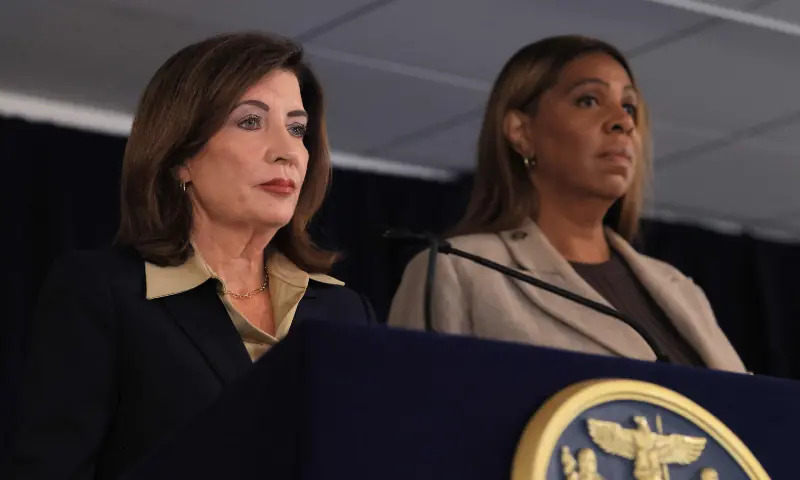
New York Governor Kathy Hochul vowed on Friday to address a critical statutory loophole within the state penal code that historically allows perpetrators to evade rape charges if the victim was willingly intoxicated at the time of the offense. The policy pronouncement follows nationwide outrage over prosecutors initially declining to file criminal charges in a high-profile, alleged gang rape case at Cornell University dating back to 2024. In response to mounting public pressure and political scrutiny, Governor Hochul appointed state Attorney General Letitia James to serve as a special prosecutor, ensuring a renewed and independent evaluation of the evidence.
The underlying investigation gained renewed momentum on Monday after the survivor filed a sweeping civil lawsuit in federal court. The legal filing alleges that in 2024, the victim was incapacitated with ketamine before being subjected to a multi-perpetrator assault involving seven members of an elite campus organization. Critics and legal analysts have pointed out that current New York statutes contain narrow definitions of consent and incapacitation, creating evidentiary hurdles when victims have consumed alcohol or substances prior to an assault, whether voluntarily or involuntarily administered.
Commercial & Economic Implications
While the legal battle unfolds within the American higher education landscape, international commercial stakeholders, compliance analysts, and institutional risk assessors are monitoring the fallout closely. Elite universities operate as multi-million-dollar economic engines, attracting substantial international student enrollment, global research grants, and corporate endowments. Scandals involving institutional negligence, opaque internal disciplinary proceedings, and perceived judicial leniency directly threaten brand equity, institutional credit ratings, and investor confidence in private educational bonds.
For international trade and commerce bodies operating across borders, governance and compliance standards are increasingly intertwined with reputational risk management. Corporations and institutional investors partnering with Ivy League universities evaluate operational integrity, regulatory compliance, and workplace safety standards when deploying capital. A weakened legal framework surrounding campus safety can cascade into broader reputational risks for associated corporate partners, commercial sponsors, and international trade delegations that prioritize rigorous environmental, social, and governance metrics.
Related Intelligence: Pakistan Confirms High-Level Riyadh Talks on Regional Security and Trade
Stakeholder Perspectives & Market Reactions
Civil rights advocates, legal scholars, and victim support organizations have welcomed the intervention of Attorney General Letitia James, characterizing the appointment as an essential step toward restoring public trust in the judicial process. For years, advocacy groups have lobbied the New York State Legislature to revise consent laws, arguing that current statutes penalize victims for voluntary consumption while shielding perpetrators from accountability.
Conversely, defense attorneys and legal associations caution that legislative overhauls must be carefully drafted to preserve due process rights and maintain clear evidentiary standards in criminal proceedings. Meanwhile, university administrators nationwide face heightened scrutiny from alumni, donors, and federal regulators regarding their handling of Title IX compliance, internal disciplinary tribunals, and mandatory reporting protocols. Institutional stakeholders emphasize that comprehensive institutional reform is vital to prevent similar systemic failures and restore confidence among the student body and the broader public.
Forward Outlook & Key Watchpoints
As the Office of the Attorney General assumes prosecutorial responsibilities, legal observers will closely monitor grand jury proceedings and potential indictments stemming from the reopened Cornell investigation. The timeline for the legislative session in Albany will dictate how quickly Governor Hochul can advance statutory amendments to close the voluntary intoxication loophole.
Key watchpoints include the progression of the federal civil lawsuit, potential legislative language introduced to redefine legal consent, and broader policy shifts across American universities regarding campus security and disciplinary transparency. The outcome of this case is expected to establish a landmark legal precedent, reshaping penal codes and institutional compliance standards across the United States for years to come.
Join Our Official WhatsApp Channel
Receive live commodity alerts, policy changes, and commercial intelligence directly on WhatsApp.