
Netanyahu Defends Regional Actions at UN Amid Walkouts and Domestic Pressures
Israeli Prime Minister Benjamin Netanyahu delivered a defiant address at the UN General Assembly on Thursday, triggering widespread walkouts as international isolation intensifies ahead of a high-stakes domestic election.
The Core Development
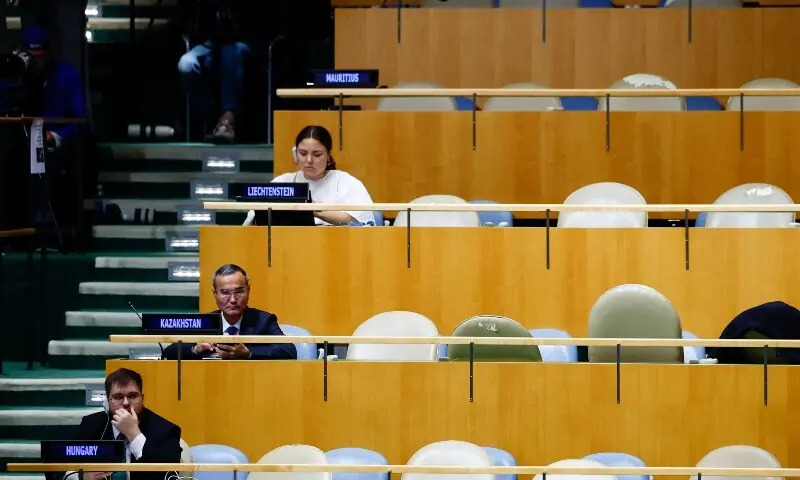
Israeli Prime Minister Benjamin Netanyahu mounted a forceful defense of Israel's military and strategic actions across the Middle East during a combative address at the United Nations General Assembly in New York on Thursday. As the Israeli leader approached the podium, dozens of diplomats from various member states stood up and walked out of the assembly hall in a coordinated demonstration of disapproval. Hundreds of protesters gathered outside the UN headquarters, vocalizing fierce opposition to Israeli military campaigns in Gaza and Lebanon.
The diplomatic boycott underscores the severe international pressure facing Netanyahu. Domestically, the Israeli premier is navigating a turbulent political landscape while campaigning for re-election ahead of a crucial national vote scheduled for October 27. The convergence of external diplomatic isolation and internal political vulnerability has created a complex operational environment for the administration, forcing a reliance on defiant nationalist rhetoric to rally his domestic political base.
Commercial & Economic Implications
For emerging economies like Pakistan, prolonged Middle Eastern instability carries significant macroeconomic transmissions. Global crude oil benchmarks, supply chain routes, and international freight insurance premiums remain highly sensitive to escalations in the Levant and the broader Gulf region. Any sustained disruption to maritime trade lanes or energy production centers directly impacts import bills, exerting upward pressure on domestic fuel prices, transport costs, and broader consumer price inflation.
Furthermore, heightened geopolitical risk aversion in international capital markets tends to strengthen the US dollar and depress investor sentiment toward frontier and emerging markets. This dynamic complicates debt servicing, constrains foreign exchange reserves, and increases the cost of vital commodity imports, including petroleum products and liquefied natural gas, directly affecting Pakistan's balance of payments stability.
Stakeholder Perspectives & Market Reactions
International bodies, human rights organizations, and various member state delegations have intensified calls for an immediate cessation of hostilities, warning that ongoing conflict threatens regional economic stability and international law. Conversely, Israeli officials maintain that military operations are an existential necessity to neutralize security threats and secure the return of hostages.
Within commercial and financial sectors across South Asia, business associations and market analysts are closely monitoring commodity futures. Importers and wholesale distributors express mounting concern over potential volatility in energy and shipping markets, noting that prolonged geopolitical friction could erode retail purchasing power and squeeze profit margins across industrial supply chains.
Forward Outlook & Key Watchpoints
Markets and policymakers will closely monitor the outcome of the October 27 Israeli elections, as a change in government leadership could signal a pivot in regional policy and diplomatic engagement. Key watchpoints include potential UN Security Council resolutions, shifts in international trade sanctions, and real-time fluctuations in international brent crude prices.
For Pakistan's trade and economic planners, maintaining strategic fiscal buffers and diversifying energy sourcing remain critical imperatives to insulate domestic markets from external geopolitical shocks originating in the Middle East.
Join Our Official WhatsApp Channel
Receive live commodity alerts, policy changes, and commercial intelligence directly on WhatsApp.