
Pakistan Enforces Strict Penalties to Safeguard Islamabad Safe City Assets
President Asif Zardari has approved an ordinance imposing strict financial penalties and damage compensation rules to protect Islamabad's Safe City surveillance infrastructure.
The Core Development
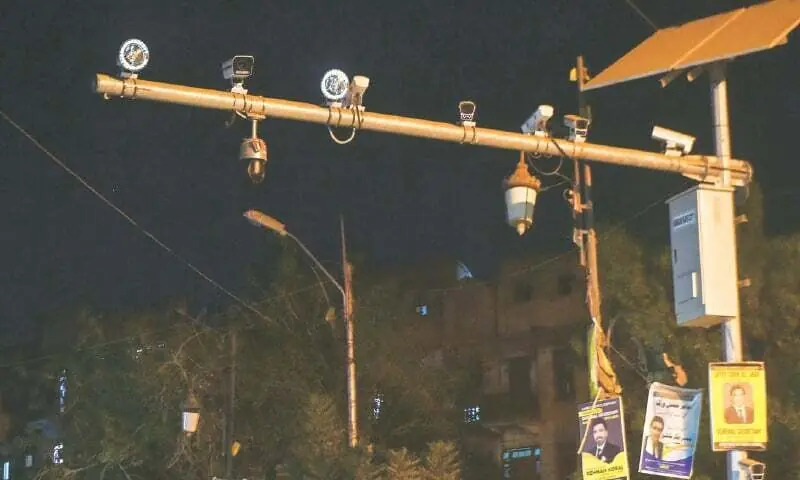
In a decisive move to fortify national security and public infrastructure, President Asif Zardari has officially approved the Islamabad Capital Territory Safe City Camera and Surveillance Infrastructure Protection and Damage Compensation Ordinance. Executed on the formal advice of Prime Minister Shehbaz Sharif, the legislative measure introduces a rigorous punitive framework designed to deter vandalism, sabotage, and deliberate destruction of state-owned digital and physical surveillance assets across the federal capital.
The Presidential Office formally announced the enactment via official channels, highlighting that the ordinance specifically targets individuals and groups responsible for impairing the operational integrity of the Safe City network. Under the newly established legal guidelines, stringent financial penalties will be enforced not only against direct perpetrators of infrastructure damage but also against entities or individuals found guilty of inciting, encouraging, or organizing acts of vandalism against public monitoring systems. The legislation mandates explicit compensation mechanisms to recover repair and replacement costs directly from liable parties, plugging existing legal loopholes that previously hindered swift state recovery of public property losses.
Commercial & Economic Implications
While ostensibly framed as a national security and law enforcement measure, the ordinance carries profound implications for the commercial and economic landscape of Islamabad and the broader national economy. Modern urban surveillance networks serve as the backbone for maintaining law and order, ensuring uninterrupted retail trade, protecting wholesale distribution hubs, and safeguarding commercial supply chains from disruption caused by civil unrest or localized protests.
Frequent bouts of political agitation and street protests historically inflict severe collateral damage on municipal infrastructure, forcing prolonged business closures, disrupting commuter traffic, and depressing consumer sentiment in commercial districts like Blue Area and Karachi Company. By establishing a robust deterrent against the destruction of critical monitoring eyes on the streets, the government aims to assure foreign investors, domestic traders, and retail conglomerates of a stable, predictable, and secure operating environment. Predictable security directly translates to reduced insurance risk premiums for logistics operators and wholesale distributors, ultimately mitigating inflationary pressures stemming from supply chain bottlenecks and transport delays.
Related Intelligence: New York City Subsurface Incursions Spark National Security and Infrastructure Review
Stakeholder Perspectives & Market Reactions
Business councils, trader associations, and legal experts have expressed cautious optimism regarding the enforcement of the ordinance, viewing it as a necessary step to protect commercial investments from recurrent mob violence. Representatives from various chambers of commerce have long argued that unchecked vandalism during political rallies severely undermines business confidence and inflicts multi-million rupee losses on urban commercial entities.
However, civil society groups and legal analysts have emphasized the critical importance of transparent implementation and judicial oversight. Stakeholders underline that while protecting public assets is paramount, enforcement mechanisms must be applied impartially to preserve civil liberties and ensure that financial penalties are levied through due process rather than arbitrary executive action. Market observers note that the ultimate success of the ordinance will depend heavily on the executive's capacity to prosecute offenders swiftly without escalating political tensions.
Forward Outlook & Key Watchpoints
As the ordinance transitions from legislative approval to active field enforcement, key market watchers and policy analysts will monitor several operational metrics. Crucial indicators include the speed at which law enforcement agencies operationalize the recovery mechanisms, the judiciary's handling of initial penalty disputes, and the tangible reduction in infrastructure downtime during future public demonstrations.
Furthermore, federal authorities are expected to evaluate the scalability of this legislative model for other major metropolitan centers, including Lahore, Karachi, and Peshawar, where municipal surveillance assets face similar vulnerabilities. For the business community in Islamabad, the immediate priority remains the unhindered continuity of commercial operations backed by a resilient, state-protected security apparatus.
Join Our Official WhatsApp Channel
Receive live commodity alerts, policy changes, and commercial intelligence directly on WhatsApp.