
Naqvi Exposes Rift Over Khyber Pakhtunkhwa Governorship Amid Escalating Political Tension
Interior Minister Mohsin Naqvi has claimed an unnamed party chief is aggrieved over being excluded from Khyber Pakhtunkhwa's gubernatorial slot, intensifying political friction and policy uncertainty across the province.
The Core Development
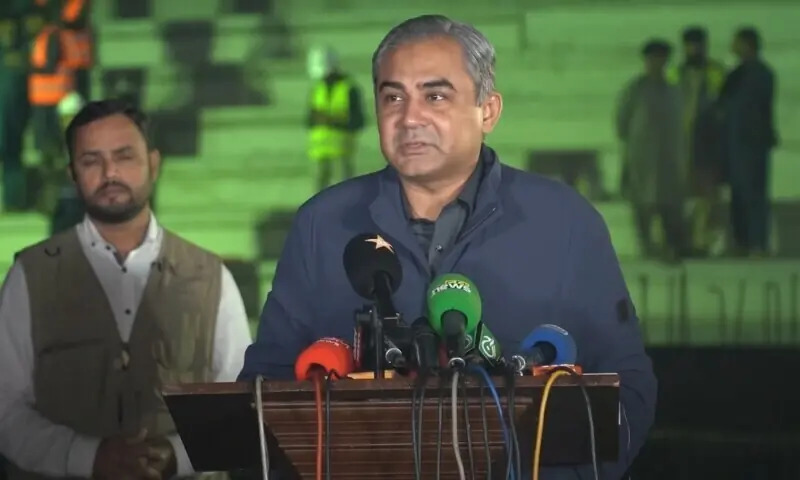
In an explosive media briefing held in Lahore on Friday, Federal Interior Minister Mohsin Naqvi revealed acute friction within Pakistan's political landscape, claiming that the head of an influential political party is intensely aggrieved over not being appointed governor of Khyber Pakhtunkhwa. Although Naqvi stopped short of explicitly naming the politician, his remarks signaled high-stakes maneuvering behind the federal government's administrative strategies in the northwestern province.
Naqvi alleged that the party chief sought a decisive role in the potential imposition of governor's rule in Khyber Pakhtunkhwa, hoping to secure the constitutional position of governor as part of an arrangement. The interior minister heavily criticized the politician's track record, pointing out that this figure had leveraged state patronage and institutional support for several decades to build and sustain a political footprint. In a pointed critique, Naqvi stated that the individual in question historically depended on establishment patronage to arrange logistics, including domestic airfare for party members, arguing that figures with such entanglements have little credibility when publicly condemning the current governing setup.
Commercial & Economic Implications
This escalating political discord compounds governance instability in Khyber Pakhtunkhwa, a province critical to regional transit trade and wholesale commerce. Constant friction between federal authorities and regional political figures injects uncertainty into bureaucratic operations, slowing down infrastructure execution, municipal spending, and provincial trade policy.
For commercial enterprises, retailers, and wholesale distribution networks, protracted political infighting directly undermines market sentiment. Khyber Pakhtunkhwa acts as the primary conduit for transit trade linking Pakistan with Afghanistan and Central Asian markets. Operational disruptions or policy paralysis stemming from disputes over gubernatorial appointments and talk of emergency governance delay cargo clearance, raise freight risks, and disrupt fast-moving consumer goods supply chains. Furthermore, uncertainty over regional administrative control deters private capital deployment, keeping local credit markets constrained and exacerbating inflationary pressures on imported commodities and locally produced staples.
Stakeholder Perspectives & Market Reactions
Commercial bodies and regional chambers of commerce have expressed rising concern over persistent administrative volatility. Trader associations in Peshawar and surrounding commercial hubs observe that disputes over provincial leadership undermine regulatory consistency, creating hesitation among distribution agencies and institutional lenders. Many wholesale merchants report that speculation surrounding governor's rule impedes commercial agreements and delays municipal policy approvals.
Legal and political analysts point out that public disclosures by senior federal cabinet members reflect deep fragmentation among traditional political elites. Observers note that while the federal government seeks to project administrative resolve, public accusations regarding historical patronage risk intensifying legislative gridlock. Market participants largely view these tensions as an impediment to coherent fiscal management and sustained structural reforms, arguing that economic stabilization requires predictability rather than persistent provincial-federal confrontation.
Forward Outlook & Key Watchpoints
The immediate outlook hinges on whether the federal administration pursues formal intervention in Khyber Pakhtunkhwa or maintains the prevailing administrative status quo. Stakeholders will closely monitor retaliatory statements from opposition leaders and coalition partners, which could clarify the identity of the targeted party chief and trigger realignments on the legislative floor.
Key watchpoints over the coming weeks include the security situation in the province, federal-provincial coordination on trade corridors, and revenue transfer discussions under the National Finance Commission framework. If political fragmentation escalates into overt constitutional stalemates, investor confidence in regional distribution and cross-border commerce will face renewed headwinds, complicating broader macroeconomic recovery efforts.
Join Our Official WhatsApp Channel
Receive live commodity alerts, policy changes, and commercial intelligence directly on WhatsApp.