
Fatal Multan Bosan Road Crash Spotlights Urban Transit Safety Deficits
A devastating high-speed collision on Multan's Bosan Road killed five young occupants, intensifying scrutiny over regional traffic monitoring, emergency infrastructure, and municipal road management.
The Core Development
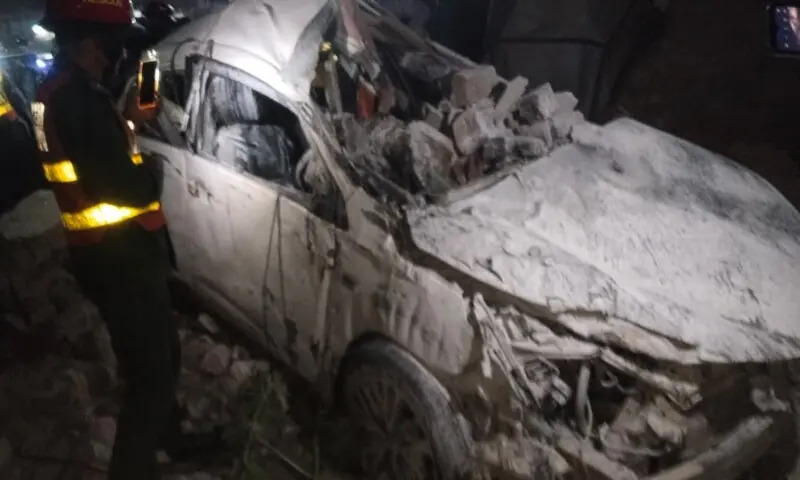
A catastrophic road traffic collision on Multan's Bosan Road claimed the lives of five young men in their early-to-mid twenties during the pre-dawn hours on Monday. Emergency services confirmed that the incident occurred around 4:00 AM when a speeding Toyota Corolla lost control, rammed into a concrete road divider, and careened into the boundary wall of an adjacent vacant plot before erupting into flames.
According to official logs from emergency responder Rescue 1122, control room operators received initial distress calls from a passerby at approximately 4:15 AM. First responder units and municipal firefighting teams reached the site to extinguish the vehicle fire and initiate extrication operations. All five passengers, identified as residents of Shujaabad tehsil, succumbed to critical trauma at the scene before medical intervention could be administered.
Rescue personnel confirmed that the victims suffered fatal blunt-force head trauma alongside burn injuries. Preliminary victim identification documented three of the deceased as individuals aged 22, 23, and 28 years, while the remaining two were estimated to be between 24 and 25 years old. Traffic police officials and forensic investigators secured the perimeter, initiating an investigation into the precise speed profile and mechanical status of the vehicle prior to the collision.
Commercial & Economic Implications
While traffic fatalities are primarily treated as public safety tragedies, the persistent recurrence of high-impact vehicular accidents on vital commercial arteries like Bosan Road exacts a heavy economic toll. Bosan Road serves as one of Multan's prime mixed-use and educational corridors, hosting financial institutions, commercial retail plazas, and universities. Frequent disruptions and infrastructural damage create systemic risks for commercial logistics, localized trade mobility, and the broader retail supply chain in southern Punjab.
From a macroeconomic perspective, vehicular collisions directly affect Pakistan's human capital. The disproportionate loss of young individuals in their prime productive years undermines workforce expansion and increases localized household economic vulnerability, particularly in agrarian-linked hubs like Shujaabad. Furthermore, rising accident frequency increases commercial fleet insurance underwriting costs, municipal road rehabilitation expenditures, and private health-related liability expenses across the regional transport network.
Related Intelligence: Cuba's Economic Vulnerability Threatens Decades of Global Geopolitical Influence
Stakeholder Perspectives & Market Reactions
Civic society groups, urban development planners, and local transport associations have reiterated concerns over inadequate structural safeguards along primary metropolitan arteries. Representatives from regional commuter unions noted that long stretches of Bosan Road lack dynamic speed enforcement cameras, adequate nighttime illumination, and energy-absorbing safety barriers capable of mitigating high-impact crashes.
Legal and regulatory observers have called for stricter enforcement of municipal transit bylaws and standardized speed-limiting protocols during low-traffic overnight hours. Local traders operating along the Bosan Road belt have expressed apprehension regarding municipal response capabilities, noting that secondary fire hazards emerging from automotive crashes represent operational threats to commercial assets and adjacent retail properties. Official statements from district administration authorities confirmed that an administrative inquiry will evaluate road markings and divider placement in the affected corridor.
Forward Outlook & Key Watchpoints
In the immediate wake of the incident, the Multan district administration and provincial transport regulators are expected to review urban speed compliance strategies along arterial thoroughfares. Watchpoints over the coming quarters include whether the Punjab government will accelerate funding for intelligent traffic management systems (ITMS) across secondary cities beyond Lahore, integrating automated radar networks and targeted night patrols.
Additionally, scrutiny will center on infrastructural audits of road dividers and lighting standards managed by the Multan Development Authority. Enforcement drives addressing vehicle roadworthiness, high-speed night commuting, and stricter driver licensing protocols across southern Punjab will serve as critical indicators of regulatory resolve to stem preventable road fatalities.
Join Our Official WhatsApp Channel
Receive live commodity alerts, policy changes, and commercial intelligence directly on WhatsApp.