
Meloni Convenes Crisis Cabinet as Violent Clashes Trigger Security Concerns Across Italy
Italian Prime Minister Giorgia Meloni has called an emergency security summit after intense urban clashes led to more than 200 arrests, raising concerns over national stability and broader regional economic disruptions.
Geopolitical & Core Developments
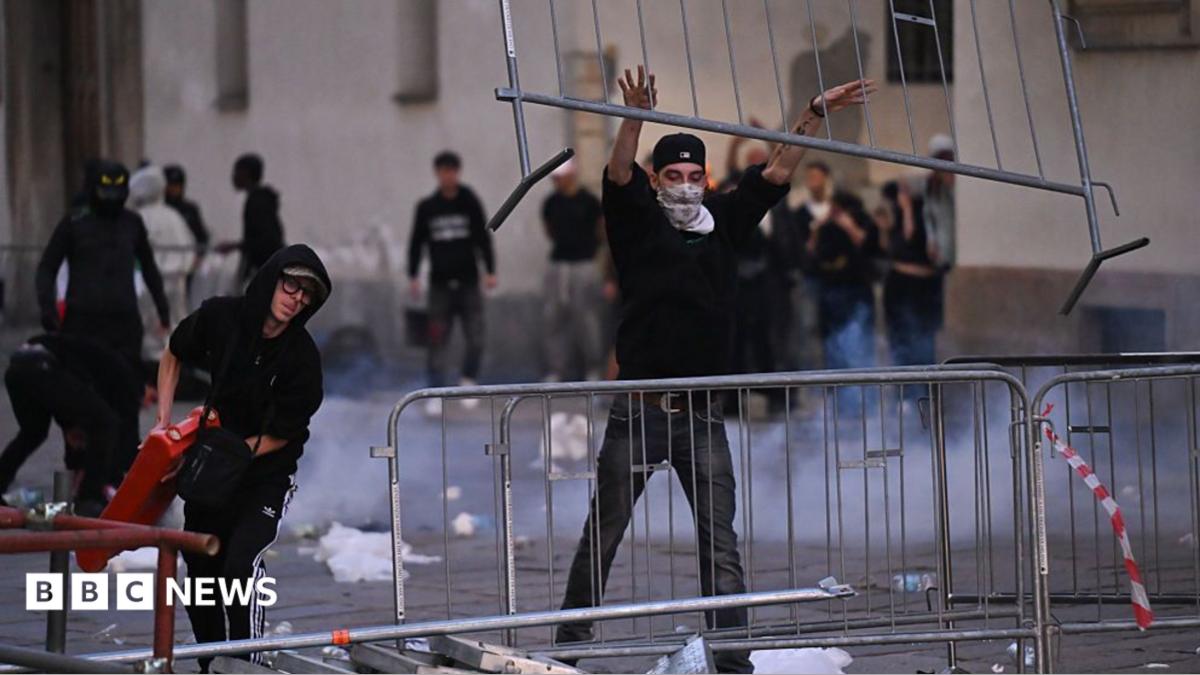
Italian Prime Minister Giorgia Meloni has called an extraordinary cabinet meeting following an outbreak of severe civil unrest that swept major urban centers over the weekend, resulting in the detention of more than 200 individuals and dozens of injuries among security personnel. According to state authorities, coordinated demonstrations over socio-economic pressures, infrastructure disputes, and foreign policy shifts degenerated into direct confrontations with law enforcement, prompting riot police to deploy tear gas and water cannons.
The swift escalation highlights growing domestic friction within the euro zone's third-largest economy. Meloni, whose right-wing coalition has prioritized stringent public order mandates and tightened migration controls, now faces critical tests regarding institutional governance and internal stability. Rome's emergency session is expected to review emergency policing powers, enhance intelligence oversight into fringe radical organizations, and evaluate potential curfews in high-risk zones. The crisis comes at an awkward geopolitical juncture for Meloni, who has sought to project Italy as a reliable, disciplined anchor of Mediterranean diplomacy within both the European Union and the G7.
Global Trade & Economic Ripples
While the weekend violence was primarily confined to public squares and transport nodes, international commodity markets and pan-European logistics systems are attentive to the ripple effects of protracted unrest in Italy. Urban disruptions in key logistics hubs risk slowing inland intermodal freight transfers connecting the ports of Genoa, Trieste, and Naples to Central European manufacturing networks. Any prolonged disruption to railway arteries or arterial highways could elevate regional freight rates and delay delivery schedules for critical industrial intermediate goods, chemicals, and agricultural products.
Financial markets registered modest nervousness, with Italian government bond spreads widening marginally against the German Bund benchmark on Monday morning. While sovereign yields remain largely anchored by broader European Central Bank monetary expectations, sustained civil instability risks denting foreign direct investment confidence. The Italian business confederations have cautioned that municipal damages and retail disruptions could harm consumer confidence during a crucial fiscal quarter, while broader tourism revenue—a cornerstone of Italy's current account balance—could face localized headwinds if travel advisories are updated by foreign foreign ministries.
Related Intelligence: Alberta Referendum Debate Stirs Energy Markets and Canadian Unity Concerns
International Reactions & Diplomatic Stances
European leaders and multilateral observers have issued guarded reactions, emphasizing the necessity of preserving public order while guaranteeing fundamental democratic assembly rights. Officials in Brussels privately voiced concern that the unrest reflects broader, systemic European frustration with elevated living costs, fiscal consolidation requirements, and industrial transitions. A spokesperson for the European Commission noted that the executive branch is monitoring developments closely, maintaining full confidence in the Italian state apparatus to uphold the rule of law.
Across European capitals, security ministries are reviewing domestic contingency plans. Analysts in Paris and Berlin observed that localized street mobilization in Italy often resonates across borders, where similar socio-economic grievances simmer. Credit rating agencies have maintained Italy's sovereign rating outlook as stable, though sovereign debt analysts noted that prolonged domestic political tension could complicate Rome's adherence to the revised EU Stability and Growth Pact fiscal targets, particularly as national deficits remain subject to strict European Commission scrutiny.
Strategic Outlook & Future Scenarios
The trajectory of Italy's internal security crisis hinges on the policy instruments agreed upon during the prime minister's emergency summit. Meloni is widely projected to adopt an uncompromising security-first posture, possibly accelerating pending public security legislation that stiffens penalties for protests targeting strategic national infrastructure and acts of civil disobedience.
Should the government balance its policing crackdown with targeted socio-economic support for affected municipalities, markets anticipate the immediate volatility will subside into localized political debate. Conversely, should the administration's measures trigger renewed protests from trade unions and civic coalitions, Italy may encounter repeated disruptions through the coming quarter. Over the medium term, Rome's capacity to maintain civil calm will directly dictate its diplomatic clout within EU policy negotiations on energy infrastructure, Mediterranean border management, and fiscal surveillance.
Join Our Official WhatsApp Channel
Receive live commodity alerts, policy changes, and commercial intelligence directly on WhatsApp.