
Maldives President Dr Mohamed Muizzu to Undertake Three-Day State Visit to Pakistan
Maldivian President Dr Mohamed Muizzu will begin a three-day official visit to Pakistan on October 20 to deepen diplomatic ties, institutional partnerships, and regional trade cooperation.
The Core Development
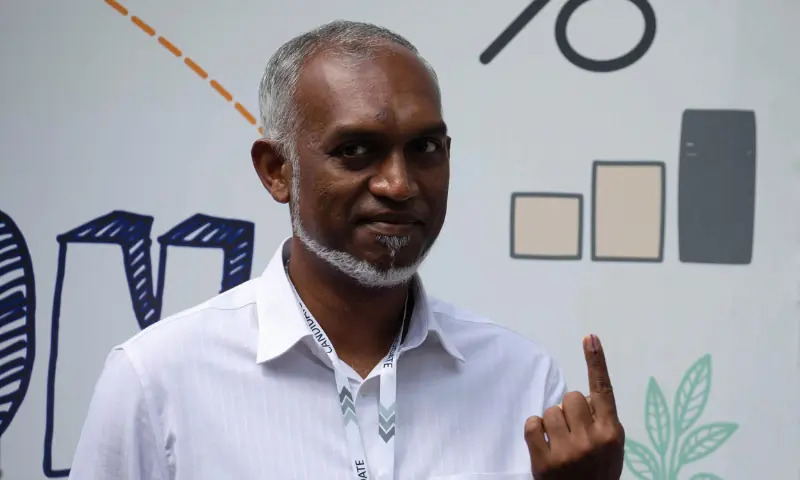
President of the Republic of Maldives Dr Mohamed Muizzu is scheduled to undertake a three-day official state visit to Pakistan from October 20 to 22, following an invitation extended by Prime Minister Shehbaz Sharif, the Ministry of Foreign Affairs confirmed on Sunday. Accompanying President Muizzu will be First Lady Sajidha Mohamed alongside a high-level official delegation comprising key cabinet ministers, senior diplomats, and business advisors.
During his stay in Islamabad, President Muizzu will hold formal bilateral talks with Prime Minister Sharif and meet with President Asif Ali Zardari. The diplomatic agenda covers an exhaustive review of regional developments, institutional cooperation frameworks, and the revitalisation of bilateral relations spanning commerce, climate change mitigation, security cooperation, and civil services training. Both nations share historic diplomatic relations rooted in common regional interests under the South Asian Association for Regional Cooperation (SAARC) framework, and the high-profile visit comes at a strategic juncture when Malé is pursuing a diversified, non-aligned foreign policy posture across the Indian Ocean rim.
Commercial & Economic Implications
While bilateral trade volume between Pakistan and the Maldives has historically remained modest, hovering around tens of millions of dollars annually, this summit represents an immediate opportunity to establish dependable trade corridors. For Pakistani exporters, the Maldivian consumer market, though small in population, boasts high purchasing power bolstered by a massive international tourism sector. The hospitality and retail supply chains in the Maldives depend heavily on imported essentials, offering significant expansion potential for Pakistani agro-commodities, including basmati rice, citrus, fresh vegetables, poultry, and meat products.
Furthermore, Pakistan's pharmaceutical and surgical instrument sectors stand to gain substantially. Expanding bilateral trade mechanisms and establishing direct regulatory certifications could enable local pharmaceutical manufacturers to supply Maldivian public health authorities and commercial pharmacies at competitive margins compared to traditional regional competitors. The talks are also expected to explore viable maritime shipping arrangements. Enhanced sea logistics and maritime linkages through regional ports could lower freight transit overheads, stabilizing wholesale trade and facilitating bulk shipments of construction materials, textiles, and finished retail goods.
Related Intelligence: Mass Funeral in Gaza Deepens Regional Tensions and Supply Chain Risks
Stakeholder Perspectives & Market Reactions
Commercial chambers across Pakistan, including the Federation of Pakistan Chambers of Commerce and Industry (FPCCI), have reiterated the need to formalize institutional trading mechanisms. Industry leaders note that previous memorandums of understanding struggled due to the absence of direct commercial shipping channels and rigid financial transaction rails. Exporters are urging both governments to expedite currency clearing arrangements or preferential customs agreements to make Pakistani products competitive on Maldivian store shelves.
From the Maldivian perspective, securing alternate, resilient import pipelines for food security and healthcare commodities is an urgent strategic objective. Policy observers note that the Muizzu administration’s pivot toward broader regional diversification creates room for Pakistan to emerge as a reliable partner in public sector technical assistance, banking solutions, and medical education programs.
Forward Outlook & Key Watchpoints
Following the arrival of the Maldivian delegation on October 20, working-level bilateral sessions will convene to negotiate memoranda of understanding across tourism promotion, higher education scholarships, meteorological data sharing, and mutual trade facilitation. Observers will closely monitor whether the discussions yield actionable timelines for establishing a joint business council or structured tariff concessions under the SAARC framework.
In the medium term, the primary indicator of success will be the establishment of recurring business-to-business exchanges and cargo logistics solutions. If Pakistan's economic managers can convert high-level diplomatic goodwill into institutional commercial conduits, local wholesalers and export-oriented industries could secure a resilient commercial foothold in the central Indian Ocean.
Join Our Official WhatsApp Channel
Receive live commodity alerts, policy changes, and commercial intelligence directly on WhatsApp.