
Security Escalation in Balochistan Threatens Supply Corridors and CPEC Investment
Military operations across Gwadar and Kalat resulted in the martyrdom of an army major and four militant deaths, intensifying logistics concerns along critical commercial and CPEC transit corridors.
The Core Development
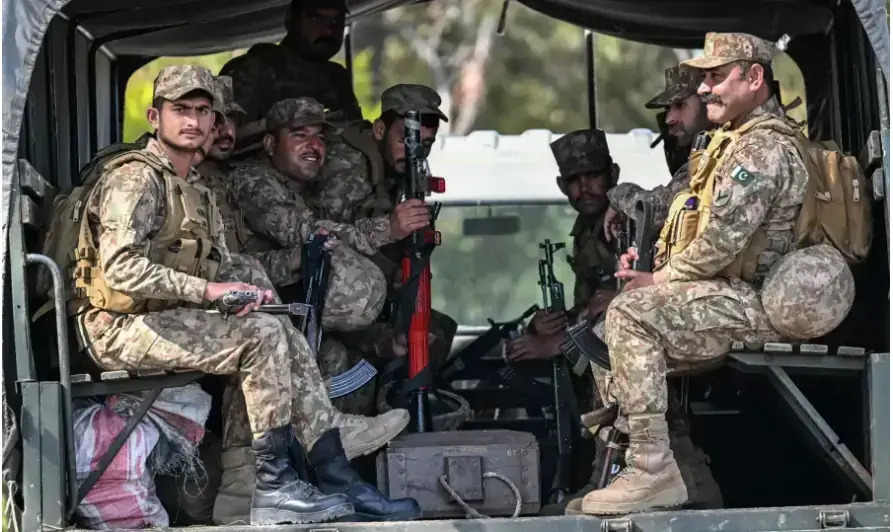
Security forces operating across Balochistan have concluded a series of synchronized, intelligence-based operations targeting insurgent networks, resulting in the martyrdom of an army major and the elimination of four militants. According to official disclosures by the Inter-Services Public Relations (ISPR), the security sweep focused on specific insurgent redoubts in the coastal and inland zones of Shadi Kaur, Pasni in Gwadar district, and Jattakabad within Kalat district.
The military confirmed that these actions targeted elements operating under the state-designated umbrella of Fitna al Hindustan, a phrase officially introduced by Pakistan's defense establishment to denote insurgent networks allegedly receiving external backing to sabotage national stability. The high-stakes operations unfolded following credible actionable intelligence indicating the imminent coordination of attacks against critical national infrastructure. A fierce gun battle ensued in complex terrain, culminating in the neutralisation of four militants and the death of Major Haseeb, who led the tactical assault from the front. Recovered material from the site included modern weaponry, tactical communication gear, and significant caches of explosives intended to interdict commercial and transport movements across the provincial artery network.
Commercial & Economic Implications
The strategic location of these kinetic operations—encompassing coastal zones adjacent to the deep-sea port of Gwadar and the central transit hub of Kalat—carries immediate consequences for Pakistan's national logistics chain and broader wholesale distribution. Kalat functions as an essential transit choke point connecting the coastal macro-corridor via the N-25 National Highway with Quetta and onwards to Punjab and Sindh. Disruptions or enhanced security measures along this route typically delay cargo transit, forcing transport operators to incur significant demurrage fees and route diversions.
For wholesale merchants, distribution networks, and importers, intensified counter-insurgency operations inevitably induce upward pressure on freight costs. Hauliers routinely adjust baseline rates upward by 10 to 15 percent to absorb heightened operational risks and prolonged transit checkpoints through sensitive zones in Balochistan. These friction costs filter directly into the landed prices of essential staples, construction materials, and retail goods distributed throughout the province. Furthermore, recurrent security skirmishes near Gwadar directly impact industrial confidence, cooling private capital engagement for the Gwadar Free Zone and delaying the commercial operationalization of the China-Pakistan Economic Corridor (CPEC) logistics grid.
Related Intelligence: Kenya Cult Tragedy Verdict Stirs Judicial and Regional Security Concerns
Stakeholder Perspectives & Market Reactions
National freight associations and regional trading houses have voiced mounting concern over the escalating security challenges in southern and central Balochistan. Haulage representatives note that long-haul drivers increasingly resist nighttime travel on regional highways, creating backlogs at loading terminals in Karachi and dry ports across central Pakistan. The Pakistan Goods Transport Alliance has repeatedly called on both provincial and federal authorities to implement fortified convoy mechanisms to safeguard critical inter-provincial supply movements.
Concurrently, corporate leadership and foreign investors monitoring bilateral trade projects continue to scrutinize the state's security overhead. Industrialists maintain that while aggressive counter-terrorism sweeps are necessary to clear rogue elements, prolonged instability elevates operational and security insurance premiums for enterprise-scale manufacturing and infrastructure developments. On the official front, political leadership and civil-military authorities have reaffirmed zero tolerance for sabotage, stating that state security operations will persist until commercial corridors and civilian populations are insulated from asymmetric threats.
Forward Outlook & Key Watchpoints
In the immediate term, security forces are expected to expand area-sanitization operations across Kalat and Makran divisions to neutralize residual insurgent cells. Market participants must monitor potential transit curfews or convoy-based mandates along the Makran Coastal Highway (N-10) and the RCD Highway (N-25). Any protracted highway closures will swiftly impact inter-provincial distribution schedules for perishables and general retail commodities.
From a policy perspective, the state is anticipated to intensify diplomatic and intelligence measures against external support structures facilitating militant networks. Strategic investors will also observe how federal authorities balance kinetic responses with economic stabilization measures in Balochistan. The timeline for normalizing commercial freight depends heavily on whether these targeted operations succeed in suppressing hostile cross-border and regional cells without provoking retaliatory infrastructure disruptions.
Join Our Official WhatsApp Channel
Receive live commodity alerts, policy changes, and commercial intelligence directly on WhatsApp.