
Pakistan, Saudi Arabia, and Turkiye Conclude Landmark 10-Year Makkah Defence Pact
Pakistan, Saudi Arabia, and Turkiye have finalized a foundational 10-year tripartite defence collaboration treaty in Makkah, establishing coordinated military industrial manufacturing and mutual strategic support.
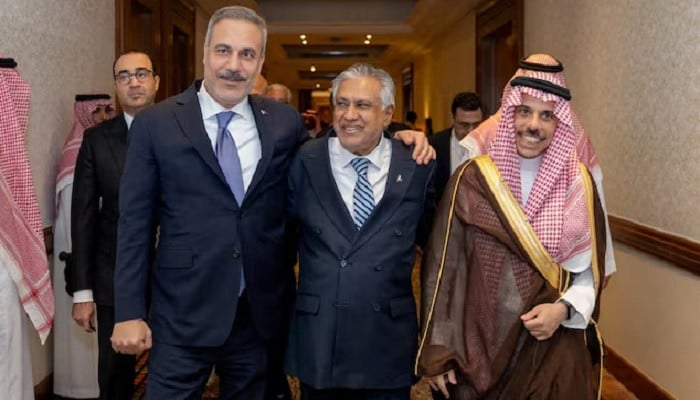
The Core Development In a landmark diplomatic and military convergence, the governments of Pakistan, the Kingdom of Saudi Arabia, and the Republic of Turkiye have formalized a [trilateral defence](/news/turkiye-ratifies-mecca-defence-pact-saudi-arabia-pakistan) collaboration treaty ratified in the holy city of Makkah. Formal diplomatic notifications confirm that the pact institutes a binding 10-year framework designed to operationalize joint technical research, technology transfers, arms co-production, and integrated security protocols across West and South Asia.
The negotiations, conducted through high-level delegations representing Pakistan's Ministry of Defence, the Turkish Defence Industry Agency (SSB), and the Saudi General Authority for Military Industries (GAMI), culminated after months of backchannel talks. Under the terms of the agreement, the three states commit to establishing joint manufacturing lines for aerospace components, uncrewed combat platforms, precision munitions, and land-based mobility systems. The pact also integrates specialized clauses detailing interoperability exercises, shared intelligence matrices, and contingency logistics mechanisms that activate during asymmetric regional conflicts.
Commercial & Economic Implications For Pakistan's domestic economy, the geopolitical realignment holds substantive commercial ramifications. The state's local industrial capacity, anchored by the Pakistan Ordnance Factories (POF) and the Pakistan Aeronautical Complex (PAC) Kamra, stands to benefit directly from subsidized capital inflows and co-development contracts backed by Saudi sovereign reserves and advanced Turkish aerospace technology.
Beyond specialized military manufacturing, the secondary ripple effects on wholesale and industrial distribution in Pakistan are notable. Dual-use technologies, high-grade steel manufacturing, composite materials fabrication, and telecommunications infrastructure development are projected to expand. This targeted foreign direct investment could alleviate long-standing external account pressures while stimulating upstream domestic engineering vendors and heavy machinery transport networks. Furthermore, secured maritime and overland corridors linked with allied security protocols provide essential resilience for Pakistan's Gulf trade lines, supporting critical energy imports and preserving container freight rates against volatile maritime disruptions.
Related Intelligence: Turkiye Moves to Ratify Trilateral Defence Agreement with Saudi Arabia and Pakistan
Stakeholder Perspectives & Market Reactions Industry representatives in Islamabad and Karachi have reacted favorably to the formalization of the 10-year security umbrella. Market analysts emphasize that securing long-term institutional agreements with Riyadh and Ankara substantially reduces the country's sovereign risk perception among international capital investors. The Pakistan Business Council and several engineering associations highlighted the opportunity for public-private partnerships, urging the Ministry of Commerce to negotiate offsets that mandate localized supply chain integration for small and medium-sized precision toolers.
Legal and international affairs scholars noted the institutional rigor embedded within the 10-year clause, highlighting that multi-year multilateral treaties offer institutional insulation against rapid shifts in domestic electoral politics across all three jurisdictions. Meanwhile, regional security analysts view the coalition as an assertive step toward defense self-sufficiency, reducing reliance on conventional Western and Eastern suppliers who have previously tied equipment deliveries to complex political conditionalities.
Forward Outlook & Key Watchpoints The implementation timeline begins with the inaugural session of the Trilateral Defence Steering Committee, scheduled to convene within ninety days to establish operational working groups across Riyadh, Ankara, and Rawalpindi. The primary initial deliverable will involve codifying intellectual property terms, joint venture fiscal structures, and export clearance protocols for regional defense systems.
Over the medium term, economic observers will monitor whether Pakistan can leverage this tripartite umbrella to negotiate concessional energy facilities or sovereign currency swap lines with Saudi Arabia to manage persistent fiscal deficits. The ultimate success of the Makkah agreement will depend on how effectively the three nations execute joint capital deployment, harmonize diverse operational doctrines, and overcome regulatory friction within respective national defense procurement systems.
Join Our Official WhatsApp Channel
Receive live commodity alerts, policy changes, and commercial intelligence directly on WhatsApp.