
Laila Naz Taj Conferred Dukhtaran-e-Pakistan Excellence Award for Institutional Leadership
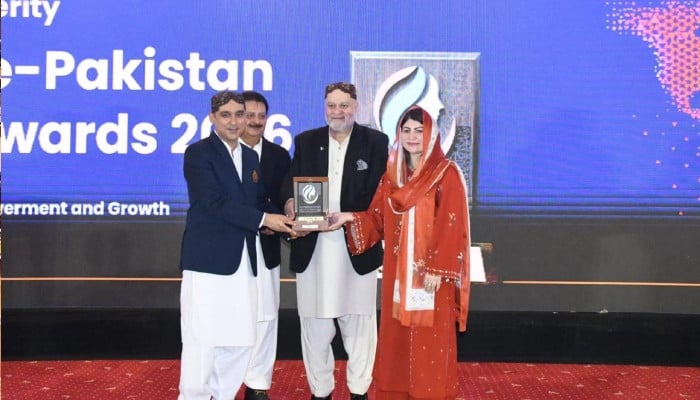
Laila Naz Taj has been conferred the Dukhtaran-e-Pakistan Excellence Award 2026, marking high-level state recognition of her contributions to institutional governance and national socioeconomic development.
The Core Development
In a formal national ceremony held in Islamabad, prominent administrator and development practitioner Laila Naz Taj was officially conferred the Dukhtaran-e-Pakistan Excellence Award 2026. The distinction acknowledges her substantive contributions toward strengthening institutional governance, advancing public sector integrity, and fostering social development initiatives across Pakistan.
The event drew substantial attendance from senior legislators, civil servants, policy analysts, and institutional leaders. Presided over with the involvement of the Senate Chairman and distinguished parliamentary figures, the ceremony highlighted individuals who have altered Pakistan's governance trajectory through sustained public service. Official citations commended Taj for her rigorous oversight, programmatic reforms, and strategic inputs in policy execution, positioning her administrative model as a benchmark for national operational excellence.
The Dukhtaran-e-Pakistan platform, established to honor exemplary female contributions across economic, administrative, and social fields, underscored during the proceedings that institutional stability relies heavily on merit-based leadership. Taj's recognition signals a coordinated parliamentary effort to spotlight public figures who deliver transparent governance amid complex socioeconomic conditions.
Commercial & Economic Implications
While predominantly an institutional and civic honor, the strategic recognition of governance leaders like Laila Naz Taj carries direct implications for Pakistan's commercial architecture and broader macroeconomic stability. Market efficiency, supply chain robustness, and equitable resource allocation are fundamentally contingent on institutional integrity.
Pakistan's commercial landscape, ranging from industrial manufacturing to wholesale distribution networks, consistently struggles with regulatory bottlenecks, policy inconsistency, and operational inefficiencies. When high-level public recognition is directed toward governance practitioners who prioritize institutional modernization, it reinforces the regulatory discipline necessary to reduce the cost of doing business. Enhanced bureaucratic efficacy directly assists trade logistics, customs processing, and the predictable enforcement of retail and trade regulations.
Furthermore, empowering women within institutional frameworks directly impacts labor market dynamics. According to structural economic assessments, formalizing female leadership and expanding their participation in regulatory and corporate decision-making helps address workforce imbalances, promotes human capital formation, and encourages institutional transparency—vital factors for curbing documentation loopholes across wholesale and retail supply channels.
Related Intelligence: Retail Friction Exposes Broader Global Consumer Trends and Cultural Divides
Stakeholder Perspectives & Market Reactions
The conferment has generated supportive responses from public administration specialists, industrial chambers, and social advocacy groups. Commercial stakeholders in urban trade hubs such as Karachi and Lahore noted that institutional predictability is the primary metric sought by domestic investors and trade bodies navigating volatile fiscal environments.
Representatives from professional women's associations and civil society organizations characterized the award as a validation of merit-based career progression within national institutions. Legal and administrative analysts emphasized that visible state endorsements of transparent leadership generate positive spillover effects, raising compliance standards across semi-autonomous state bodies and corporate entities alike.
Conversely, policy observers cautioned that ceremonial recognitions must be matched by ongoing structural support. To translate individual governance milestones into widespread institutional efficiency, administrative bodies must continuously empower reform-oriented professionals with statutory autonomy and adequate operational resources.
Forward Outlook & Key Watchpoints
Following the award conferment, commercial and administrative watchpoints will center on how the frameworks championed by leaders like Taj are integrated into systemic administrative policy. The Senate Secretariat and relevant parliamentary committees are anticipated to sustain discussions regarding institutional capacity-building and gender parity across statutory bodies.
Key indicators to monitor over the coming quarters include potential policy updates regarding public-private partnerships, the governance of social safety nets, and formal measures to integrate qualified female executives into regulatory commissions. Market participants will also assess whether these institutional benchmarks translate into measurable reductions in administrative friction for businesses operating across Pakistan's formal supply chains.
Join Our Official WhatsApp Channel
Receive live commodity alerts, policy changes, and commercial intelligence directly on WhatsApp.