
Kremlin Signals Potential Trilateral Summit Between Putin, Trump, and Xi
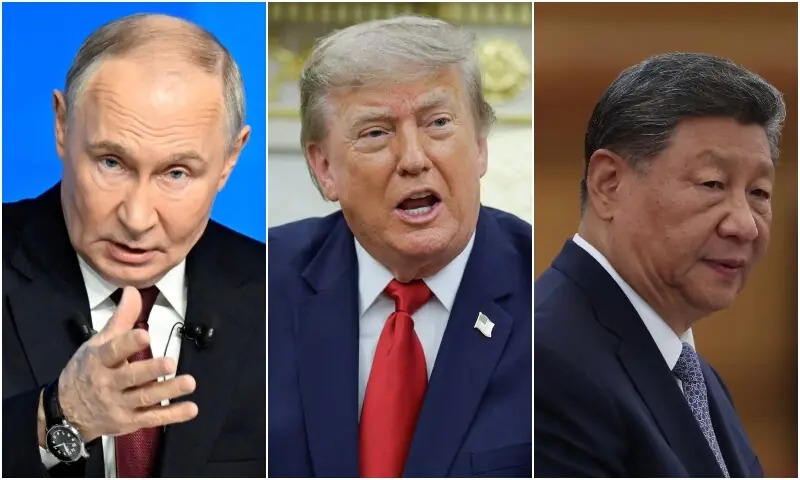
The Kremlin has acknowledged preliminary talks regarding a potential three-way summit between Vladimir Putin, Donald Trump, and Xi Jinping in China, focusing on resolving the protracted conflict in Ukraine.
The Core Development
Moscow has confirmed that diplomatic channels have explored the prospect of a historic trilateral summit involving Russian President Vladimir Putin, US President Donald Trump, and Chinese President Xi Jinping. Kremlin spokesman Dmitry Peskov addressed the development following media reports indicating that Moscow had floated the concept of a high-level meeting aimed at addressing the protracted conflict in Ukraine. The anticipated diplomatic engagement is being evaluated around the sidelines of the upcoming Asia-Pacific Economic Cooperation (APEC) summit scheduled to take place in China.
Peskov clarified that while the potential for such an engagement was raised during intergovernmental discussions, formal arrangements, definitive agendas, and concrete proposals have not yet been formalized. The proposition follows persistent signals from Washington regarding an interest in expediting a negotiated settlement to hostilities in Eastern Europe. Bringing the leaders of the United States, China, and the Russian Federation into a single room would represent a profound realignment of international diplomacy, shifting conflict-resolution talks into a trilateral great-power framework.
Commercial & Economic Implications
For emerging economies, particularly Pakistan, the trajectory of Ukraine-related geopolitical negotiations carries direct macroeconomic consequences. Pakistan remains structurally vulnerable to global energy shocks, relying heavily on imported crude oil, liquefied natural gas (LNG), and agricultural staples, notably wheat and edible oils. The prolonged Eastern European confrontation has periodically disrupted Black Sea shipping routes, elevated freight insurance rates, and spurred volatility in fertilizer and grain prices.
A diplomatic breakthrough leading to sanctions relief or stabilized corridor access would likely alleviate upward pressure on international agricultural commodities and benchmark petroleum indices. In Pakistan's wholesale distribution networks and domestic retail markets, lower global crude prices directly translate into reduced transport logistics overheads, eased retail fuel pricing, and curtailed domestic headline inflation. Conversely, continued deadlock or aggressive unilateral trade posturing by Washington could further fragment international supply chains, creating pricing friction for Pakistani industrial importers sourcing raw inputs and intermediate materials.
Related Intelligence: Government Slashes Petrol and Diesel Rates Amid Shifting Global Markets
Stakeholder Perspectives & Market Reactions
Global financial markets have registered cautious optimism at the prospect of major-power rapprochement, though institutional investors remain prudent given the absence of formal diplomatic protocols. Analysts tracking international trade note that any durable peace framework mediated by Beijing and Washington would need to reconcile deeply divergent security architectures in Europe and broader global tariff regimes.
Within Pakistan, commercial trading associations and manufacturing bodies view potential de-escalation favorably. The Federation of Pakistan Chambers of Commerce and Industry (FPCCI) and regional wholesale forums have repeatedly noted that global supply disruptions amplify balance-of-payments pressures and foreign exchange volatility. Domestic market operators emphasize that easing geopolitical friction could stabilize the Pakistani Rupee by diminishing external import bills. However, regional strategic analysts caution that trilateral negotiations involving Beijing and Washington may compel secondary economies to navigate increasingly complex compliance demands and bilateral trade alignments.
Forward Outlook & Key Watchpoints
The immediate focus shifts to the preliminary diplomatic exchanges preceding the APEC assembly in China. Market participants and policymakers will monitor official confirmations from Beijing and the White House regarding whether formal bilateral or trilateral sessions will be integrated into the summit itinerary.
Critical indicators over the coming weeks include whether Washington sets formal preconditions regarding territorial sovereignty in Eastern Europe, how Beijing positions its neutrality and mediation credentials, and whether European Union leadership is factored into prospective frameworks. For Pakistani businesses, the ultimate bellwether will remain global energy benchmarks and food commodity futures, which are expected to respond sharply to any tangible diplomatic breakthroughs or subsequent summit declarations.
Join Our Official WhatsApp Channel
Receive live commodity alerts, policy changes, and commercial intelligence directly on WhatsApp.