
France Imposes Curfews Amid Violent Inflation Protests Threatening European Stability
France has introduced emergency curfews across Paris and several major cities after severe cost-of-living riots overwhelmed law enforcement, stoking supply chain disruption and political uncertainty across Europe.
The Core Development
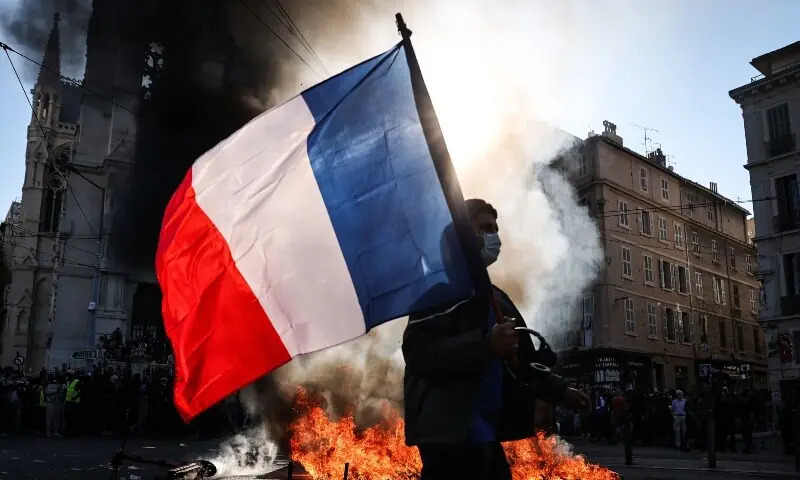
The French government has instituted partial curfews across Paris and multiple metropolitan hubs after widespread demonstrations over escalating living costs deteriorated into unprecedented civil unrest. French Prime Minister Sebastien Lecornu indicated that the administration has not ruled out declaring a nationwide state of emergency, a posture reinforced by admissions from the Interior Ministry that police formations had momentarily lost operational control over high-density commercial corridors.
The unrest culminated over the weekend as demonstrations initially focused on purchasing power, fuel prices, and broader food inflation turned violent. Major public institutions suffered operational halts; the world-renowned Louvre museum was shuttered on Monday due to blockades by student demonstrators. With municipal services paralyzed and public property severely damaged, the government faces mounting scrutiny over its intelligence failures and operational slowness. Crucially, the unrest arrives a mere six months before France is scheduled to elect a successor to President Emmanuel Macron, dramatically raising the political stakes as activist coalitions issue nationwide calls for renewed mobilizations in the coming days.
Commercial & Economic Implications
While rooted in domestic purchasing-power grievances, the destabilization of the European Union's second-largest economy carries direct ramifications for international trading partners, including commercial entities and import-export networks in Pakistan. Retail disruption in major French retail and fashion centers typically triggers immediate ripples upstream to primary suppliers. Pakistan's textile and apparel sector—which relies heavily on French and broader Eurozone consumer demand under the EU GSP Plus trade preference scheme—faces heightened exposure to delayed seasonal orders and inventory adjustments.
Furthermore, freight forwarders and wholesale distribution channels are bracing for localized logistics bottlenecks. Port backlogs, trucking disruptions, and urban distribution blockades throughout France threaten to delay clearing procedures for outbound and inbound consignments. Extended civil instability in Paris also exerts downward pressure on the euro, influencing foreign exchange calculations for Pakistani traders managing euro-denominated letters of credit and commercial debt settlement.
Related Intelligence: Netanyahu Security Doctrine Sparks Scrutiny Over Regional Strategy and Domestic Politics
Stakeholder Perspectives & Market Reactions
European trade bodies and retail associations have voiced severe alarm over the curfews, warning that protracted operational interruptions during peak trading periods could cripple consumer confidence and push marginal retail businesses into insolvency. Business federations have demanded immediate security guarantees from the state, emphasizing that inventory looting and retail vandalism threaten downtown commercial viability.
From the perspective of South Asian exporters and Pakistani business chambers, trade representatives have expressed concern that European buyer sentiment may turn excessively risk-averse. In institutional commentary, financial analysts underscored that sustained civil defiance over persistent price surges illustrates structural economic fatigue that neither monetary policy tightening nor piecemeal fiscal subsidies have managed to alleviate. Civil liberties watchdogs, conversely, have criticized the curfew measures and potential emergency decrees as authoritarian overreach designed to suppress legitimate popular anger over stagnant wages and runaway inflation.
Forward Outlook & Key Watchpoints
The immediate focus centers on upcoming weekend mobilizations, with labor unions and independent grassroots groups pledging intensified nationwide strikes. Market monitors are watching whether Prime Minister Lecornu formally triggers the state of emergency framework, a measure that would grant prefects expanded powers to restrict movement, prohibit public assemblies, and establish militarized cordons around critical infrastructure.
In the medium term, the crisis threatens to derail the government's fiscal roadmap and heighten sovereign bond yield spreads relative to German benchmarks. For Pakistani trading desks, the primary variables to track remain European retail sales indices, freight transit clearance times across French logistics corridors, and shifts in euro-dollar currency pairings, all of which will determine the commercial fallout on cross-border supply chains through the subsequent fiscal quarter.
Join Our Official WhatsApp Channel
Receive live commodity alerts, policy changes, and commercial intelligence directly on WhatsApp.