
Khyber Pakhtunkhwa Government Accused of Breaking Counterterrorism Pacts
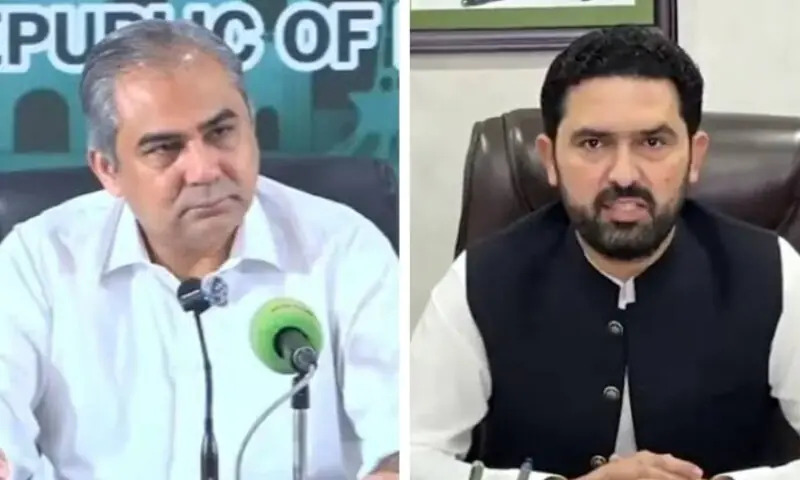
Interior Minister Mohsin Naqvi claims the Khyber Pakhtunkhwa government reneged on critical counterterrorism commitments agreed upon during recent government-opposition negotiations.
The Core Development
In a sharp escalation of political and security tensions, Federal Interior Minister Mohsin Naqvi publicly accused the Khyber Pakhtunkhwa (KP) provincial administration of backtracking on critical counterterrorism commitments negotiated over the weekend. According to statements released by the minister on social media platform X, the provincial government, aligned with the Pakistan Tehreek-e-Insaf (PTI), had initially agreed to formalize a comprehensive written agreement and submit an operational implementation plan within a strict 72-hour window.
The core of the weekend negotiations centered on establishing a unified national stance against escalating militancy in the region. Naqvi outlined that the provincial leadership had ostensibly committed to several stringent measures. These included reconsidering the controversial Police Act 2026 to insulate security apparatuses from partisan political interference, implementing robust protocols to prevent militants from establishing safe havens, and issuing an unequivocal condemnation of the banned Tehreek-i-Taliban Pakistan (TTP) alongside other militant outfits. Furthermore, the discussions reportedly yielded consensus on supporting the national framework regarding Afghan refugees—specifically focusing on phased repatriation and the dismantling of unauthorized camps within KP—and halting independent diplomatic or administrative engagements with the interim Afghan government.
However, the sudden reversal by the provincial administration has dealt a severe blow to collaborative security policymaking, leaving federal and provincial authorities at an impasse.
Commercial & Economic Implications
Persistent security instability and political friction in Khyber Pakhtunkhwa carry direct, deleterious consequences for commercial activity, wholesale distribution, and retail trade across Pakistan. KP serves as a vital trade corridor connecting the domestic market with Central Asian economies via key land routes. When governance disputes stall counterterrorism execution, logistical arteries face heightened risks of disruption, driving up freight insurance premiums, transportation delays, and operational costs for supply chain networks.
For local markets and consumers, prolonged security uncertainty directly fuels inflationary pressures. Unstable commercial environments deter both domestic and foreign direct investment, stifle regional manufacturing, and impede agricultural supply chains originating from the northwest. Small and medium-sized enterprises (SMEs) bear the brunt of this instability, facing squeezed profit margins and constrained consumer purchasing power as risk premiums ripple through the broader economy.
Related Intelligence: Bosnian Elections Test State Viability and Investor Confidence
Stakeholder Perspectives & Market Reactions
Business councils, trader associations, and industry bodies have expressed deep dismay over the ongoing political brinkmanship between federal authorities and the KP government. Commercial leaders argue that economic recovery remains inextricably linked to absolute security and political consensus. Industry representatives have issued joint appeals urging all political factions to prioritize national stability over partisan disputes, warning that investor confidence remains highly sensitive to security disruptions in vital frontier regions.
Legal and constitutional experts have likewise weighed in, noting that structural friction between federal mandates and provincial autonomy under the 18th Amendment frequently complicates law enforcement coordination. Analysts point out that without seamless cooperation between the federation and provincial law enforcement agencies, counterterrorism strategies will remain fractured and ineffective.
Forward Outlook & Key Watchpoints
As the political standoff persists, market watchers and policymakers will closely monitor several key indicators over the coming weeks. The primary watchpoint is whether federal and provincial interlocutors can salvage any framework for dialogue or if security administration will default entirely to federal intervention. Stakeholders will also track developments regarding the enforcement of the Police Act 2026, Afghan refugee repatriation timelines, and any shifts in federal funding allocations for provincial counterterrorism operations. Ultimately, restoring institutional trust is essential for safeguarding Pakistan's macroeconomic stability and ensuring uninterrupted commercial corridors.
Join Our Official WhatsApp Channel
Receive live commodity alerts, policy changes, and commercial intelligence directly on WhatsApp.