
Federal-Opposition Talks Collapse as PTI Marches on Capital
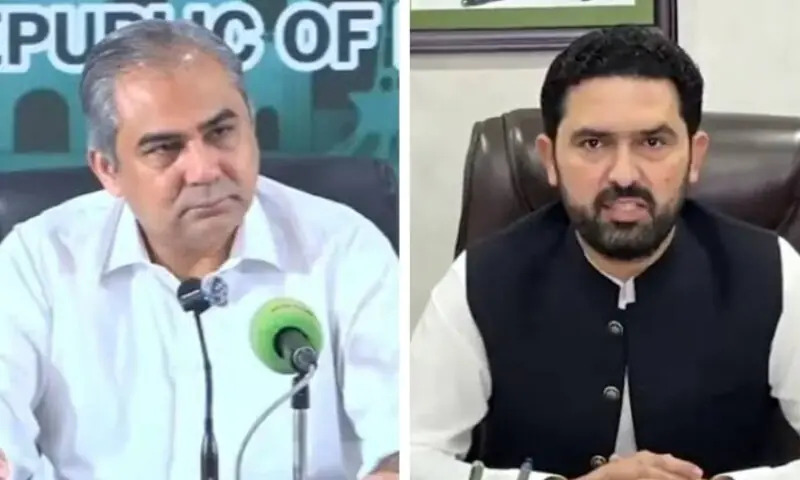
Interior Minister Mohsin Naqvi declared negotiations with the opposition collapsed following PTI's long march, accusing Khyber Pakhtunkhwa Chief Minister Sohail Afridi of sabotaging talks amidst strict Islamabad High Court warnings.
The Core Development
The political landscape of Pakistan deteriorated sharply on Sunday as Interior Minister Mohsin Naqvi officially announced the complete collapse of high-stakes negotiations between the federal government and the Pakistan Tehreek-e-Insaf (PTI) opposition. Speaking at an emergency press conference in Islamabad, Naqvi stated that the diplomatic track had broken down entirely after the opposition launched its long march toward the federal capital. The announcement followed an intense second round of bilateral talks that spanned several hours but failed to produce any meaningful consensus.
At the center of the government's frustration is Khyber Pakhtunkhwa Chief Minister Sohail Afridi, whom Naqvi accused of actively undermining the peace process. According to federal officials, provincial administrative machinery under Afridi's purview was leveraged to facilitate the mobilization of protesters, directly contradicting the spirit of the ongoing dialogue. The breakdown coincides with heightened legal sensitivities surrounding the Islamabad High Court (IHC) order issued on September 14. The court explicitly ruled that no political entity possesses the lawful authority to paralyze public mobility by occupying thoroughfares, highways, interchanges, and toll plazas within the capital territory.
Commercial & Economic Implications
For Kalyar Traders and the broader business community across Pakistan, political instability of this magnitude inflicts immediate and severe collateral damage on commercial activity. Protracted political confrontations and threatened blockades in Islamabad invariably paralyze major supply chain corridors connecting Punjab and Khyber Pakhtunkhwa with key port facilities in Karachi. Wholesale distribution networks face immediate disruptions as transport operators reroute shipments or suspend operations entirely to avoid vehicle vandalism and highway closures.
Retail markets in major urban centers are already registering bearish sentiments. Consumer price volatility is exacerbated by panic-buying and artificial supply shortages triggered by logistical bottlenecks. Furthermore, persistent political uncertainty undermines investor confidence at a time when Pakistan's fragile economic stabilization program requires absolute predictability. Small and medium enterprises, which form the backbone of domestic trade, bear the brunt of reduced foot traffic, declining consumer purchasing power, and escalating security-related operational overheads.
Related Intelligence: Federal-Opposition Talks Collapse as KP Chief Minister Blamed for Sabotage
Stakeholder Perspectives & Market Reactions
Trade bodies, chambers of commerce, and legal experts have expressed deep dismay over the latest political deadlock. Representatives from major merchant associations have issued joint appeals urging both the federal administration and opposition leadership to prioritize economic continuity over partisan posturing. Business leaders emphasize that recurring street agitation disrupts debt servicing, halts industrial output, and severely damages Pakistan's export credentials in international markets.
From a legal standpoint, constitutional experts note that while the Islamabad High Court has drawn a firm red line regarding the occupation of public infrastructure, the enforcement mechanism remains fraught with political friction. Opposition representatives maintain that peaceful assembly is a fundamental democratic right, arguing that administrative restrictions infringe upon civil liberties. Meanwhile, federal authorities have reiterated that law enforcement agencies will execute the IHC directives without exception, raising concerns over potential clashes that could further destabilize urban commercial centers.
Forward Outlook & Key Watchpoints
As the situation on the ground remains highly volatile, stakeholders across the financial and industrial sectors are closely monitoring several critical indicators over the coming days. The primary focus centers on the enforcement of the Islamabad High Court order and the government's operational strategy to maintain law and order along critical national highways.
Key watchpoints for the business community include the duration and trajectory of the PTI march, potential deployment of civil-military security apparatus in the capital, and any emergency measures enacted by the State Bank of Pakistan or Ministry of Finance to stabilize currency and equity markets against speculative panic. Unless a renewed backchannel compromise is established, commercial friction and logistics delays are expected to persist, keeping market volatility elevated through the end of the fiscal quarter.
Join Our Official WhatsApp Channel
Receive live commodity alerts, policy changes, and commercial intelligence directly on WhatsApp.