
KP Governor Kundi Chairs First Advisory Council Meeting Under Emergency Rule
Khyber Pakhtunkhwa Governor Faisal Karim Kundi has chaired the inaugural meeting of the newly established KP Advisory Council following the federal imposition of governor rule.
The Core Development
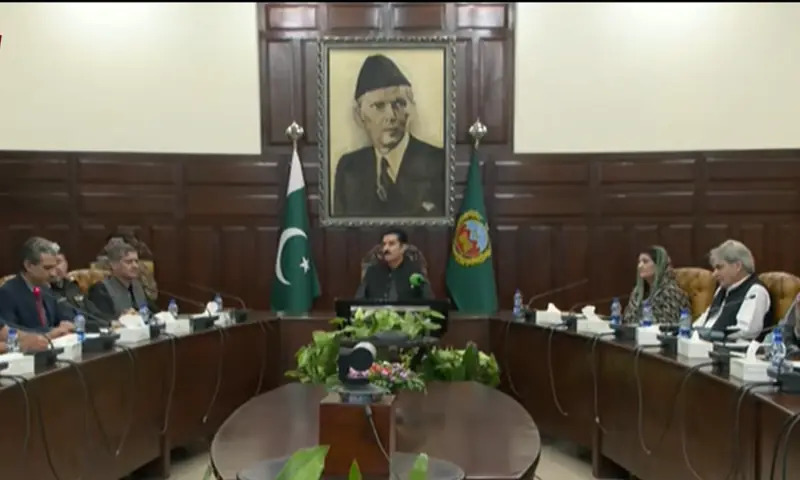
Khyber Pakhtunkhwa Governor Faisal Karim Kundi on Sunday officially chaired the inaugural meeting of the newly formed KP Advisory Council, a critical administrative body established by the federal government following the formal imposition of an emergency and governor's rule in the province. The high-stakes meeting, held at the Governor House, marked the operational commencement of the temporary governance structure designed to steer the province through a period of acute political and constitutional uncertainty. At the very outset of the proceedings, all appointed members of the advisory council formally introduced themselves and detailed their respective ministerial and departmental portfolios.
Addressing the assembled council members, Governor Kundi extended formal felicitations while striking a somber and pragmatic tone regarding the gravity of the current situation. He emphasized that the newly minted leadership team would inevitably face a multitude of complex administrative, security, and economic challenges. The imposition of emergency rule, sanctioned by the federal cabinet and approved by the presidency, has fundamentally altered the political landscape of Khyber Pakhtunkhwa, transferring executive authority to the governor and his advisory council in a bid to restore administrative writ and continuity.
Commercial & Economic Implications
The political shift and the imposition of emergency rule in Khyber Pakhtunkhwa carry profound ramifications for commercial activity, wholesale distribution, and retail trade across northwestern Pakistan. KP serves as a vital trade corridor connecting the Pakistani interior with Afghanistan and Central Asian markets via key trade routes such as Torkham. Prolonged political instability directly threatens cross-border trade volumes, customs revenues, and the seamless movement of essential commodities.
For local markets, supply chain disruptions can rapidly translate into inflationary pressures, driving up prices for daily consumables, construction materials, and imported goods. Retailers and wholesale distributors in Peshawar and surrounding commercial hubs have expressed apprehension regarding potential disruptions in commercial transport and law-and-order stability. The advisory council faces the immediate burden of ensuring that fiscal discipline is maintained, provincial development expenditures are rationalized, and essential public-sector supply chains remain uninterrupted to shield ordinary consumers from compounding economic shocks.
Related Intelligence: Federal Government Imposes Emergency in Khyber Pakhtunkhwa Citing Security Breakdown
Stakeholder Perspectives & Market Reactions
Reaction from trade associations, industry bodies, and legal circles has been markedly divided as stakeholders digest the sweeping implications of federal intervention. Representatives from various chambers of commerce and industry in the province have cautiously welcomed the prospect of administrative stability, stressing that uninterrupted business operations and investor confidence must remain top priorities for the newly installed advisory council.
Conversely, legal experts and political stakeholders have raised questions concerning the constitutional longevity and democratic legitimacy of governor's rule, warning of potential friction between federal directives and provincial administrative organs. Business leaders, however, remain pragmatic, prioritizing economic predictability over political friction. They are urging the Kundi-led council to immediately engage with private sector stakeholders to address taxation grievances, reduce regulatory red tape, and secure commercial arteries against disruptions.
Forward Outlook & Key Watchpoints
As the KP Advisory Council settles into its operational mandate, market observers and political analysts are closely monitoring several critical benchmarks. Chief among these is the council's ability to swiftly formulate a functional provincial budget, disburse development funds transparently, and manage public sector expenditures under federal oversight.
Key watchpoints for the coming weeks include policy announcements regarding regional taxation, energy tariffs, and measures to stimulate private investment in economically depressed districts. Furthermore, the effectiveness of the administration in maintaining law and order along major trade corridors will serve as a definitive litmus test for the success of governor's rule. Stakeholders will be watching to see whether this administrative intervention paves the way for sustainable economic recovery or merely manages immediate political fallout.
Join Our Official WhatsApp Channel
Receive live commodity alerts, policy changes, and commercial intelligence directly on WhatsApp.