
State of Emergency and Governor Rule Declared in Khyber Pakhtunkhwa
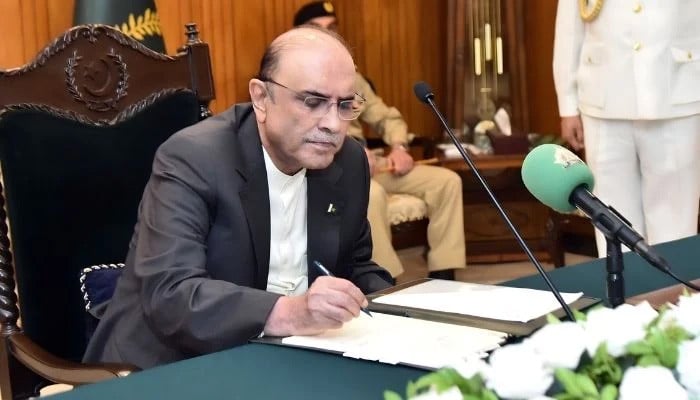
President Asif Ali Zardari has approved the imposition of a state of emergency and governor rule in Khyber Pakhtunkhwa, raising critical governance and economic concerns.
The Core Development
In a decisive constitutional maneuver that underscores escalating political friction, President Asif Ali Zardari has formally approved a summary on the federal cabinet's advice, imposing a state of emergency and governor rule in Khyber Pakhtunkhwa. The proclamation, executed under the provisions of the Constitution of Pakistan, effectively suspends the provincial cabinet and transfers executive authority directly to the federally appointed governor. This high-stakes administrative shift follows weeks of growing tensions between federal authorities and the provincial administration, culminating in a breakdown of governance mechanisms within the region. Key administrative offices in Peshawar have been placed under direct federal oversight, with federal law enforcement agencies stepping up security protocols across major urban centers and strategic transit arteries.
Commercial & Economic Implications
The abrupt imposition of emergency rule introduces profound volatility into the regional economy of northwestern Pakistan. Khyber Pakhtunkhwa serves as a vital commercial nexus, particularly for bilateral trade with Afghanistan through the Torkham border crossing. Wholesale distribution networks, import-export houses, and retail trade syndicates immediately face operational uncertainty. Supply chains handling perishable foodstuffs, construction materials, and manufactured goods are bracing for potential logistical bottlenecks due to heightened security checks and prospective movement restrictions. Furthermore, regional inflation, already burdened by national macroeconomic pressures, risks further escalation if supply routes experience prolonged disruptions or if commercial confidence wanes amidst political unpredictability.
Related Intelligence: Federal Government Imposes Emergency in Khyber Pakhtunkhwa Citing Security Failures
Stakeholder Perspectives & Market Reactions
Business councils, chambers of commerce, and trader associations across Peshawar and surrounding industrial zones have voiced deep anxiety regarding the stability of commercial operations. Representatives from the Sarhad Chamber of Commerce and Industry noted that the suspension of the elected provincial apparatus threatens ongoing tax relief initiatives and development projects vital for local SMEs. Legal experts remain divided on the long-term constitutional implications, with corporate counsels warning that prolonged administrative centralization could deter foreign and domestic private investment within the province. Public response remains tense, with civil society organizations calling for restraint and the preservation of uninterrupted commercial activity to protect vulnerable wage earners.
Forward Outlook & Key Watchpoints
As the province navigates this unprecedented administrative paradigm, market participants and economic analysts are closely monitoring several critical indicators. Foremost among these are the operational continuity of major trade terminals, the posture of federal financial institutions toward provincial development allocations, and the prospective timeline for restoring civilian administration. Business leaders urge federal policymakers to establish immediate liaison channels with the local merchant community to guarantee unhindered supply chain flows. The ultimate stabilization of consumer prices and retail trade depends heavily on how swiftly administrative clarity is achieved under the newly instituted governor rule framework.
Join Our Official WhatsApp Channel
Receive live commodity alerts, policy changes, and commercial intelligence directly on WhatsApp.