
Federal Government Imposes Emergency in Khyber Pakhtunkhwa Citing Security Breakdown
The federal government has imposed a state of emergency in Khyber Pakhtunkhwa, citing severe security lapses and alleging a political nexus with terrorist factions.
The Core Development
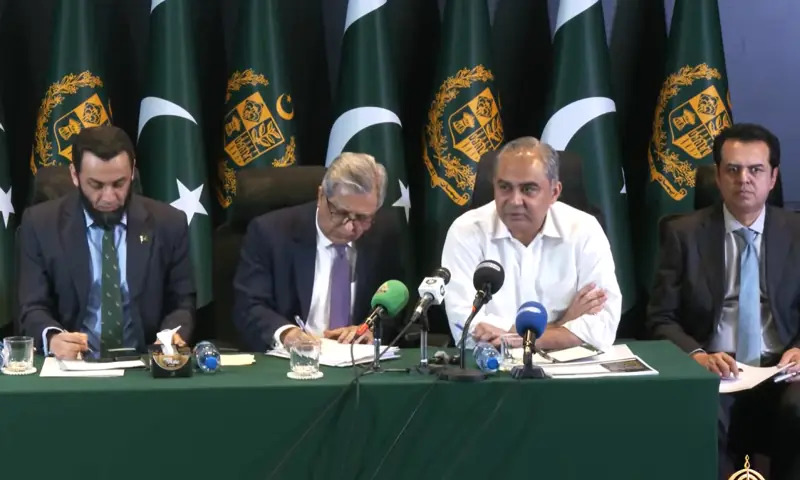
The federal government officially announced the imposition of a state of emergency and governor's rule in Khyber Pakhtunkhwa, escalating an already tense political standoff between Islamabad and the Pakistan Tehreek-e-Insaf (PTI) provincial administration. The decision followed a joint high-level press conference featuring Federal Information Minister Attaullah Tarar, Interior Minister Mohsin Naqvi, Law Minister Azam Nazeer Tarar, and Minister of State for Interior Tallal Chaudhry.
During the briefing, federal ministers defended the drastic constitutional measure, arguing that the provincial government's persistent failure to mount an effective counterterrorism strategy necessitated direct federal intervention. Information Minister Tarar went a step further, alleging an explicit nexus between elements within the PTI-led KP government and militant groups operating in the region. The escalation comes on the heels of protracteddeadlocks between the Centre and the opposition party over national security policy, institutional reforms, and the administration of critical border regions.
Commercial & Economic Implications
For Kalyar Traders and the broader business community across Pakistan, the political instability and imposition of emergency rule in a vital frontier province carry profound economic repercussions. Khyber Pakhtunkhwa serves as a critical trade corridor for commerce with Central Asia, housing major commercial hubs and transit routes that are indispensable for wholesale distribution and retail supply chains.
Prolonged security lockdowns, potential curfews, and administrative uncertainty threaten to paralyze commercial transit through the Torkham border and surrounding trading posts. Such disruptions invariably translate into constricted supply chains, delayed freight movements, and upward pressure on wholesale commodity prices. Furthermore, heightened political risk tends to dampen investor confidence, exacerbating inflationary pressures at a time when domestic markets are striving to stabilize following stringent macroeconomic adjustments.
Related Intelligence: India Student Crackdown Risks Domestic Instability and Trade Fallout
Stakeholder Perspectives & Market Reactions
Business councils, trader associations, and legal experts have voiced cautious concern over the constitutional and commercial fallout of the emergency declaration. Representatives from major wholesale markets note that sudden governance shifts invariably generate operational friction, creating bottlenecks in inter-provincial trade and increasing the cost of doing business.
Legal analysts point out that governor's rule introduces complex jurisdictional questions, particularly regarding the execution of commercial contracts, local tax collections, and regulatory enforcement within the province. Meanwhile, opposition leaders have condemned the measure as an unconstitutional assault on provincial autonomy, vowing legal challenges across higher judicial forums. Conversely, business federations have urged all political stakeholders to prioritize economic stability, warning that protracted civil unrest will severely undermine consumer demand and industrial output.
Forward Outlook & Key Watchpoints
As the emergency takes effect, institutional actors and market watchers are monitoring several critical indicators to gauge the trajectory of the crisis. Key watchpoints include the duration of federal oversight, the response of provincial bureaucracy and law enforcement agencies, and potential judicial interventions regarding the legality of the governor's rule.
For the commercial sector, the immediate priority remains the unhindered flow of goods along major logistical corridors. Kalyar Traders will closely track trade volume metrics at the KP borders and monitor any shifts in inter-provincial tariff enforcement or security protocols that could impact wholesale pricing structures and distribution networks in the weeks ahead.
Join Our Official WhatsApp Channel
Receive live commodity alerts, policy changes, and commercial intelligence directly on WhatsApp.