
Kohat Police Lines Attack Neutralized as Forces Eliminate Eight Militants
Security forces neutralized eight militants in a targeted clearance operation at Kohat Police Lines, stabilizing the strategic Khyber Pakhtunkhwa transit hub while commercial supply chains along the Indus Highway brace for heightened security checks.
The Core Development
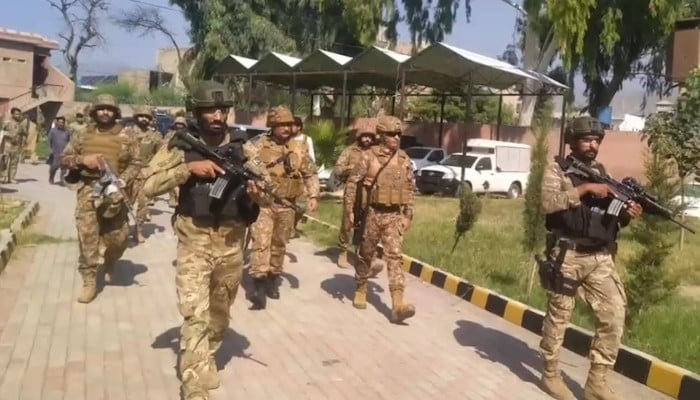
In a decisive counter-terrorism engagement, Pakistani security forces successfully concluded an intensive tactical clearance operation at the Police Lines complex in Kohat, Khyber Pakhtunkhwa, neutralizing eight heavily armed militants. The operation commenced after an armed insurgent cadre attempted a coordinated breach of the high-security perimeter of the facility, which houses key administrative headquarters, armories, and residential barracks for law enforcement personnel.
According to operational briefs from the Khyber Pakhtunkhwa Police and Counter-Terrorism Department (CTD), the assailants were equipped with automatic assault weapons, suicide vests, and hand grenades. Specialized tactical units, supported by paramilitary elements, rapidly established a fortified perimeter, cutting off potential escape routes and containing the attackers within an isolated compound sector. Systematic clearance maneuvers eliminated all hostile combatants, averting large-scale casualties within the strategic police establishment. Post-operation sanitization and forensic sweeps were immediately initiated to identify the logistical network and command structure behind the assault.
Commercial & Economic Implications
Beyond the immediate tactical outcome, the incident carries significant operational ramifications for regional commerce, transit logistics, and wholesale distribution networks. Kohat functions as an indispensable transit corridor connecting Peshawar, the provincial capital, with the southern districts of Khyber Pakhtunkhwa—including Karak, Bannu, Lakki Marwat, and Dera Ismail Khan—via the arterial Indus Highway (N-55).
For enterprise supply networks, including commercial distributors and fast-moving consumer goods (FMCG) traders such as Kalyar Traders, security disruptions along this arterial corridor introduce operational friction. Checkpoints, convoy inspections, and dynamic transit controls inevitably compress transport velocity. Freight carriers face extended turnaround times and localized delays, which exert upward pressure on secondary transport tariffs and transit insurance risk premiums. Furthermore, wholesale agricultural and manufactured goods moving between southern Khyber Pakhtunkhwa and Punjab face intermittent bottleneck risks, testing the resilience of inventory buffers among regional distributors and retail outlets.
Related Intelligence: Kohat Police Lines Clearance Ends with Eight Terrorists Neutralized
Stakeholder Perspectives & Market Reactions
Regional commercial stakeholders have responded with measured caution, coupled with urgent appeals for sustained corridor security. Representatives from regional trade bodies and logistics syndicates, including affiliates of the Sarhad Chamber of Commerce and Industry (SCCI), highlighted that while security forces demonstrated swift operational efficacy, recurring security threats along transport axes undermine commercial confidence and deter private capital expenditure.
Transport unions have urged the provincial administration and the National Highway and Motorway Police to deploy hardened mobile patrols along vulnerable sectors of the N-55 to prevent logistics paralysis. Concurrently, provincial authorities have reaffirmed their commitment to operational deterrence, stressing that counter-terrorism protocols are being synchronized with trade facilitation mandates to prevent prolonged economic disruption across urban trading centers.
Forward Outlook & Key Watchpoints
In the operational aftermath, law enforcement agencies across Khyber Pakhtunkhwa are anticipated to maintain elevated security alerts across municipal police lines, state infrastructure, and inter-district transit nodes. Commercial operators must account for intensified cargo documentation reviews and vehicle scanning protocols, particularly during nocturnal transport windows along southern transit routes.
Key watchpoints in the near term include whether the provincial government will deploy supplementary security contingents to the Indus Highway corridor to guarantee unhindered commercial logistics. Additionally, supply chain managers must closely monitor replenishment velocity, regional distribution stock levels, and freight transit timelines to mitigate potential retail price volatility across vulnerable peripheral markets.
Join Our Official WhatsApp Channel
Receive live commodity alerts, policy changes, and commercial intelligence directly on WhatsApp.