
Security Forces Neutralise 11 Militants in Strategic Balochistan Counter-Terror Operations
Pakistan security forces neutralized 11 terrorists during targeted operations across Panjgur and Chagai districts under Operation Raddul Fitna 3, stabilizing vital commercial logistics routes and strategic mineral corridors in Balochistan.
The Core Development
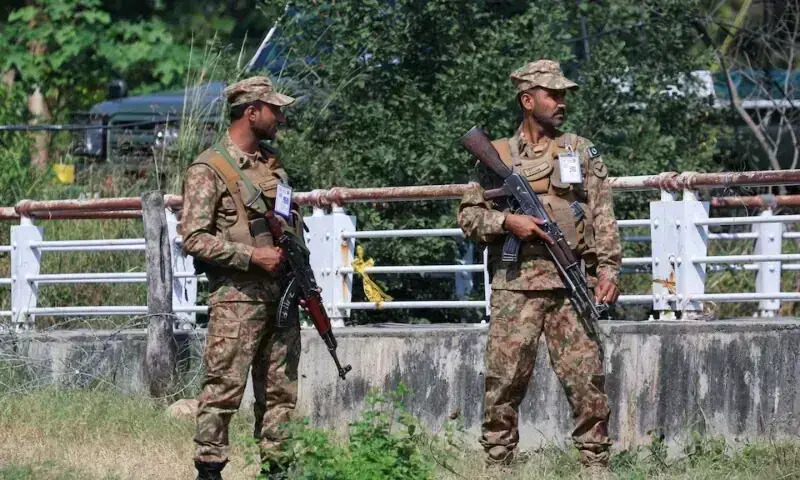
In a synchronized intelligence-based counter-terrorism campaign, Pakistani security forces neutralized 11 terrorists in separate tactical engagements across the Panjgur and Chagai districts of Balochistan. The localized offensives were executed under the broader mandate of Operation Raddul Fitna 3, a strategic initiative designed to systematically dismantle asymmetric threat networks targeting state personnel, national infrastructure, and commercial connectivity in the province.
According to operational details released by state authorities, five militants were eliminated in the Gowargo sector of Panjgur district following an intense exchange of fire. Ground troops subsequently retrieved an extensive cache of military-grade weapons, tactical equipment, and ammunition abandoned by the hostile elements. Concurrently, security formations carried out targeted maneuvers in the Aminabad and Siah Chang areas of Chagai district, neutralizing six armed insurgents and seizing significant stockpiles of explosives, detonators, and automatic firearms. Both operational theaters represent critical peripheral junctions where non-state armed groups have historically attempted to establish logistical sanctuaries and interdict overland vehicular movement.
Commercial & Economic Implications
The tactical success in Panjgur and Chagai carries direct economic consequences for Balochistan and the broader national supply chain. Chagai serves as the focal point of Pakistan's strategic mineral economy, housing monumental assets including the multi-billion-dollar Reko Diq copper-gold project and the operational Saindak mining venture. Disruptions or security vacuums in this district elevate project insurance rates, disrupt heavy-machinery transport, and jeopardize foreign capital mobilization essential for national balance-of-payments stability.
Furthermore, Chagai anchors the N-40 National Highway, the primary overland trade conduit linking Quetta to the Taftan border crossing with Iran. Periodic unrest along this corridor inflates road freight tariffs, forces logistics operators to incorporate security risk premiums, and delays the transit of vital commercial consignments, including imported liquefied petroleum gas, industrial chemicals, and petrochemicals. In Panjgur, which links the Makran coastal logistics framework to the interior via the M-8 motorway, securing trade arteries is critical for stabilizing local wholesale markets, agricultural distribution—most notably the regional date-farming sector—and formal retail distribution. Decisive kinetic actions reduce supply chain vulnerability, curbing illicit trafficking rings while reinforcing the viability of formal domestic trade corridors.
Related Intelligence: Kohat Clearance Operation Ends as Security Forces Neutralize Eight Militants
Stakeholder Perspectives & Market Reactions
Commercial stakeholders and trade bodies across Balochistan have responded to the security developments with measured optimism. Representatives from regional transport associations and the Quetta Chamber of Commerce and Industry have consistently underscored that the safety of cargo convoys along western transit arteries remains paramount for preserving trade margins. Supply chain operators note that persistent militant threats along border highways have historically led to freight haulage surcharges of up to 15 to 20 percent, costs that are ultimately passed down to domestic consumers through higher retail prices.
Institutional investors and corporate consortiums engaged in regional resource extraction view sustained clearance operations as an indispensable prerequisite for maintaining their capital deployment timelines. Security analysts emphasize that while tactical successes effectively degrade active militant capabilities in the short term, corporate enterprise requires permanent area-domination frameworks to guarantee uninterrupted freight movement and protect multinational engineering personnel operating across isolated extraction sites.
Forward Outlook & Key Watchpoints
In the aftermath of the Panjgur and Chagai operations, state authorities are projected to intensify kinetic sweeps under Operation Raddul Fitna 3 to forestall retaliatory asymmetric strikes. Corporate actors, logistics firms, and market analysts must track several forward-looking indicators over the coming quarters. Chief among these is the continuity and security clearance throughput along the N-40 and M-8 transport axes, alongside the operational pacing of early-stage infrastructural works at the Reko Diq site.
Additionally, market watchers should monitor border freight volumes clearing the Taftan dry port facility, as enhanced territorial control typically translates into accelerated customs inspections and reduced vehicular turnaround times. Moving forward, the key benchmark of success will be whether security operations successfully suppress transit risk to a degree that compresses commercial logistics overheads, stabilizes wholesale commodity flows, and restores private investor confidence across Pakistan's western commercial corridors.
Join Our Official WhatsApp Channel
Receive live commodity alerts, policy changes, and commercial intelligence directly on WhatsApp.