
Makeshift Gaza Classrooms Highlight Generational Crisis and Regional Reconstruction Bottlenecks
As Gaza children return to makeshift tent classrooms amid ruined infrastructure, the compounding educational deficit highlights stalled post-war governance talks, multi-billion-dollar reconstruction challenges, and enduring volatility across Middle Eastern commercial corridors.
Geopolitical & Core Developments
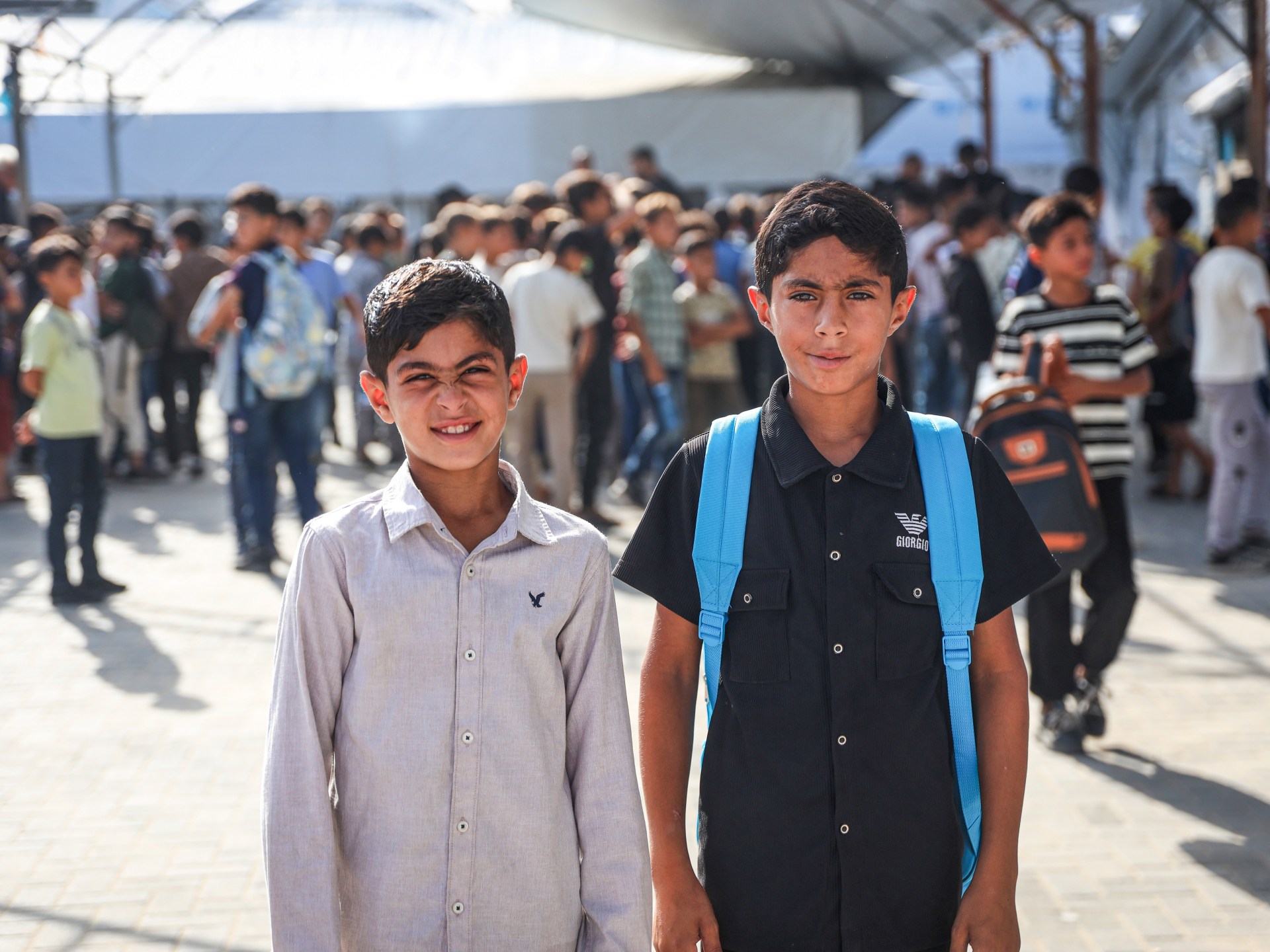
More than six hundred thousand school-aged children across the Gaza Strip have faced severe disruption to formal education following months of relentless warfare and widespread devastation of civil infrastructure. United Nations relief agencies report that over 85 percent of Gaza's educational facilities have sustained direct hits, significant structural damage, or total destruction. The emergence of makeshift open-air and tented classrooms in displacement hubs such as al-Mawasi, Deir al-Balah, and Khan Younis reflects an urgent community-led effort to stem total societal collapse. However, these fragile educational initiatives operate under extreme scarcity, lacking desks, textbooks, sanitation, and electricity.
The human capital crisis is inextricably tied to the broader geopolitical deadlock. Negotiations involving Israel, Hamas, the United States, Egypt, and Qatar have repeatedly stalled over terms concerning permanent ceasefire guarantees, troop withdrawals, and post-war governance frameworks. In the absence of an agreed administrative transition, local municipal services and educational systems remain virtually paralyzed. The systematic erosion of Gaza's foundational institutions poses a generational security threat, fostering an environment of acute disenfranchisement that analysts warn will destabilize the Levant for decades.
Global Trade & Economic Ripples
While tent classrooms represent an immediate humanitarian emergency, the underlying conflict continues to reverberate across international commerce and macroeconomic structures. Reconstruction estimates compiled by the World Bank, the United Nations, and the European Union exceed 50 billion dollars, requiring unprecedented future imports of structural steel, cement, heavy machinery, and electrical grid components. Until security frameworks permit organized reconstruction, commercial access via the Kerem Shalom and Rafah crossings remains heavily restricted, impeding both aid flows and prospective commercial stabilization.
Beyond the enclave's borders, the Gaza conflict remains the primary catalyst for commercial maritime disruptions in the Red Sea and Gulf of Aden. Persistent Houthi drone and missile strikes have forced global shipping conglomerates to divert container vessels around the Cape of Good Hope. This detour adds 10 to 14 transit days between Asia and Europe, soaking up global shipping capacity, inflating container freight rates, and driving up bunker fuel consumption. Concurrently, heightened regional security volatility preserves an elevated geopolitical risk premium across Brent crude benchmarks and European natural gas contracts, compounding global inflationary pressures.
Related Intelligence: Information Warfare and Digital Erasure Reshape Geopolitical Power Dynamics
International Reactions & Diplomatic Stances
Multilateral bodies have expressed alarm over the long-term ramifications of prolonged educational disruption. The United Nations Relief and Works Agency for Palestine Refugees (UNRWA) and UNICEF have jointly warned of a 'lost generation' susceptible to severe trauma and radicalization if structured learning is not swiftly restored. UN Secretary-General Antonio Guterres has repeatedly stressed that civilian infrastructure, including schools and medical centers, must be shielded under international humanitarian law.
Diplomatic positioning among key global powers remains divided. Western capitals, led by Washington and Brussels, have reaffirmed the necessity of humanitarian access and education restoration while insisting on rigorous oversight mechanisms to prevent resources from diverting to militant groups. In contrast, Arab League members and the Gulf Cooperation Council (GCC)—specifically Saudi Arabia, the United Arab Emirates, and Qatar—have maintained that multi-billion-dollar reconstruction commitments cannot materialize without a binding, internationally recognized roadmap toward an independent Palestinian state and enduring political stability.
Strategic Outlook & Future Scenarios
Looking forward, three primary trajectories dominate the geopolitical horizon. Under a prolonged low-intensity attrition scenario, Gaza's social infrastructure will remain in functional paralysis, driving sustained humanitarian migration pressures toward regional neighbors and prolonging high marine insurance rates in adjacent shipping corridors.
Alternatively, an internationally supervised governance model—potentially coordinated through an interim Arab-backed or United Nations administrative mission—could unlock early-stage stabilization funding for prefabricated schools and water infrastructure. This pathway would lay the groundwork for major logistics and commodity contracts tied to regional reconstruction. Conversely, an escalation encompassing northern regional frontiers would further threaten Mediterranean energy assets and intensify trade fragmentation across the Middle East. Upcoming multilateral gatherings will indicate whether the international community can formulate a coordinated strategy to salvage Gaza's civil future before systemic collapse becomes irreversible.
Join Our Official WhatsApp Channel
Receive live commodity alerts, policy changes, and commercial intelligence directly on WhatsApp.