
Kohat Police Lines Clearance Ends with Eight Terrorists Neutralized
Security forces concluded a 21-hour clearance operation at Kohat Police Lines, neutralizing eight terrorists. The engagement highlights rising operational challenges and transit frictions along Khyber Pakhtunkhwa's key commercial logistics routes.
The Core Development
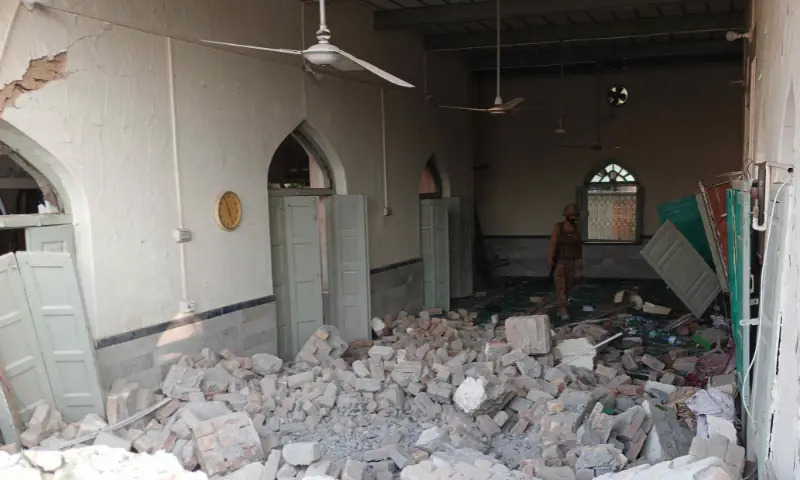
A high-intensity, 21-hour counter-terrorism clearance operation at the Old Police Lines in Khyber Pakhtunkhwa's Kohat district concluded on Saturday, resulting in the elimination of eight heavily armed terrorists. The confrontation began following a coordinated, two-pronged assault launched near an adjacent mosque, triggering an immediate and robust containment response from law enforcement. Elite Force commandos, Counter Terrorism Department (CTD) personnel, and paramilitary security forces rapidly cordoned off the facility, initiating systematic room-by-room clearance maneuvers across administrative structures.
According to an official handout issued by the Khyber Pakhtunkhwa Police, all eight assailants were neutralized during fierce exchanges of gunfire. Security forces subsequently declared key sections of the complex sanitized after bomb disposal units neutralized booby traps and ordnance. The operation effectively thwarted a protracted hostage or siege scenario within the municipal security installation. Law enforcement recovered an extensive cache of automatic weapons, ammunition, and explosive devices from the neutralized attackers, averting potential collateral devastation in surrounding civilian areas.
Commercial & Economic Implications
Kohat represents a critical strategic node within Pakistan's northern freight matrix, acting as the primary logistical artery connecting Peshawar with southern administrative centers including Karak, Bannu, Lakki Marwat, and Dera Ismail Khan via the National Highway 55 (Indus Highway). The 21-hour security lockdown and adjacent cordons caused immediate downstream bottlenecks for heavy commercial freight, temporarily idling fleet movements through the Kohat Tunnel corridor. For wholesale distribution networks handling fast-moving consumer goods, grain commodities, and construction materials, unexpected transit halts translate directly into delivery delays and accrued demurrage.
Beyond immediate movement curbs, recurring security confrontations across Khyber Pakhtunkhwa impose structural frictions on commercial trade. Transport operators frequently incorporate elevated security risk premiums into haulage tariffs when traversing vulnerable inter-district arteries. For corporate manufacturers and wholesale traders, erratic logistics schedules require maintaining higher buffer inventories, tying up operational working capital. These compounded distribution expenses inevitably filter down to the consumer level, generating localized price volatility in retail markets across southern provincial districts.
Stakeholder Perspectives & Market Reactions
Regional trade organizations and merchant associations in Kohat and Peshawar commended the rapid and decisive tactical performance of the police forces but expressed mounting unease regarding commercial operating environments. Representatives from provincial chambers of commerce emphasized that seamless transit along major arterial highways is indispensable for sustaining industrial supply lines and retail distribution networks. Haulage unions voiced frustration over unscheduled route closures, noting that transit uncertainty exacerbates wear, fuel consumption, and scheduling defaults.
Corporate logistics directors and market analysts pointed out that chronic security vulnerabilities deter broader private sector capital commitments in the province. While established wholesale markets continue to operate, distributor risk aversion restricts formal credit extensions to regional retail partners. Economists also observed that municipal and provincial spending must increasingly prioritize operational security overhead and defensive infrastructure, which limits discretionary public capital expenditure for market modernization, warehousing infrastructure, and regional trade facilitation.
Forward Outlook & Key Watchpoints
Following the conclusion of kinetic operations, law enforcement agencies have placed security apparatuses on high alert across the division, establishing static checkpoints and mobile patrols along municipal boundaries and transit nodes. The Counter Terrorism Department and intelligence agencies are escalating intelligence-based operations to identify and dismantle ancillary logistical or facilitation networks operating within the region.
For commercial enterprises, logistics planners, and retail distributors, the primary operational focus will remain on the fluidity of freight passage through strategic transit chokepoints, particularly along the Indus Highway. Stakeholders must prepare for rigorous security inspections and intermittent cargo vetting protocols. Over the medium term, businesses operating across Khyber Pakhtunkhwa must build supply chain redundancy, utilizing flexible delivery scheduling and decentralized regional warehousing to mitigate future security-induced disruptions.
Join Our Official WhatsApp Channel
Receive live commodity alerts, policy changes, and commercial intelligence directly on WhatsApp.