
Khyber Pakhtunkhwa Governor's Rule: Technocratic Advisory Council Takes Reins
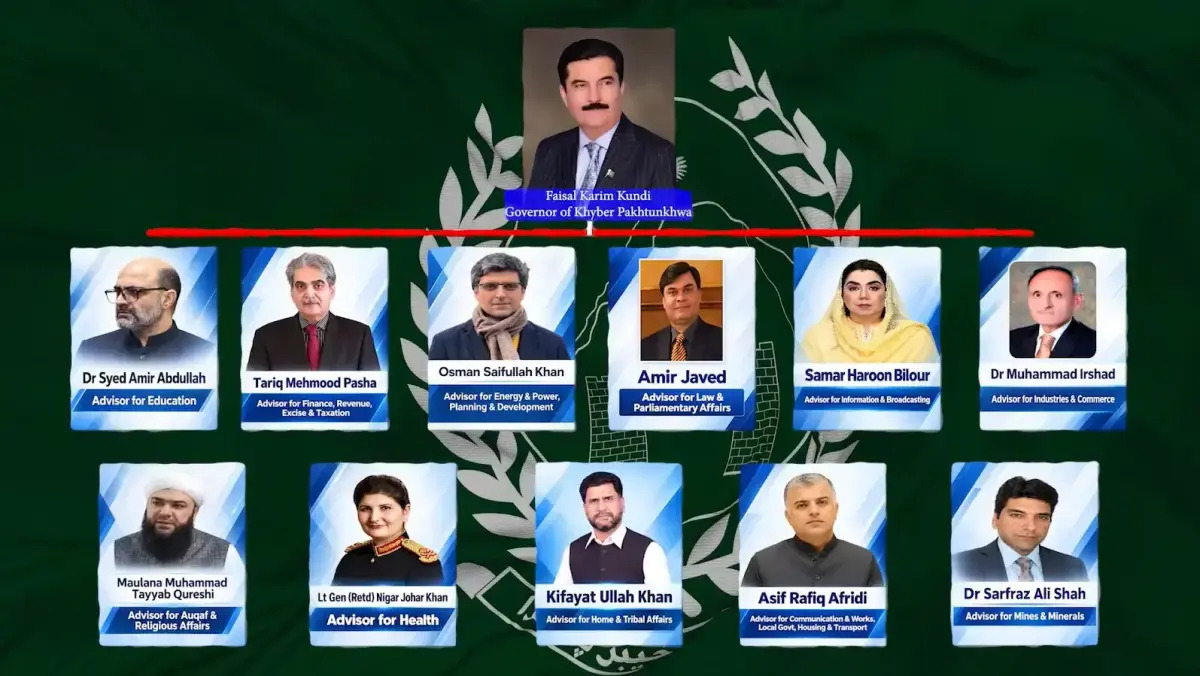
Following the imposition of governor's rule in Khyber Pakhtunkhwa, the federal government has installed an 11-member technocratic advisory council to administer provincial affairs.
The Core Development
Following the recent imposition of emergency and governor's rule in Khyber Pakhtunkhwa, the federal government has formally constituted an 11-member technocratic advisory council to steer the province through a period of administrative transition. The unprecedented move comes in the wake of the presidential approval of the cabinet's decision, stripping the ousted Pakistan Tehreek-e-Insaf (PTI) provincial administration of its executive authority. The newly established council is mandated to assist KP Governor Faisal Karim Kundi, who has assumed direct control of running the provincial machinery on behalf of the federal government.
According to federal authorities, including Information Minister Attaullah Tarar, the council is composed of highly competent professionals and specialists designed to restore administrative efficiency and financial discipline. Among the notable appointments is Kifayatullah Khan, who has been tasked with overseeing the critical provincial Home Department affairs, a position requiring acute crisis management and law enforcement coordination. The council operates under a centralized executive mandate, aiming to stabilize governance structures in a province that has experienced prolonged political turbulence and administrative paralysis.
Commercial & Economic Implications
For Kalyar Traders and the wider business community across Pakistan, the political shift in Khyber Pakhtunkhwa carries significant economic repercussions. KP serves as a vital commercial corridor for trade with Afghanistan and Central Asia, making administrative stability paramount for wholesale distribution, retail trade, and cross-border commerce. Prolonged political uncertainty often disrupts supply chains, induces inflationary pressures on essential commodities, and dampens investor confidence in regional markets.
The technocratic approach signaled by the federal government aims to curb fiscal leakages, streamline provincial revenue collection, and ensure uninterrupted market operations. Business leaders will closely monitor whether the new administration can stabilize consumer prices, manage local taxation frameworks without stifling small and medium enterprises, and secure trade routes against disruptions. The restoration of institutional predictability is viewed as a crucial prerequisite for mitigating supply chain bottlenecks that directly impact retail pricing and consumer purchasing power.
Related Intelligence: Khyber Pakhtunkhwa Emergency Threatens National Economic Stability and Trade
Stakeholder Perspectives & Market Reactions
Reaction to the formation of the advisory council has been sharply polarized along political and economic lines. Federal representatives have defended the intervention as a necessary constitutional step to rescue provincial governance from stagnation, emphasizing that technocratic oversight will accelerate public sector reforms and fiscal transparency. Conversely, ousted PTI leaders and sympathetic legal circles have condemned the governor's rule as an assault on provincial autonomy and democratic norms, raising constitutional questions regarding the centralization of power.
Meanwhile, trade bodies, chambers of commerce, and industrial associations have adopted a pragmatic, wait-and-see stance. Representatives from regional trade organizations stress that while political debates persist, the immediate priority for the business community remains economic continuity, security for commercial transport, and transparent regulatory enforcement. Legal experts continue to debate the long-term ramifications of federal interventions on Pakistan's federalist structure, even as markets adjust to the new administrative reality in Peshawar.
Forward Outlook & Key Watchpoints
As the 11-member council settles into its administrative duties, several critical milestones will determine the success of the governor's rule. Key watchpoints include the stabilization of law and order, the execution of the upcoming provincial budget under technocratic guidance, and the reopening of formal dialogue channels with local business stakeholders. Analysts will monitor whether the federal administration can deliver tangible improvements in service delivery and economic governance before political pressures mount for a return to elected democratic rule. The duration of the emergency measures and the potential timeline for fresh provincial elections remain pivotal variables for long-term economic planning in the region.
Join Our Official WhatsApp Channel
Receive live commodity alerts, policy changes, and commercial intelligence directly on WhatsApp.