
Riyadh Airport Attack Escalates Gulf Security Risks for Pakistani Trade
Fresh aerial attacks on Riyadh's international airport threaten regional stability, posing severe economic and supply chain risks for Pakistan's trade and energy sectors.
The Core Development
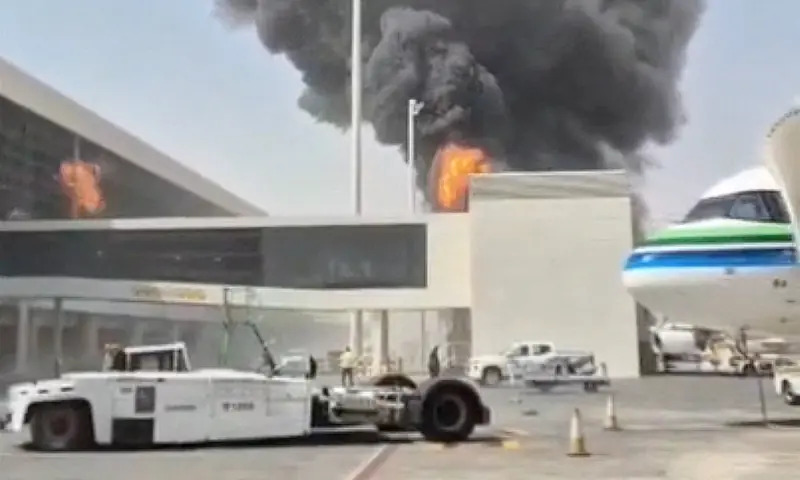
Geopolitical tensions in the Middle East escalated sharply following a fresh aerial assault targeting Riyadh's King Khalid International Airport on Sunday. According to statements released by the Saudi-led coalition forces operating in Yemen, an unidentified projectile struck Terminal 4 of the major aviation hub, sparking an immediate fire and mobilizing emergency response units to the scene. The incident follows closely on the heels of a separate lethal strike blamed on Houthi fighters just a day prior, which tragically claimed 12 lives.
Major General Turki al-Maliki, official spokesperson for the coalition, confirmed via social media platform X that coalition air defence systems successfully intercepted and destroyed an incoming cruise missile in the immediate airspace near the airport. The sequence of high-precision airborne attacks underscores a dangerous escalation in cross-border hostilities, raising immediate concerns regarding civilian infrastructure security, international aviation safety, and regional deterrence capabilities across the Arabian Peninsula.
Commercial & Economic Implications
For Pakistan, the deteriorating security situation in the Gulf carries profound macroeconomic repercussions. The Kingdom of Saudi Arabia serves as a cornerstone of Pakistan’s external economic stability, acting as both a primary source of vital petroleum imports and a principal destination for millions of Pakistani expatriate workers whose remittances sustain domestic consumption. Any sustained disruption to critical infrastructure such as Riyadh's international aviation hub threatens to ripple through international supply chains, elevate maritime and aviation insurance premiums, and introduce severe volatility into global energy markets.
An upward spiral in crude oil prices, driven by persistent geopolitical risk premiums in the Middle East, directly exacerbates Pakistan's balance of payments pressures. Higher energy import bills inevitably translate into elevated domestic fuel costs, intensifying inflationary pressures across the retail and wholesale distribution sectors. Furthermore, disruptions to commercial flight paths and cargo logistics between South Asia and the Gulf can delay perishable exports, increase freight forwarding costs, and strain the operational margins of Pakistani businesses dependent on Middle Eastern trade corridors.
Related Intelligence: Khyber Pakhtunkhwa Constitutional Crisis Threatens National Economic Stability
Stakeholder Perspectives & Market Reactions
Business councils, trade associations, and financial analysts in Pakistan are closely monitoring the unfolding security crisis in Riyadh with mounting apprehension. Industry bodies representing wholesale distributors and export houses have expressed deep concern over potential trade bottlenecks. The uninterrupted flow of goods and labor between Pakistan and Gulf Cooperation Council economies remains vital for domestic industrial output and foreign exchange reserves.
Legal and policy experts emphasize the vulnerability of Pakistan's trade framework to external geopolitical shocks, urging economic managers to diversify energy supply sources and expand bilateral trade agreements into resilient non-traditional markets. Meanwhile, financial markets have responded with cautious sentiment, pricing in potential currency volatility as foreign exchange dealers assess the broader implications of prolonged regional conflict on remittance inflows and macroeconomic stability.
Forward Outlook & Key Watchpoints
As regional diplomacy navigates this critical juncture, key stakeholders must watch several defining indicators in the coming weeks. Primary watchpoints include the frequency and sophistication of retaliatory security measures by the Saudi-led coalition, potential impacts on international flight schedules operating through Riyadh, and any official policy adjustments regarding regional energy export security.
For Pakistan's economic planners, maintaining strategic resilience requires strict monitoring of international crude price benchmarks and proactive engagement with Gulf partners to safeguard expatriate workforce security and trade channels. Policymakers must prepare contingency measures to absorb potential supply-side shocks and insulate domestic retail markets from imported inflation.
Join Our Official WhatsApp Channel
Receive live commodity alerts, policy changes, and commercial intelligence directly on WhatsApp.