
Khyber Pakhtunkhwa Emergency Threatens National Economic Stability and Trade
The imposition of emergency and governor's rule in Khyber Pakhtunkhwa has sparked intense political backlash and raised serious concerns among business and trade communities regarding supply chain continuity and regional market stability.
The Core Development
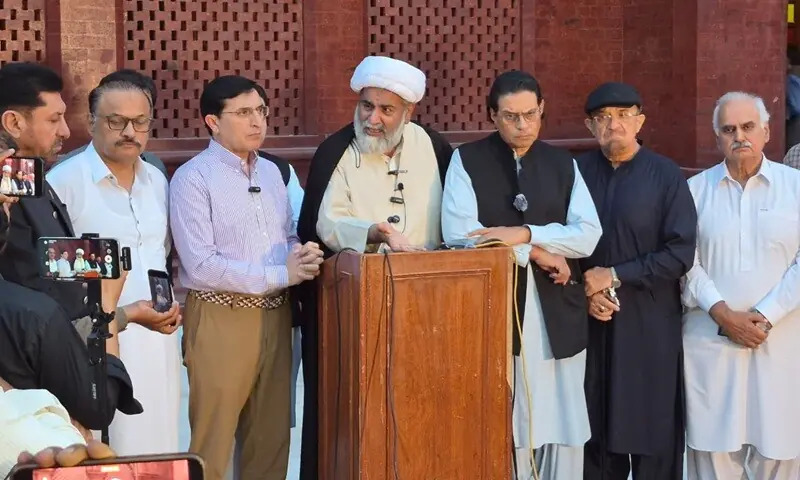
The political landscape of Pakistan faces a fresh wave of turbulence following the federal government's decision to impose governor's rule and a state of emergency in Khyber Pakhtunkhwa (KP). The move, greenlit by presidential approval of the federal cabinet's decision, has drawn fierce condemnation from the Tehreek-i-Tahafuz Ayin-i-Pakistan (TTAP) and the Pakistan Tehreek-i-Insaf (PTI). During a high-stakes press conference in Islamabad, PTI Chairman Barrister Gohar Ali Khan denounced the suspension of provincial governance as unconstitutional and fundamentally counterproductive to democratic norms.
Barrister Gohar argued that administrative high-handedness and emergency decrees will fail to resolve the complex socio-economic and security challenges plaguing the province. Instead, he emphasized that effective counterterrorism and administrative stabilization require an inclusive, unified strategy forged through genuine political consensus rather than unilateral federal intervention. Rejecting official allegations linking the provincial administration to security breakdowns, TTAP announced a multi-pronged counter-offensive. The alliance intends to challenge the legality of governor’s rule across judicial forums, parliamentary assemblies, and public platforms, while confirming that their planned long march will proceed unhindered.
Commercial & Economic Implications
For Kalyar Traders and the broader business ecosystem in Pakistan, political instability in Khyber Pakhtunkhwa carries immediate commercial ramifications. KP serves as a vital economic nexus, acting as the primary gateway for bilateral trade with Afghanistan and Central Asia through critical transit arteries like the Torkham border. Prolonged political uncertainty, administrative paralysis, and potential street agitations directly threaten wholesale distribution networks, retail trade, and cross-border commercial flows.
Supply chain disruptions resulting from curfews, protests, or heightened security measures invariably inflate logistics costs and transit times. In regional markets such as Peshawar, Bannu, and Dera Ismail Khan, commercial activity relies heavily on predictable regulatory frameworks. When provincial governance is upended, business sentiment plunges, dampening private investment and complicating inventory management for importers and exporters alike. Furthermore, any escalation in political tensions risks stoking inflationary pressures, as transport bottlenecks drive up the landed cost of essential commodities, food items, and raw materials destined for upcountry markets.
Related Intelligence: Khyber Pakhtunkhwa Emergency: Balancing Security Crises and Economic Stability
Stakeholder Perspectives & Market Reactions
Commercial bodies, trade associations, and legal experts have expressed deep unease over the escalating standoff between Islamabad and provincial stakeholders. Representatives from wholesale markets and chambers of commerce in KP have warned that sustained political polarization damages consumer confidence and stifles commercial turnover. Business leaders stress that traders require a stable regulatory environment to manage credit lines, service debt, and maintain retail pricing stability.
Legal commentators note that challenging the emergency decree in superior courts will set a critical constitutional precedent regarding the limits of federal intervention under Article 234 of the Constitution. Meanwhile, the general public and business communities are adopting a cautious wait-and-see approach, withholding capital expenditure until the legal and political trajectory becomes clearer.
Forward Outlook & Key Watchpoints
As TTAP prepares its legal challenges and mobilizes for its announced long march, stakeholders across the financial and commercial sectors must monitor several key developments. Crucial watchpoints include the initial rulings of the superior judiciary on petitions challenging the governor's rule, the potential for widespread civil disruption along major trade routes, and any signals of renewed political dialogue between federal authorities and opposition leadership. For Kalyar Traders, safeguarding supply chain resilience and maintaining diversified inventory buffers will be paramount as the province navigates this unprecedented administrative crossroads.
Join Our Official WhatsApp Channel
Receive live commodity alerts, policy changes, and commercial intelligence directly on WhatsApp.