
Khyber Pakhtunkhwa Faces Emergency and Governor Rule Amid Security Crisis
President approves federal cabinet recommendations to impose emergency and governor rule in Khyber Pakhtunkhwa following escalating security concerns and provincial disengagement.
The Core Development
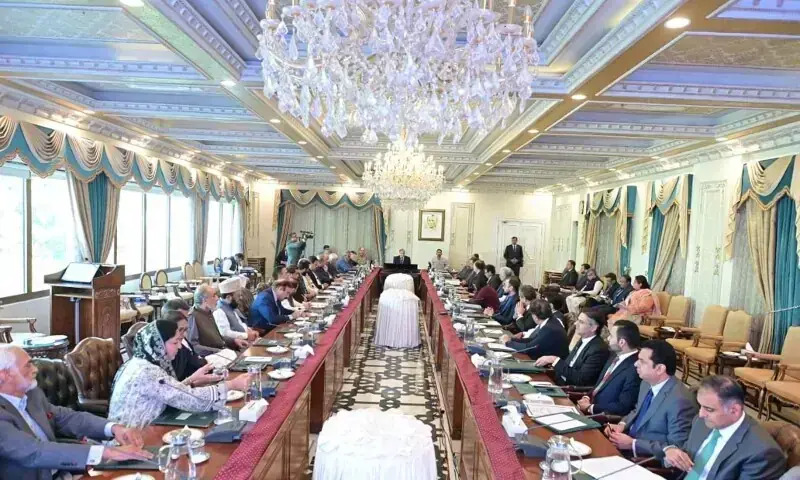
The federal government on Sunday formally imposed a state of emergency and governor rule in Khyber Pakhtunkhwa (KP), following presidential approval of recommendations put forward by the federal cabinet. The decisive constitutional maneuver materialized during an emergency session convened in Islamabad, chaired by Prime Minister Shehbaz Sharif, where top civilian and security leadership reviewed the deteriorating law and order dynamics within the northwestern province.
According to an official communique issued by the Prime Minister's Office (PMO), the cabinet scrutinized exhaustive intelligence briefs highlighting a systemic breakdown in provincial security administration. Ministers expressed grave concern over what was termed the provincial government's deliberate disengagement from the national counter-terrorism apparatus. Acting upon these findings, the cabinet formally advised the president to invoke his constitutional authority under Articles 232 and 234 of the Constitution of Pakistan, effectively suspending normal provincial governance structures to restore public order and state writ.
Commercial & Economic Implications
The imposition of emergency rule in a vital frontier province carries profound commercial and economic ramifications for Pakistan's domestic markets, particularly concerning wholesale distribution, retail trade, and cross-border commerce with Central Asia via the Torkham corridor. Khyber Pakhtunkhwa serves as a critical commercial artery for regional trade and manufacturing supply chains.
Business analysts and market economists at Kalyar Traders warn that prolonged political instability and administrative uncertainty in the province could severely disrupt freight transportation, inflate logistics costs, and exacerbate inflationary pressures on essential commodities. Retail and wholesale markets across Peshawar, Abbottabad, and Swat face immediate vulnerabilities regarding inventory replenishment and buyer confidence. Investors tracking Pakistan's macroeconomic stabilization program are closely monitoring whether administrative centralization will stabilize security or provoke commercial paralysis in key trading hubs.
Related Intelligence: Federal Cabinet Approves Khyber Pakhtunkhwa Emergency Amid Economic Strains
Stakeholder Perspectives & Market Reactions
Reaction from trade associations, industry bodies, and legal experts has been sharply polarized. Representatives from the Sarhad Chamber of Commerce and Industry have voiced acute apprehension regarding potential commercial curfews, internet suspensions, and transport bottlenecks that historically accompany emergency declarations. Business leaders urged federal and provincial authorities to safeguard commercial transit corridors and protect merchant capital from collateral disruption.
Conversely, mainstream political analysts and security experts defended the intervention as an unavoidable constitutional remedy to arrest a security vacuum. Legal constitutionalists emphasize that while Articles 232 and 234 empower the federation to take extraordinary measures during severe internal disturbances threatening national integrity, strict adherence to judicial oversight remains imperative to prevent prolonged democratic suspension.
Forward Outlook & Key Watchpoints
As the newly instituted administrative framework takes effect, market participants and policy watchers must monitor several critical indicators over the coming weeks. Key watchpoints include the duration of the emergency decree, the operational status of major commercial trade routes, and the federal administration's ability to revitalize counter-terrorism operations without stifling private sector commerce.
Furthermore, stakeholder negotiations between federal authorities and regional merchant associations will dictate the near-term resilience of local supply chains. Sustained economic stability in KP depends heavily on swift normalization, investor reassurance, and the restoration of unbroken commercial logistics across domestic and international corridors.
Join Our Official WhatsApp Channel
Receive live commodity alerts, policy changes, and commercial intelligence directly on WhatsApp.