
Federal Cabinet Approves Khyber Pakhtunkhwa Emergency Amid Economic Strains
The federal cabinet has approved the imposition of a state of emergency in Khyber Pakhtunkhwa, citing security concerns and threats to economic stability.
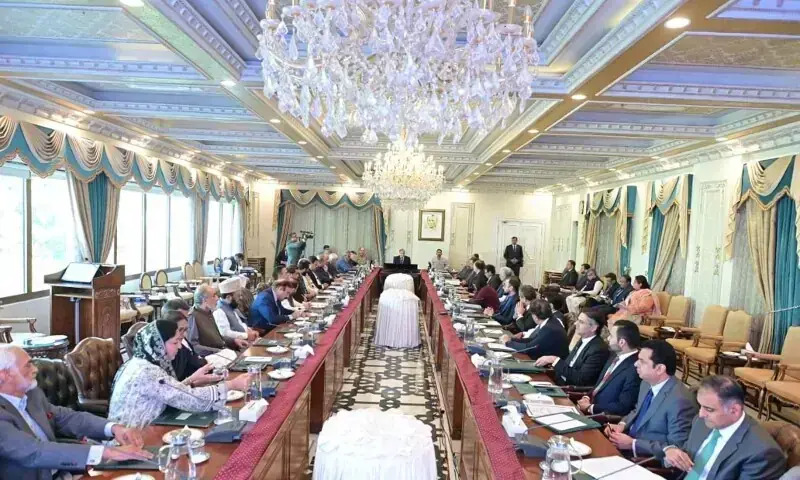
The Core Development
The federal cabinet formally approved the imposition of a state of emergency in Khyber Pakhtunkhwa (KP) during an emergency session convened on Sunday. Following the cabinet's endorsement, the Prime Minister Office (PMO) promptly dispatched an official summary to the President House for final constitutional assent. The high-stakes decision materialized after intensive briefings delivered to cabinet members regarding the worsening security paradigm across the northwestern province. Federal authorities expressed acute concern over what they termed the provincial government's deliberate disengagement from the overarching national framework combatting terrorism. Prime Minister Shehbaz Sharif, addressing the emergency cabinet meeting, asserted that the Pakistan Tehreek-e-Insaf (PTI) led provincial administration posed a direct threat to hard-fought national stabilization gains.
Commercial & Economic Implications
For Kalyar Traders and the wider business community in Pakistan, political instability and administrative gridlock in a vital border province carry severe commercial ramifications. Khyber Pakhtunkhwa serves as a critical trade corridor for bilateral commerce with Central Asia, encompassing major transit routes through the Torkham border. Protracted friction between federal authorities and the provincial apparatus threatens to disrupt wholesale distribution networks, delay freight logistics, and stoke inflationary pressures across domestic retail markets. Business leaders warn that supply chain vulnerabilities stemming from potential civil unrest or administrative paralysis could adversely impact consumer pricing indices, undermining recent macroeconomic stabilization measures achieved under international financial agreements, including the fresh staff-level agreement secured with multilateral lenders.
Related Intelligence: Myanmar Junta Conscription Drives Threaten Regional Stability and Trade
Stakeholder Perspectives & Market Reactions
Market participants, trade associations, and legal experts have expressed mixed reactions to the unprecedented move. Representatives from major chambers of commerce emphasized the absolute necessity of maintaining uninterrupted commercial activity and secure trade routes, urging all political stakeholders to prioritize economic continuity over partisan conflict. Legal analysts note that invoking emergency provisions under the Constitution introduces complex judicial and administrative challenges, particularly regarding the demarcation of provincial autonomy and federal oversight. Meanwhile, opposition figures have fiercely condemned the move as an authoritarian overreach aimed at sidelining a democratically elected regional government, setting the stage for potential political polarization in corporate and legislative circles.
Forward Outlook & Key Watchpoints
As the summary rests with the President House for final sign-off, financial markets and business councils are closely monitoring subsequent administrative developments and potential judicial interventions. Key watchpoints for investors and traders include the official gazette notification, the specific operational scope of the emergency powers, and the reaction of provincial administrative machinery. Sustained enforcement of federal directives without triggering widespread civil disruption will remain paramount to safeguarding investor confidence and maintaining steady commercial momentum throughout the upcoming fiscal quarters.
Join Our Official WhatsApp Channel
Receive live commodity alerts, policy changes, and commercial intelligence directly on WhatsApp.