
JP Morgan Abandons Oil Price Forecasts Amid US-Iran Geopolitical Escalation
JP Morgan has conceded an inability to reliably forecast crude oil prices, warning that Washington's escalating confrontation with Iran overrides historical economic thresholds such as a 100-dollar-per-barrel ceiling.
Geopolitical & Core Developments
Global energy markets have entered an unprecedented phase of geopolitical opacity following admissions from JP Morgan Chase that traditional econometric forecasting has been rendered largely ineffective. The investment banking giant publicly stated that analysts can no longer project the trajectory of crude benchmarks with institutional confidence, citing the unpredictable escalation of military and diplomatic conflict between the United States administration under Donald Trump and the Islamic Republic of Iran.
Historically, market strategists operated under the working premise that Washington maintained distinct economic boundaries to prevent domestic energy shocks. Foremost among these was an assumed red line around $100 per barrel—a threshold long viewed as politically prohibitive due to its immediate transmission into domestic retail fuel prices, consumer sentiment, and broader inflation metrics. However, the aggressive trajectory of kinetic posturing, targeted strikes, and reciprocal retaliatory measures has demonstrated that geopolitical objectives and deterrence imperatives are superseding standard macroeconomic considerations. With decision-making concentrated within narrow security councils rather than calibrated economic committees, Wall Street's quantitative models have encountered an analytical vacuum.
Global Trade & Economic Ripples
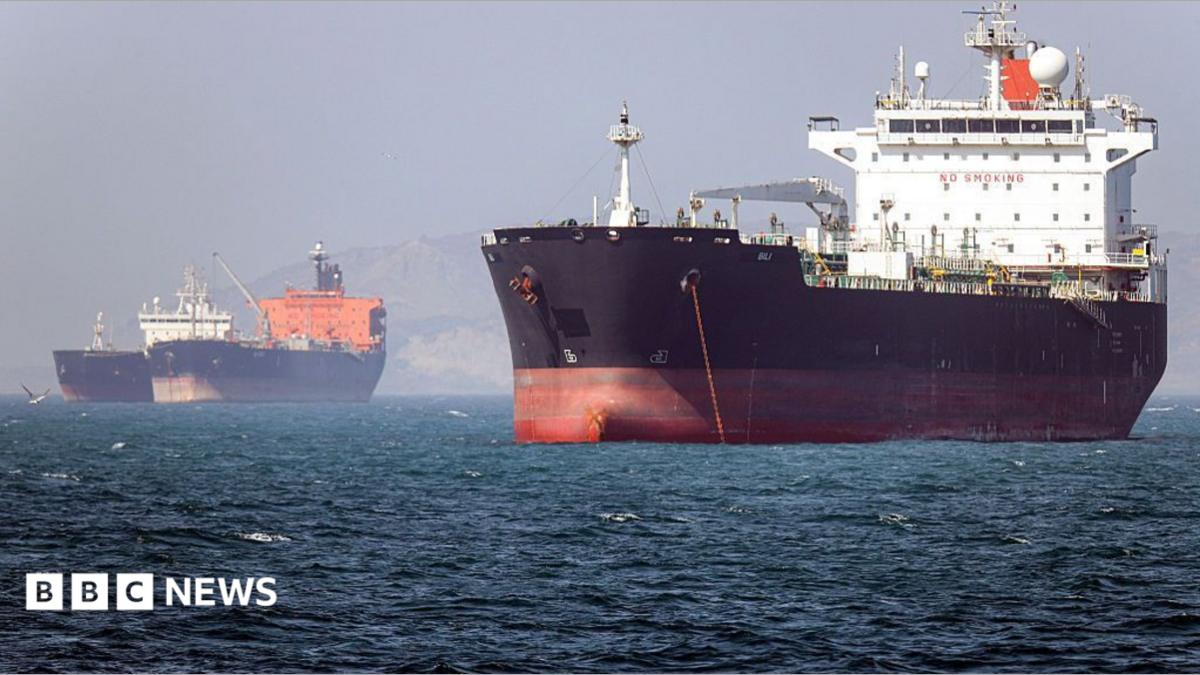
The immediate consequence of this forecasting paralysis is an expanding geopolitical risk premium embedded across Brent crude and West Texas Intermediate (WTI) futures contracts. The persistent friction between Washington and Tehran directly imperils the Strait of Hormuz, the critical maritime chokepoint through which roughly 20 percent of global petroleum consumption transits daily. Any physical disruption, mining operation, or hostile boarding in these narrow waters threatens to instantly sever seaborne flows from major Gulf producers including Saudi Arabia, Iraq, the United Arab Emirates, and Kuwait.
Maritime logistics networks are already pricing in extreme volatility. War risk insurance premiums for commercial tankers operating in the Persian Gulf and Gulf of Oman have climbed sharply, compounding operational freight rates and maritime transport costs. For energy-importing economies across Europe and Asia, particularly major manufacturing hubs in China, India, and Japan, unhedged exposure to sustained energy price spikes threatens to reignite import-driven inflation, widen current account deficits, and weaken sovereign currencies against a resurgent US dollar.
Related Intelligence: Government Renews Talks With Jamaat-i-Islami Over Disputed Petroleum Levy
International Reactions & Diplomatic Stances
JP Morgan’s unusually candid assessment that "we simply don't know" where prices will settle has reverberated across international financial institutions. Peer investment banks and credit rating agencies are similarly reassessing their baseline commodity assumptions, acknowledging that conventional supply-demand fundamentals—such as OECD inventory levels and non-OPEC output growth—are currently secondary to geopolitical catalysts.
Diplomatically, multilateral institutions and regional stakeholders have voiced mounting alarm. United Nations officials have repeatedly warned that military miscalculations in the Middle East risk triggering systemic global economic fallout. European Union leadership has emphasized the necessity of de-escalation channels to avert an unmanageable supply shock that could derail modest economic recovery on the continent. Concurrently, major Asian purchasers have urged both parties to guarantee unimpeded maritime passage, emphasizing that prolonged transit instability in the Persian Gulf constitutes a shared international security crisis.
Strategic Outlook & Future Scenarios
The near-term trajectory of global energy pricing hinges on whether Washington and Tehran remain locked in escalatory cycles or pivot toward tacit deterrence. Should conflict remain confined to localized asymmetric maneuvers and cyber engagements away from critical energy infrastructure, crude markets may fluctuate within an elevated, volatile band governed by ongoing tension.
Conversely, a structural escalation—such as direct strikes on regional processing facilities or an effective closure of the Strait of Hormuz—would instantaneously breach the previously assumed $100 threshold, potentially propelling crude toward historic highs. In that scenario, the ability of OPEC+ to mitigate deficits through spare production capacity remains deeply questionable given that Gulf infrastructure itself sits within the operational theater. Market participants must consequently prepare for a prolonged environment of structural uncertainty, where political volatility overrides economic fundamentals.
Join Our Official WhatsApp Channel
Receive live commodity alerts, policy changes, and commercial intelligence directly on WhatsApp.