
Government Renews Talks With Jamaat-i-Islami Over Disputed Petroleum Levy
Federal Minister Ahsan Iqbal has invited Jamaat-i-Islami for urgent negotiations to resolve the dispute over the petroleum levy and pre-empt a planned march on Islamabad set for September 20.
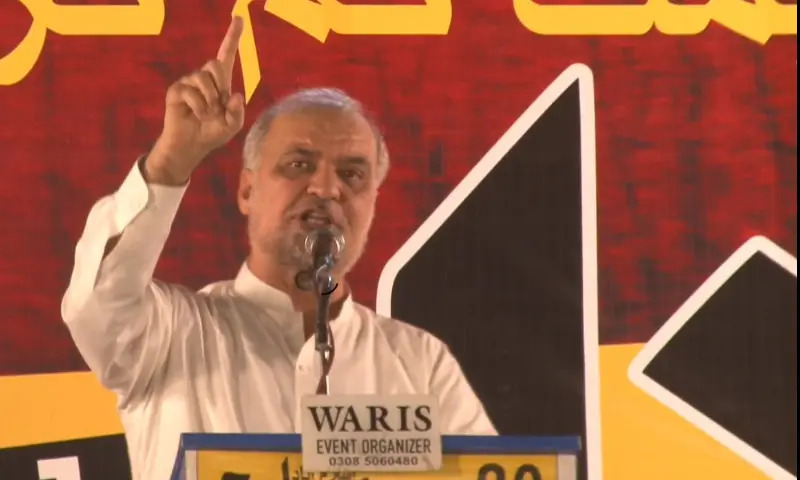
The Core Development
In an urgent bid to avert administrative gridlock in the federal capital, Federal Minister for Planning, Development, and Special Initiatives Ahsan Iqbal initiated contact with Jamaat-i-Islami (JI) Vice Emir Liaqat Baloch, formally inviting the party to resume negotiations regarding its contentious fiscal demands. The government's overture comes at a critical juncture, as JI Emir Hafiz Naeemur Rehman finalises operational logistics for a planned mass march on Islamabad scheduled for September 20, organized primarily to challenge the federal petroleum development levy.
Baloch, who heads the party's central negotiating committee, confirmed receipt of the dialogue offer. While acknowledging the administration's outreach, Baloch stated that any formal acceptance remains subject to strategic consultations with the party's central leadership. Crucially, the JI leadership clarified that operational mobilization for the federal capital demonstration remains active and unhindered. The deadlock reflects deep underlying friction following prior rounds of engagement between the state and the religious-political group, where tentative agreements on rationalizing power tariffs, auditing independent power producers (IPPs), and reducing indirect taxation stalled at the implementation stage.
Commercial & Economic Implications
The dispute highlights the fragile tightrope the federal administration must walk between structural stabilization and domestic socio-economic tolerance. The petroleum development levy functions as an indispensable non-tax revenue engine for the state, with targeted collections structured to satisfy fiscal performance criteria under the International Monetary Fund's Extended Fund Facility. Any unilateral reduction or abolition of the levy would destabilize the government's primary fiscal balance, risking immediate policy friction with international creditors and widening sovereign financing gaps.
From the perspective of domestic commerce, the compound impact of fuel levies and utility surcharges continues to compress operating margins across wholesale distribution networks and retail enterprises. High-speed diesel prices directly dictate national freight and inter-city cargo transit tariffs. Because intermediate distributors and logistics fleets pass these structural expenses downstream, end-consumer purchasing power has contracted sharply. For retail traders and commercial suppliers, a prolonged sit-in or physical blockade of the twin cities would choke critical distribution arteries connecting Punjab with Khyber Pakhtunkhwa, resulting in supply chain bottlenecks, inventory holding backlogs, and localized price volatility.
Related Intelligence: Government Trims Petrol and Diesel Prices in Modest Fortnightly Adjustment
Stakeholder Perspectives & Market Reactions
Commercial chambers, merchant associations, and transport syndicates have voiced profound concern over the looming confrontation. National freight operators emphasize that transport fuel now accounts for nearly half of total fleet operating overheads, rendering marginal trade routes economically unviable without frequent freight rate revisions. While intermediate wholesalers share JI's broader frustration regarding high energy pricing and cascading indirect levies, they broadly caution against coercive street actions that interrupt commercial movement.
Wholesale market unions operating across major trading hubs have signaled that prolonged logistics standstills along National Highway corridors cause swift perishability losses and disrupt trade credit cycles. In legal and fiscal circles, analysts point out that the executive branch has virtually zero fiscal space to roll back the petroleum levy without identifying compensating revenue streams of equivalent yield. Official government representatives maintain that while procedural relief on power tariffs and municipal taxes remains negotiable, the macro-fiscal architecture agreed upon with international financial institutions remains non-negotiable.
Forward Outlook & Key Watchpoints
The trajectory of the impending standoff will depend entirely on the substantive concessions tabled during the forthcoming consultative sessions. Commercial stakeholders are monitoring whether the federal government will provide interim relief mechanisms—such as localized adjustments to retail sales taxes, deferred electricity surcharges, or expedited reviews of sovereign power contracts—in exchange for JI postponing its march.
If the dialogue fails to achieve a breakthrough, market participants must brace for heightened political volatility, comprehensive security cordons around federal entry points, and localized freight paralysis beginning September 20. Analysts observe that sustained disruption along national transport corridors will depress trading volumes during the concluding weeks of the quarter, compounding operational frictions for Pakistan's retail distribution networks and intensifying short-term inflationary pressure.
Join Our Official WhatsApp Channel
Receive live commodity alerts, policy changes, and commercial intelligence directly on WhatsApp.