
JI Threatens Capital Lockdown Over Excessive Fuel Levies and Energy Costs
Jamaat-i-Islami is advancing its planned march on Islamabad, demanding the immediate withdrawal of petroleum levies amounting to Rs114 per litre on petrol and Rs100 per litre on diesel amid worsening fiscal pressures.
The Core Development
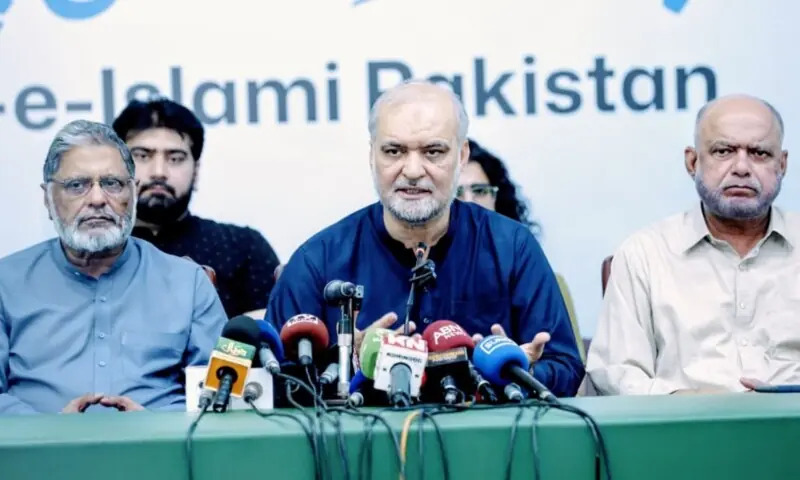
Tensions between the federal government and opposition political forces escalated sharply as Jamaat-i-Islami (JI) reaffirmed its unyielding stance on staging a massive march toward Islamabad. Speaking at a press conference at the party headquarters in Mansoora, Lahore, JI Emir Hafiz Naeemur Rehman declared that protest caravans originating from across the country would begin their coordinated advance toward the federal capital on Sunday. The party has established an uncompromising threshold for calling off the demonstration: the outright abolition of the government's steep petroleum levies and associated energy surcharges.
At present, the federal administration levies an aggregate of Rs114 per litre in taxes, customs duties, and petroleum development levies on petrol, alongside a punitive fiscal extraction of Rs100 per litre on high-speed diesel. This escalation represents the culmination of sustained regional demonstrations; since August 16, JI has mobilized continuous sit-ins across strategic transit corridors in Karachi, Lahore, Peshawar, Quetta, and dozens of provincial hubs. With bilateral negotiations effectively paralyzed and federal economic planners constrained by structural reform targets under international lending frameworks, Rehman emphasized that state pressure would not impede the nationwide march.
Commercial & Economic Implications
For Pakistan's commercial ecosystem, the planned convergence on the federal capital presents severe operational risks. High-speed diesel represents the fundamental lifeblood of the domestic real economy, powering agricultural machinery, inter-provincial freight transport, and industrial auxiliary generation. By maintaining elevated duties on petroleum products to bridge chronic tax shortfalls, the government has substantially increased overhead expenditures for logistics providers, wholesale traders, and retail distribution networks.
The prospect of road blockades and highway closures threatens to sever critical supply lines connecting the southern ports of Karachi with consumer markets in Punjab, Khyber Pakhtunkhwa, and the federal territory. In the wholesale sector, intermediate raw materials and fast-moving consumer goods (FMCG) face acute transit delays. Any protracted breakdown in transport corridors will squeeze trading margins, compress distributor cash flows, and generate artificial shortages that inevitably trigger cost-push inflationary pressures at the retail level. Small and medium-sized enterprises (SMEs), already operating under diminished aggregate demand and elevated borrowing costs, stand particularly vulnerable to supply interruptions.
Related Intelligence: Dar Directs Inclusion of All Active Petrol Pumps in Fuel Relief Roster
Stakeholder Perspectives & Market Reactions
The domestic business community views the escalating confrontation with mixed sentiments, caught between widespread anger over energy taxes and deep apprehension regarding logistics gridlock. Major commercial associations and regional chambers of commerce have routinely voiced frustration regarding the excessive petroleum levy, warning the Ministry of Finance that treating road transport as an inelastic revenue engine has severely damaged manufacturing competitiveness and consumer purchasing power.
Simultaneously, trade syndicates, goods transport operators, and industrial logistics federations fear widespread supply chain immobilization. Commercial operators anticipate that law enforcement agencies may deploy shipping containers to seal motorway entry points, choking freight traffic along the Grand Trunk (GT) Road and core arterial routes. From an economic management standpoint, officials within the Ministry of Finance acknowledge off the record that the government has virtually no fiscal leeway to repeal the petroleum development levy. The levy constitutes an indispensable pillar of the non-tax revenue commitments agreed upon with the International Monetary Fund (IMF), meaning any unilateral withdrawal would destabilize macroeconomic benchmarks.
Forward Outlook & Key Watchpoints
The near-term trajectory depends entirely on whether the federal administration pursues heavy-handed containment or seeks last-minute institutional mediation before caravans reach Islamabad's perimeter. Key developments to monitor include the potential enforcement of Section 144 across the capital, preemptive transport detentions at provincial border crossings, and security deployments along national highways.
Should the government attempt administrative concessions to defuse the march, adjustments are far more likely to occur through marginal relief in power tariff slabs or minor adjustments in statutory regulatory orders rather than a dismantling of the petroleum levy. Commercial enterprises and supply-chain stakeholders must formulate contingency distribution strategies, anticipate delays in freight transit, and monitor policy enforcement closely as structural fiscal austerity clashes with mounting public resistance.
Join Our Official WhatsApp Channel
Receive live commodity alerts, policy changes, and commercial intelligence directly on WhatsApp.