
KP Leadership and Opposition Solidify Plans for High-Stakes September 27 Protest
Khyber Pakhtunkhwa leadership and national opposition figures have coordinated plans for a September 27 capital march, threatening transit corridors, wholesale supply lines, and inter-provincial trade.
The Core Development
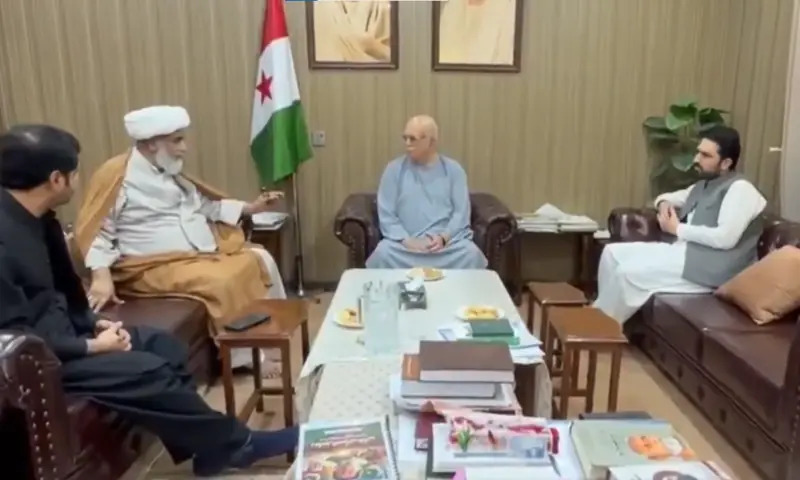
In a calculated escalation of political mobilization, Khyber Pakhtunkhwa Chief Minister Sohail Afridi convened high-level consultations with National Assembly Opposition Leader Mehmood Khan Achakzai and Senate opposition leadership to consolidate strategies for a planned nationwide protest on September 27. The coordinated offensive, spearheaded by Pakistan Tehreek-e-Insaf alongside the multi-party opposition coalition Tehreek-i-Tahafuz-i-Ayin-i-Pakistan, centers on demanding the release of incarcerated party founder Imran Khan and mobilizing the public for constitutional supremacy.
The formal alignment follows an assurance of operational and political solidarity from the TTAP leadership, formalized during bilateral negotiations in Islamabad. According to official dispatches released on social platform X, the leadership reviewed inter-provincial mobilization routes, logistical contingencies, and staging points for an anticipated march converging on the federal capital. The direct involvement of the Khyber Pakhtunkhwa provincial administration elevates the protest from a localized demonstration to a direct administrative and political showdown between the provincial government in Peshawar and the federal coalition in Islamabad.
Commercial & Economic Implications
For Pakistan's wholesale and retail ecosystems, the prospect of a protracted confrontation along the northern transport corridor presents severe operational hazards. Khyber Pakhtunkhwa serves as an indispensable trade artery connecting central Pakistan to border transit points with Afghanistan and broader Central Asian trade networks. Billions of rupees in transit goods, fast-moving consumer items, industrial raw materials, and agricultural perishables move through the Peshawar-Islamabad-Lahore transit axis daily.
Anticipated law enforcement containment measures, primarily the deployment of shipping containers at key bottlenecks such as the Attock Bridge, the Grand Trunk Road, and the M-1 Motorway, threaten to immobilize inter-provincial freight. Logistics operators and wholesale distribution firms warn that road transport blockages trigger sudden escalations in carrying costs, with private trucking rates historically surging between 25 and 40 percent during periods of federal-provincial gridlock. Such disruptions invariably disrupt agricultural produce arrivals into the twin cities of Rawalpindi and Islamabad, provoking localized food inflation and dampening consumer footfall across key retail hubs.
Related Intelligence: Gaza Strikes Kill Health Official Son as Regional Ceasefire Talks Stall
Stakeholder Perspectives & Market Reactions
The impending standoff has generated acute concern among trade organizations and corporate executives. Representatives from wholesale merchant bodies and the All Pakistan Anjuman-e-Tajiran have expressed frustration over recurring political unrest, urging both federal authorities and opposition leaders to avoid paralyzing commercial activity in an economy already contending with elevated electricity tariffs and dampened consumer purchasing power. Small retailers, operating on minimal inventory margins, face immediate liquidity strains when delivery cycles are interrupted.
Financial markets are similarly cautious. Institutional investors on the Pakistan Stock Exchange maintain a defensive posture, as institutional capital historically retreats to the sidelines during episodes of acute institutional confrontation. Market analysts emphasize that sustained political volatility introduces friction into the implementation of structural economic reforms agreed upon with international multilateral lenders, reinforcing risk premiums across currency and equity markets.
Forward Outlook & Key Watchpoints
As the September 27 date approaches, commercial enterprises and logistics managers must track several decisive developments. Chief among them is the Ministry of Interior's administrative posture, specifically whether pre-emptive arrests, the imposition of Section 144, or border containment measures will be enforced along the Khyber Pakhtunkhwa-Punjab boundary.
Secondary indicators include potential telecommunication and mobile internet restrictions in key transit districts, which routinely disrupt digital banking, electronic order bookings, and app-based transport infrastructure. Businesses operating across the northern corridor are advised to front-load wholesale shipments, secure supplementary safety stocks, and map alternative cargo routing to mitigate transit volatility over the final week of September.
Join Our Official WhatsApp Channel
Receive live commodity alerts, policy changes, and commercial intelligence directly on WhatsApp.