
Dar Directs Inclusion of All Active Petrol Pumps in Fuel Relief Roster
Deputy Prime Minister Ishaq Dar has ordered the integration of all functional petrol pumps into the federal fuel relief scheme while purging non-operational and diesel-only outlets to streamline delivery and prevent fiscal leakages.
The Core Development
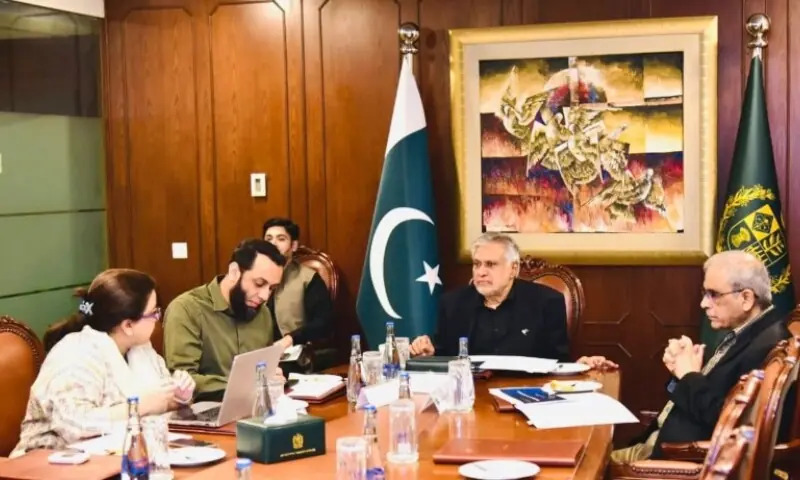
Deputy Prime Minister and Foreign Minister Senator Mohammad Ishaq Dar has formally directed the National Steering Committee on Fuel Subsidy to bring every functional retail fuel outlet across Pakistan into the administrative framework of the Prime Minister’s fuel relief initiative. Chairing a high-level review meeting in Islamabad over the weekend, Dar ordered authorities to conduct an immediate reconciliation of the retail database. The mandate explicitly requires the expunging of permanently closed filling stations, non-compliant dealers, and commercial fuel outlets dealing exclusively in High-Speed Diesel (HSD) from the subsidy distribution roster.
The directive targets the operational architecture of the targeted fuel relief package, designed principally to shield vulnerable, low-income segments—particularly two-wheeler and three-wheeler commuters—from volatile international petroleum prices. By mandating an exhaustive digital alignment of active petrol pumps, the federal government aims to curb logistical discrepancies, remove phantom distribution outlets, and ensure verified Motor Gasoline (Mogas) dispensing points are accessible nationwide.
Commercial & Economic Implications
The initiative carries profound economic implications for Pakistan’s retail energy ecosystem, sovereign fiscal management, and macroeconomic stabilization objectives. Under the scrutiny of the International Monetary Fund’s extended credit arrangements, Pakistan operates under strict constraints regarding untargeted public spending. The rationalization of the retail subsidy network represents a calculated attempt to execute targeted fiscal relief without triggering uncontrolled budgetary outlays.
From a retail trade perspective, integrating all active stations creates a level playing field among Oil Marketing Companies (OMCs) and independent dealer-operated franchises. Historically, selective onboarding of fuel points risked commercial distortion, diverting consumer traffic away from non-registered stations and complicating regional supply chains. By establishing universal onboarding for active petrol-dispensing stations, retail networks can maintain standard inventory turnover and avoid localized fuel runs. Conversely, removing diesel-exclusive stations isolates the subsidy mechanism exclusively to consumer-grade transport fuel, preventing commercial freight, heavy haulage, and industrial sectors from improperly claiming intended retail relief.
Related Intelligence: Asian Games 2026: Soft Power and Industrial Stakes in Aichi-Nagoya
Stakeholder Perspectives & Market Reactions
The fuel retail fraternity, represented prominently by the Pakistan Petroleum Dealers Association (PPDA) and corporate members of the Oil Companies Advisory Council (OCAC), has voiced guarded support alongside practical administrative concerns. Dealership associations have consistently emphasized that any retail-level subsidy framework must be backed by seamless transaction settlement mechanisms, robust digital connectivity, and clear commission structures to avoid eroding pump margins.
Industry stakeholders point out that previous iterations of targeted subsidy regimes faced friction due to point-of-sale (POS) terminal latency, internet outages in peri-urban locations, and slow reimbursement timelines from state financial clearinghouses. Conversely, micro-transport operators and commuter unions have welcomed the directive, noting that universal retail access eliminates geographic disparities where motorcycle owners were forced to travel extended distances to access designated subsidized dispensing points. Regulatory watchdogs emphasize that data verification through the National Database and Registration Authority (NADRA) and the Oil and Gas Regulatory Authority (OGRA) will be critical to verify eligibility and retail compliance.
Forward Outlook & Key Watchpoints
In the coming weeks, the National Steering Committee on Fuel Subsidy is scheduled to coordinate with provincial administrative bodies, OGRA, and registered OMCs to finalize the purge of non-functional and diesel-exclusive retail sites. The technical deployment of point-of-sale verification systems across remote and rural petrol stations will serve as the immediate litmus test for the initiative’s viability.
Market observers will closely monitor the fiscal mechanism deployed for dealer reimbursement. If settlement pipelines between the Ministry of Energy, the Ministry of Finance, and fuel retailers experience bottlenecks, the risk of dealer non-compliance or informal surcharges could rise. Additionally, economic analysts will observe how this targeted relief mechanism interacts with future revisions to the Petroleum Development Levy (PDL) and baseline fuel tariffs, assessing whether the revamped retail network can deliver consumer price relief while upholding the federal government’s overarching budgetary discipline.
Join Our Official WhatsApp Channel
Receive live commodity alerts, policy changes, and commercial intelligence directly on WhatsApp.