
Italy Unveils Strict School Caps and Face Covering Bans
Italian Prime Minister Giorgia Meloni has announced strict new legislation to cap foreign student numbers and ban face coverings in schools, intensifying right-wing migration policies.
The Core Development
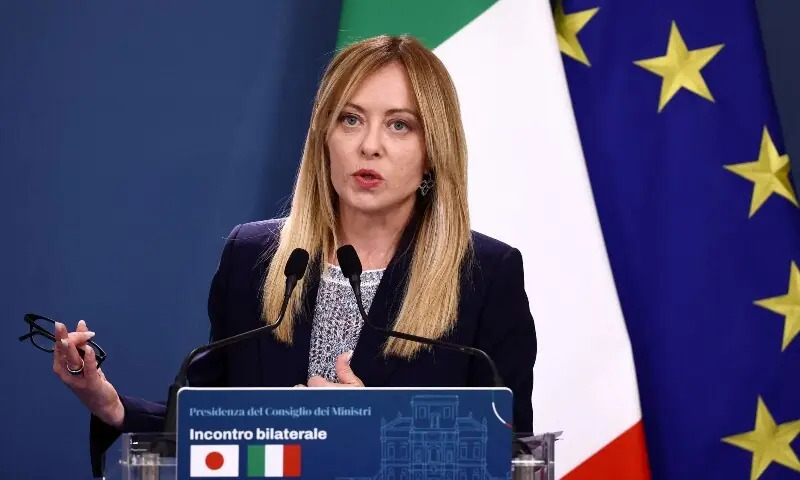
Italian Prime Minister Giorgia Meloni announced a sweeping legislative package during a right-wing youth party event on Sunday, targeting the nation's educational framework. The upcoming policy measures introduce a strict legal cap on the number of foreign students permitted per classroom alongside a comprehensive ban on face coverings in Italian schools. Situated centrally within the Mediterranean, Italy remains acutely exposed to continuous maritime migrant arrivals, transforming demographic management and integration into perennial political flashpoints. Successive administrations have grappled with the logistical and social pressures of absorbing displaced populations, yet the Meloni administration is pursuing a decidedly more restrictive approach.
The proposed cabinet measure specifically seeks to establish rigid numerical limits for foreign students, alongside mandatory intervention criteria for families whose children encounter severe integration barriers within the national curriculum. By leveraging educational policy as a primary instrument of cultural assimilation, the government aims to restructure public institutions to reflect traditional nationalist values. This latest initiative builds upon a series of hardening stances regarding citizenship rules, religious symbols, and border security, signaling an escalation in the state's oversight of multicultural communities.
Commercial & Economic Implications
While educational and cultural in initial presentation, shifts in Italian domestic policy ripple outward into broader European trade and macroeconomic stability, indirectly influencing commercial landscapes in emerging markets like Pakistan. European regulatory tightening, labor market restrictions, and immigration controls often translate into altered remittance flows, bilateral trade dynamics, and diplomatic friction between European Union member states and key developing trade partners. For Pakistani exporters, particularly within textiles, agricultural commodities, and light manufacturing, European consumer sentiment and political shifts dictate market access parameters and regulatory compliance standards.
Furthermore, restrictive social policies within major European economies frequently presage broader shifts in foreign direct investment, bilateral aid allocations, and commercial partnership agreements. As Italy tightens domestic controls, the predictability of trade logistics, labor mobility for business personnel, and bilateral commercial frameworks could experience friction. Pakistani business leaders and trade associations must monitor these socio-political transformations closely, as regulatory shifts in core European markets routinely set precedents for wider continental trade policies, potentially impacting import-export margins and supply chain agreements.
Related Intelligence: Aleema Khan Detained Under Public Order Ordinance Amid Escalating Political Uncertainty
Stakeholder Perspectives & Market Reactions
Public opinion across Europe remains starkly polarized regarding the administration's trajectory. Right-wing factions and conservative constituencies have vocally applauded the measures as necessary safeguards for national identity, social cohesion, and public order. Conversely, civil rights organizations, immigrant advocacy groups, and progressive political parties have condemned the mandates as discriminatory overreaches that alienate minority communities and violate fundamental educational access rights.
Legal experts are currently examining the constitutional viability of banning specific religious and cultural expressions within public institutions, anticipating rigorous courtroom challenges once the legislation is formally tabled before the Cabinet. Educational administrators have also expressed operational concerns, citing potential logistical difficulties in enforcing foreign student caps and managing specialized integration programs without adequate state funding and institutional resources.
Forward Outlook & Key Watchpoints
As the Meloni administration prepares to present the formal measure to the Cabinet, domestic and international observers are closely tracking the legislative timeline. Key watchpoints include the specific numerical thresholds set for foreign student classroom quotas, the precise legal definitions applied to prohibited face coverings, and the enforcement mechanisms designated for non-compliant educational institutions.
The outcome of upcoming parliamentary debates and subsequent judicial reviews will serve as a critical barometer for European migration policy trends. For international observers, including financial and commercial analysts in Pakistan, the policy's implementation will test the balance between nationalist governance and international human rights obligations, shaping the broader socioeconomic climate across the Mediterranean basin.
Join Our Official WhatsApp Channel
Receive live commodity alerts, policy changes, and commercial intelligence directly on WhatsApp.