
Indian Opposition Marches Over Election Chief Amid Institutional Turmoil
Indian opposition lawmakers launched mass protests in New Delhi demanding the resignation of Chief Election Commissioner Gyanesh Kumar over controversial voter list revisions and alleged institutional compromise.
The Core Development
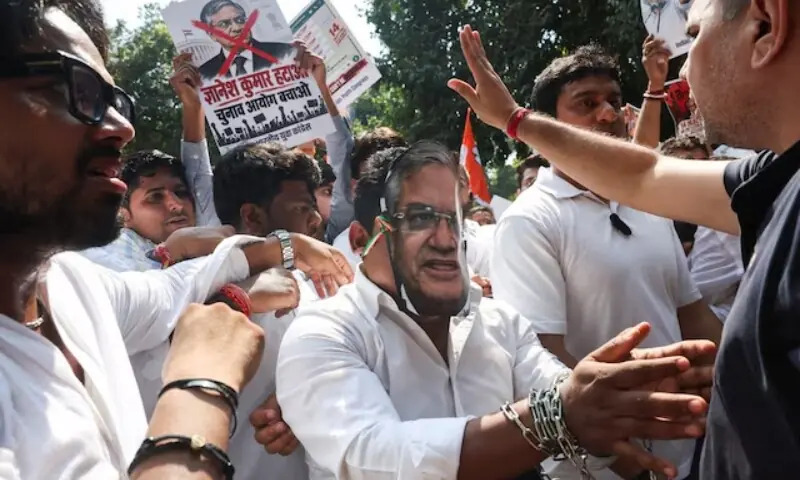
Dozens of Indian opposition lawmakers, alongside members of the youth-led movement, commenced a high-stakes march in the heart of New Delhi to demand the immediate resignation of Chief Election Commissioner Gyanesh Kumar. The demonstration follows a deeply controversial revision of national voter lists that opposition figures argue threatens the integrity of the electoral process. Hundreds of heavily armed security personnel, including elements of the Rapid Action Force, maintained a strict vigil across central New Delhi, erecting extensive barricades and blockading key thoroughfares to contain the surging crowds.
The political confrontation erupted in the wake of investigative reports published by the Indian Express last month, which revealed unprecedented internal divisions and institutional friction within the country's poll body. Opposition parties aligned against Prime Minister Narendra Modi's administration contend that the appointment of Kumar by the ruling government has compromised the political neutrality of an institution historically regarded as a pillar of Indian democracy. The protesters marched with banners and placards denouncing what they term executive overreach into independent administrative bodies.
Commercial & Economic Implications
While political unrest in New Delhi primarily reflects domestic governance disputes, heightened political instability in India carries critical economic spillover effects across the wider South Asian region. Persistent political friction and street-level agitation can disrupt cross-border supply chains, bilateral trade negotiations, and investor sentiment in emerging markets. For Pakistan's commercial sectors, particularly retail trade, wholesale distribution, and agricultural commodities, prolonged domestic turmoil in a major neighboring economy influences regional macroeconomic stability, currency valuations, and investor risk premiums.
Furthermore, foreign portfolio investors closely monitor political stability across South Asia when allocating capital to emerging market funds. Institutional volatility that questions the predictability of governance and regulatory frameworks in the region can lead to cautious capital flows, impacting regional equity benchmarks and commodity pricing dynamics. Commercial enterprises in Pakistan dealing in cross-border trade must factor in geopolitical risk premiums as political polarization deepens within India.
Related Intelligence: Gaza Human Cost Underscores Deepening Middle East Supply Chain Fragility
Stakeholder Perspectives & Market Reactions
Trader associations, industry bodies, and legal experts across the region have expressed growing concern regarding the erosion of trust in independent state institutions. Legal analysts note that public confidence in electoral and regulatory bodies remains paramount for maintaining predictable business environments and investor certainty. Opposition leaders have vowed to escalate parliamentary protests and nationwide agitation unless a transparent judicial review or independent inquiry into the poll body's operations is established.
Conversely, supporters of Prime Minister Modi's administration have dismissed the protests as politically motivated grandstanding designed to discredit legitimate administrative updates to electoral databases. Government spokespersons maintain that the Election Commission operates entirely within constitutional boundaries and that institutional reforms are necessary to modernize administrative procedures.
Forward Outlook & Key Watchpoints
As opposition lawmakers dig in their heels, the political standoff in New Delhi shows no immediate signs of abating. Key watchpoints include potential legal challenges filed in higher courts regarding the disputed voter list revisions, further announcements of nationwide demonstrations by opposition coalitions, and the official response from the election commission regarding internal dissent.
Policy enforcement and security protocols in the Indian capital will remain stringent in the near term, potentially causing localized economic disruptions. Observers will closely monitor upcoming state-level electoral schedules and parliamentary sessions to gauge whether the institutional crisis will impact broader legislative agendas and regional economic stability.
Join Our Official WhatsApp Channel
Receive live commodity alerts, policy changes, and commercial intelligence directly on WhatsApp.