
India Grapples With Deepening Economic Dependence on Chinese Imports
India's burgeoning economic reliance on Chinese imports highlights deep structural vulnerabilities in global supply chains, challenging New Delhi's ambitions for domestic manufacturing self-reliance.
Geopolitical & Core Developments
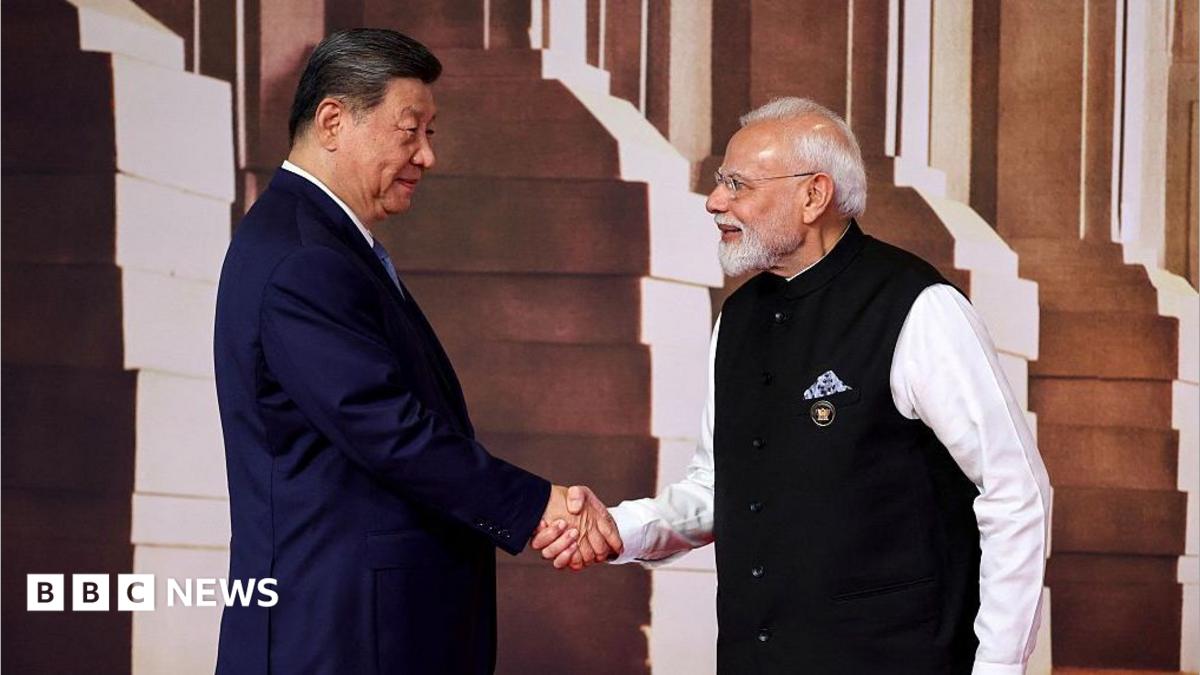
The economic relationship between New Delhi and Beijing presents one of the most complex geopolitical paradoxes of the contemporary global economy. Despite persistent border skirmishes, military standoffs in the Himalayas, and a succession of restrictive trade measures imposed by the Indian government—including the banning of numerous Chinese mobile applications and heightened scrutiny of foreign direct investment—the commercial ties binding the two Asian giants have grown increasingly dense. India's domestic retail markets, ranging from electronics and active pharmaceutical ingredients to ubiquitous children's toys, continue to be dominated by competitively priced Chinese merchandise.
This dynamic exposes the profound limitations of state-directed decoupling in an interconnected globalized marketplace. While political leadership in New Delhi champions ambitious slogans like 'Atmanirbhar Bharat' (Self-Reliant India) and deploys production-linked incentive schemes to stimulate domestic manufacturing, the foundational inputs required to sustain industrial output frequently trace back to Chinese factories. The structural integration is so deep that attempts to restrict finished goods imports often inadvertently result in a surge of intermediate components entering Indian ports, preserving the underlying trade imbalance while altering its composition.
Global Trade & Economic Ripples
The persistence of heavy reliance on Chinese supply chains carries substantial implications for international trade corridors and global commodity pricing. As Indian manufacturers scramble to substitute Chinese inputs, they frequently encounter higher operational costs and inferior logistics networks, dampening their competitiveness in export markets. Furthermore, the massive bilateral trade deficit underscores a broader vulnerability across emerging economies that depend heavily on Chinese manufacturing might for industrial scaling and affordable consumer goods.
In the broader context of global shipping lanes and maritime commerce, the volume of container traffic moving from Chinese ports to Indian hubs remains a critical artery for South Asian retail and industrial sectors. Any disruption along these maritime routes, whether driven by geopolitical flashpoints in the South China Sea or shifting regulatory regimes, cascades directly into Indian domestic inflation and supply chain bottlenecks. The reliance also exerts downward pressure on domestic manufacturing margins, as local enterprises struggle to compete with the vast economies of scale commanded by their northern neighbor.
Related Intelligence: Flydubai Foiled Plot Elevates Aviation and Middle East Security Concerns
International Reactions & Diplomatic Stances
Global trade analysts and multilateral economic bodies have closely monitored New Delhi's policy maneuvers, viewing India's struggle as a litmus test for the broader global phenomenon of economic de-risking. International monetary institutions have frequently noted that while diversification away from single-source suppliers is a prudent long-term strategy, abrupt protectionist measures can distort domestic pricing and slow down industrial modernization.
Diplomatic observers point out that New Delhi's strategy has evolved from outright confrontation to a nuanced, sector-specific management approach. While strategic security concerns dictate strict oversight of telecommunications, power infrastructure, and sensitive technologies, economic pragmatism forces a tacit acceptance of Chinese consumer goods and raw materials that are essential for maintaining employment and controlling inflation. Western allies, eager to position India as a democratic counterweight to Beijing, have offered technology-sharing partnerships and alternative supply chain frameworks, though these initiatives require years of capital expenditure to yield tangible alternatives to entrenched trade patterns.
Strategic Outlook & Future Scenarios
Looking ahead, the trajectory of India-China economic relations will likely be defined by a persistent tension between strategic security imperatives and commercial reality. Upcoming bilateral and multilateral summits will undoubtedly feature intense diplomatic maneuvering over trade access, technological standards, and investment protections. However, short of a catastrophic geopolitical escalation, a complete decoupling remains highly improbable.
For global commodity traders and multinational corporations, India's balancing act serves as a primary indicator of the limits of economic nationalism in the twenty-first century. As New Delhi attempts to scale its domestic industrial base, policymakers will need to navigate the delicate challenge of phasing out dependence on strategic imports without destabilizing domestic retail and manufacturing ecosystems. The success or failure of this transition will shape not only India's economic destiny but also the broader architecture of Asian trade and geopolitical stability for decades to come.
Join Our Official WhatsApp Channel
Receive live commodity alerts, policy changes, and commercial intelligence directly on WhatsApp.