
IHC Directs Petitioner to Furnish Evidence Challenging Top NAB Appointments
The Islamabad High Court has demanded documentary proof from a petitioner contesting the legal validity of top National Accountability Bureau appointments, issuing formal notices to the anti-graft body and federal law ministry.
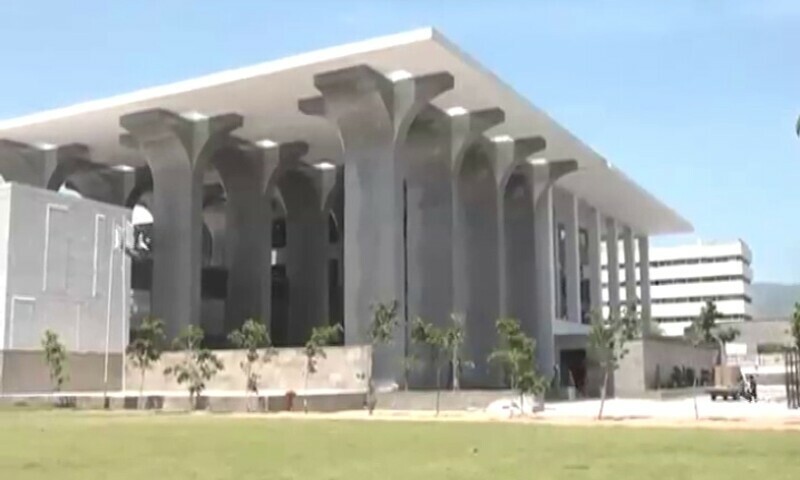
The Core Development
The Islamabad High Court (IHC) on Wednesday took up a constitutional petition challenging the statutory validity of key appointments within the National Accountability Bureau (NAB). Presiding judge Justice Umair Majid Malik issued formal notices to the federal anti-corruption watchdog, the Ministry of Law and Justice, and other associated respondents, seeking formal responses regarding the appointment processes of NAB Deputy Chairman Ihtesham Qadir Shah and Prosecutor General Sohail Nasir.
The petition, instituted by senior advocate Dr G.M. Chaudhry, contends that both officers fail to satisfy the prescribed statutory criteria under the National Accountability Ordinance. The petitioner specifically argued that Prosecutor General Sohail Nasir inappropriately represented himself as a former high court judge, noting that he had served as an additional judge of the Lahore High Court (LHC) rather than receiving confirmation as a permanent judge.
During the proceedings, Justice Malik voiced strong reservations regarding the legal merits of the argument, observing that the petitioner risked destabilizing fundamental judicial conventions. With an ironic remark, Justice Malik stated, "In that case, you might as well remove our badges too, as we are also currently serving as additional judges." Pointing out procedural weaknesses in the arguments presented, the bench held that the petitioner had materially undermined the coherence of his own challenge. Consequently, the court explicitly directed the petitioner to compile and submit verifiable documentary evidence establishing that either official fell short of the statutory qualifications governing their appointments before further legal remedies could be deliberated.
Commercial & Economic Implications
While ostensibly a matter of administrative law, high-level shifts and legal scrutiny surrounding the leadership of Pakistan's principal accountability apparatus directly affect commercial sentiment, enterprise governance, and the broader macroeconomic climate. NAB wields sweeping oversight powers over white-collar crimes, procurement disputes, and financial integrity checks across state-owned enterprises, public-private partnerships, and private corporate groups.
For wholesale distribution networks, industrial importers, and commercial trade operations, judicial stability in accountability tribunals is paramount. Protracted administrative uncertainty within NAB creates regulatory friction for state institutions. Senior bureaucratic decision-making often paralyzes during periods of legal ambiguity, delaying infrastructure approvals, trade concessions, and state procurement settlements. In turn, these logistical and licensing gridlocks raise operating friction for domestic supply chains, exacerbating wholesale price volatility and adding compliance premiums across the manufacturing and retail sectors.
Stakeholder Perspectives & Market Reactions
Corporate counsel and commercial associations have monitored the development closely. Legal practitioners specializing in corporate defense maintain that any institutional instability at the apex of the anti-graft bureau disrupts ongoing settlements, trial prosecutions, and pre-arrest proceedings. The chambers of commerce have consistently advocated for definitive legislative insulation of executive appointments, arguing that persistent litigation against top regulators disincentivizes civil servants and commercial executives from authorizing vital procurement contracts.
Inside the legal fraternity, the bench’s strict evidentiary demands were widely interpreted as a necessary bulwark against frivolous institutional challenges. Analysts observed that challenging additional judges' jurisdictional standing poses systemic risks to the judicial hierarchy itself. State legal representatives maintained that both officials were selected in accordance with institutional protocols, dismissing the assertions as unsubstantiated procedural posturing.
Forward Outlook & Key Watchpoints
The immediate path forward hinges on whether the petitioner can present definitive statutory documentation proving non-compliance with appointment criteria. Should the petitioner fail to present authentic records delineating disqualifying factors, the IHC is likely to dismiss the petition with costs, reaffirming the operational legitimacy of the NAB leadership.
Market participants and corporate stakeholders will monitor the subsequent hearing dates, the written replies filed by the Ministry of Law, and the legal counterarguments from NAB’s prosecution branch. In the interim, the bureau’s operational continuity remains intact, though corporate compliance executives will continue monitoring regulatory pronouncements for potential shifts in corporate oversight, asset disclosures, and contract enforcement policies across Pakistan’s financial ecosystem.
Join Our Official WhatsApp Channel
Receive live commodity alerts, policy changes, and commercial intelligence directly on WhatsApp.