
Jamaat-i-Islami Marches on Islamabad Demanding Abolition of Petroleum Levy
Jamaat-i-Islami has launched a nationwide protest march toward Islamabad, warning that public demonstrations could escalate into a regime-ouster campaign unless the federal government abolishes heavy petroleum levies driving inflation.
The Core Development
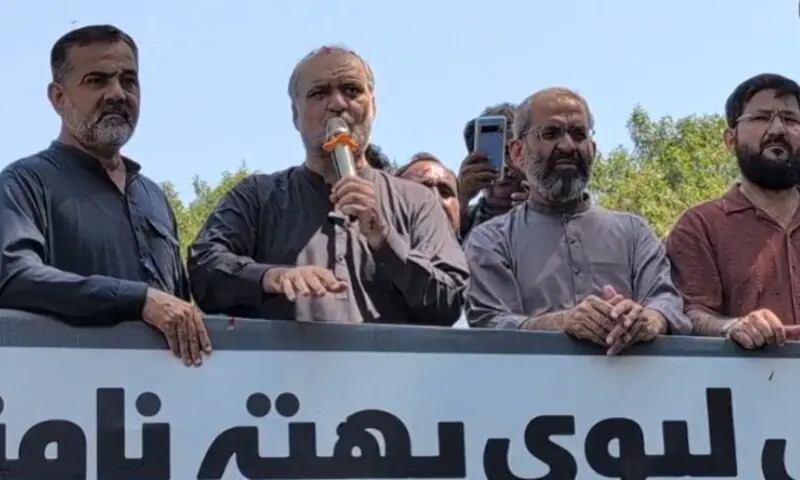
Jamaat-i-Islami (JI) launched an aggressive multi-pronged protest march toward Islamabad on Sunday, mounting direct political pressure on the federal government to abolish the controversial petroleum development levy. Addressing a massive gathering of party supporters at Karachi's Cantonment Railway Station prior to departure, JI Emir Hafiz Naeemur Rehman issued a clear ultimatum: should the coalition government fail to eliminate taxes on petroleum products, the agitation would broaden into a sustained movement aimed at removing the administration from power.
The demonstration encompasses a synchronized rail and road mobilization. The train march departed Karachi alongside motorized road caravans traveling along the national highway grid, traversing key interior Sindh hubs including Landhi, Hyderabad, Nawabshah, Rohri, and Sukkur before converging northward toward Punjab and the federal capital. Rehman stressed that the nationwide mobilization seeks to confront the state's structural dependence on regressive indirect taxation, which he argued disproportionately penalizes working-class households and the country's commercial grassroots.
Commercial & Economic Implications
The protest strikes at the heart of Pakistan's precarious fiscal architecture. The petroleum levy represents a cornerstone of the federal government's non-tax revenue mobilization strategy under the International Monetary Fund's Extended Fund Facility. Eliminating or substantially reducing the levy would create an immediate fiscal hole of several hundred billion rupees in the national budget, jeopardizing primary surplus commitments and macro-stabilization targets.
For wholesale distribution and retail commerce, however, the financial strain of current fuel pricing remains severe. Petroleum levies directly inflate pump prices for high-speed diesel and motor spirit, triggering immediate transmission into domestic freight rates, agricultural pumping costs, and secondary haulage. Transporters operating along the critical north-bound trade corridor have systematically passed these cost spikes onto wholesale distributors and retail merchants. The compounding impact has driven up baseline operating expenses, narrowed gross retail margins, and compressed consumer discretionary spending across both urban and rural commercial markets.
Related Intelligence: JI Mobilizes Islamabad March Against Escalating Petroleum Levy and Power Tariffs
Stakeholder Perspectives & Market Reactions
The escalation in political friction has elicited mixed reactions across business communities and policy circles. Small trader associations and retail merchant bodies have voiced growing alignment with demands for tax relief, noting that soaring energy tariffs and retail fuel costs are suppressing commercial turnover and accelerating business closures. Market participants argue that relentless cost-push pressures have eroded retail working capital.
Conversely, corporate supply chain managers and freight operators have expressed acute apprehension regarding the operational fallout of a prolonged march. Blockades or transit bottlenecks along the N-5 national highway and entrances to Islamabad could paralyze inter-provincial logistics, leaving containerized cargo and perishable food supplies stranded. Meanwhile, institutional economists warn that the federal administration has virtually no fiscal space to compromise on fuel levies without unraveling ongoing external financing arrangements, leaving policymakers trapped between social unrest and macroeconomic contractual obligations.
Forward Outlook & Key Watchpoints
The operational trajectory of the march over the coming days will depend heavily on the federal government's containment strategy and willingness to engage in backdoor dialogue. Observers are closely monitoring whether the administration will permit protesters to stage a prolonged sit-in within the capital or implement preemptive cordons and section-based bans on public assembly.
Key commercial watchpoints include potential disruptions to freight schedules between Karachi's marine ports and upcountry distribution terminals, fluctuations in fuel retail pricing reviews, and the stability of urban retail supply chains. Should the standoff harden into prolonged political instability in Islamabad, it risks rattling domestic equity markets and complicating the execution of critical economic reforms.
Join Our Official WhatsApp Channel
Receive live commodity alerts, policy changes, and commercial intelligence directly on WhatsApp.