
Government and PTI Set for High-Stakes Second Round of Talks
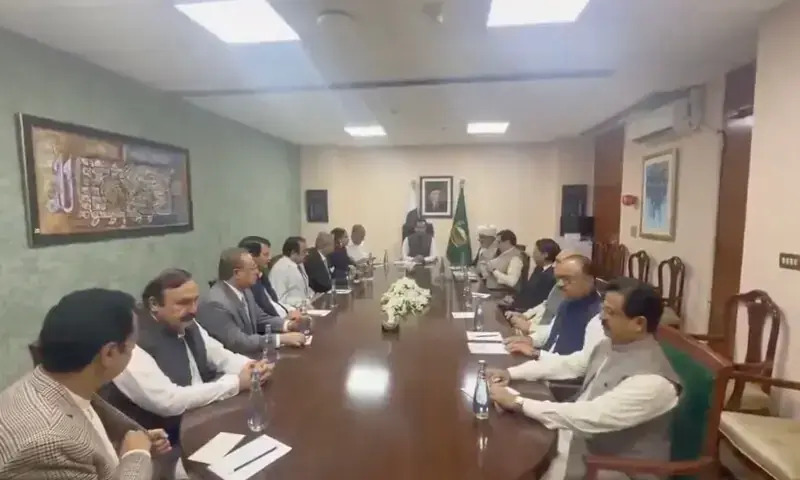
Government and PTI delegations meet for a crucial second round of negotiations as the opposition finalizes strict communication SOPs following recent media controversies.
The Core Development
Political tensions in Pakistan entered a critical phase on Saturday as delegations representing the federal government and the Pakistan Tehreek-e-Insaf (PTI) opposition gathered for the second round of high-stakes negotiations. The resumption of dialogue follows intensive back-channel consultations aimed at bridging a wide partisan divide that has persistently threatened national political stability. Ahead of the formal sitting, opposition leaders convened an emergency session to formulate a rigid framework of standard operating procedures designed to govern communication and procedural conduct throughout the dialogue process.
The preliminary consultations were heavily overshadowed by friction stemming from recent public statements. According to Tehreek Tahaffuz-e-Ain-e-Pakistan (TTAP) spokesperson Akhunzada Hussain Ahmed Yousufzai, inflammatory remarks made by Pakistan Peoples Party (PPP) leader Sherry Rehman on Friday created an adverse atmosphere that lingered late into the night. To insulate the ongoing negotiations from similar external pressures, the opposition coalition reached a consensus on strict media protocols. It was formally decided that neither side will engage with journalists or issue independent statements while the talks remain active. Instead, all communication will be streamlined through a single, jointly approved press statement issued strictly after the conclusion of each session.
Furthermore, the opposition meeting addressed contentious administrative matters, specifically scrutinizing the government's official stance regarding the prevailing law and order situation in Khyber Pakhtunkhwa (KP). Following comprehensive consultations with the KP Chief Minister, the opposition prepared a detailed, counter-position dossier to address federal concerns, which is being formally presented during Saturday's proceedings.
Commercial & Economic Implications
For Kalyar Traders and the broader business community across Pakistan, protracted political instability translates directly into commercial friction, currency volatility, and depressed market confidence. Financial markets and wholesale distribution networks are acutely sensitive to political standoffs between the federal administration and the PTI opposition. Uncertainty surrounding governance directly impacts retail trade, supply chain continuity, and inflationary pressures, as commercial stakeholders delay capital expenditure and inventory expansion pending definitive political settlements.
A stable political environment is an essential prerequisite for macroeconomic recovery, foreign direct investment, and structural fiscal reforms mandated by international financial institutions. Sustained political confrontation routinely disrupts transportation corridors, particularly through KP and Punjab, leading to supply chain bottlenecks that artificially inflate consumer prices for essential commodities. Business councils and trade associations have repeatedly emphasized that prolonged deadlocks undermine investor sentiment, weaken the Pakistani Rupee against major foreign currencies, and stall critical industrial output. Consequently, the commercial sector views these negotiations not merely as a political exercise, but as a vital economic stabilizing mechanism capable of restoring predictability to domestic markets.
Related Intelligence: Khyber Pakhtunkhwa CM Afridi Defends October 4 Long March Amid High Stakes
Stakeholder Perspectives & Market Reactions
Rapprochement efforts have elicited cautious optimism mixed with deep skepticism from various national stakeholders. Industrial bodies, chambers of commerce, and legal experts have welcomed the resumption of face-to-face dialogue, viewing it as the only viable alternative to escalating street agitation. However, market participants remain wary, noting that previous rounds of negotiations have repeatedly collapsed due to mutual distrust and unyielding partisan rhetoric.
Trader associations in major urban centers have issued joint appeals urging both political factions to prioritize national economic stability over partisan maneuvering. Legal analysts point out that while the establishment of media SOPs is a positive step toward reducing sensationalism, substantive compromises on constitutional amendments, electoral transparency, and administrative authority in KP remain indispensable for a lasting accord. Public response, mirrored across digital and print platforms, reflects fatigue with perpetual political turmoil and a strong demand for policy continuity that shields the working class from compounding economic hardships.
Forward Outlook & Key Watchpoints
The trajectory of these negotiations over the coming days will serve as a definitive barometer for Pakistan's immediate political and economic stability. Key watchpoints include the formal adoption and strict adherence to the newly minted media SOPs, the ability of the opposition to deliver a unified stance backed by the KP provincial administration, and the federal government's willingness to accommodate substantive administrative demands.
If the current round yields a mutually acceptable framework, subsequent meetings are expected to establish a structured timeline for addressing broader legislative and electoral disputes. Conversely, a breakdown in talks could trigger renewed protests, heightening security risks and exerting downward pressure on financial markets. Kalyar Traders will continue to monitor these developments closely, advising commercial partners to maintain agile inventory strategies and hedge against potential short-term regulatory and currency fluctuations.
Join Our Official WhatsApp Channel
Receive live commodity alerts, policy changes, and commercial intelligence directly on WhatsApp.