
Khyber Pakhtunkhwa CM Afridi Defends October 4 Long March Amid High Stakes
Khyber Pakhtunkhwa Chief Minister Sohail Afridi remains firm on holding an October 4 long march, as government-opposition talks resume to avert potential economic disruption.
The Core Development
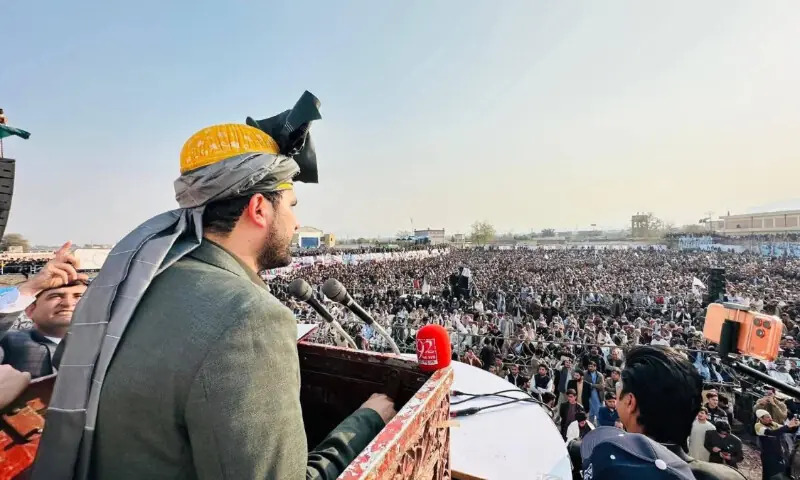
Khyber Pakhtunkhwa Chief Minister Sohail Afridi has remained unyielding in his resolve to execute a high-stakes political long march scheduled for October 4. In public statements disseminated via digital platforms, the chief executive of the province emphasized that Pakistan Tehreek-e-Insaf (PTI) remains the preeminent political force in the country, invoking constitutional guarantees that enshrine the right to peaceful assembly and democratic protest. Originally slated for September 27 to protest the detention of the party founder and former prime minister, the demonstration was deferred to early October following intense political friction.
The announcement coincides with a critical juncture in parliamentary diplomacy, as government delegates and opposition leaders convened for a second round of high-level negotiations inside the Speaker's Chambers at 2:00 PM. These discussions aim to bridge deep ideological chasms and formulate a framework that accommodates democratic dissent while averting civil unrest. However, Chief Minister Afridi's explicit vow to prevent a recurrence of the violent disruptions witnessed on May 9 highlights the fragile security equilibrium governing the federal capital and provincial corridors.
Commercial & Economic Implications
For the commercial and financial architecture of Pakistan, prolonged political instability carries immediate and severe repercussions. Wholesale distribution networks, retail trade corridors, and supply chain logistics between Khyber Pakhtunkhwa and the federal capital face acute vulnerabilities during large-scale political mobilizations. Road closures, container blockades, and heightened security checkpoints routinely paralyze freight transport, driving up fuel consumption, transit times, and ultimately retail prices for essential commodities.
Inflationary pressures remain a persistent concern for Kalyar Traders and the wider business community. Unresolved political standoffs erode investor confidence, stall foreign direct investment, and trigger currency volatility in interbank markets. Financial analysts warn that any escalation into civil unrest directly impacts consumer spending power, dampens retail turnover during critical trading cycles, and strains provincial exchequers through emergency security expenditures rather than developmental allocations.
Related Intelligence: Government Denies Islamabad Road Closures Amid Security Precaution Deployments
Stakeholder Perspectives & Market Reactions
Trade associations, industrial bodies, and chambers of commerce across Pakistan have voiced mounting anxiety over the hardening political stances. Representatives from major business federations issued joint appeals urging both the ruling coalition and opposition leadership to prioritize economic continuity over partisan mobilization. Business leaders emphasize that commercial enterprises are still grappling with high utility tariffs, tight monetary policies, and subdued domestic demand, leaving little fiscal buffer to absorb the shocks of street-level agitations.
Legal experts and constitutional analysts maintain that while peaceful protest is an unalienable right under the Constitution of the Islamic Republic of Pakistan, the state holds a simultaneous obligation to safeguard public property, maintain law and order, and ensure uninterrupted commercial transit. Public response remains deeply polarized, reflecting broader societal fatigue with recurring political gridlocks that sideline pressing economic reforms and fiscal consolidation measures.
Forward Outlook & Key Watchpoints
As the October 4 deadline approaches, market participants and policy observers are closely monitoring several critical indicators. The outcome of the ongoing parliamentary negotiations in the Speaker's Chambers will serve as the primary barometer for whether the march proceeds as a controlled demonstration or transforms into a disruptive confrontation. Key watchpoints include administrative decisions regarding route permits, security deployments along major national highways, and subsequent policy statements from both federal ministers and PTI leadership.
For businesses operating within Pakistan, risk mitigation strategies, diversified supply routing, and careful inventory management will remain paramount over the coming days. The ability of state institutions and political actors to negotiate a peaceful resolution will ultimately dictate whether the nation can avert further economic friction and restore stability to domestic markets.
Join Our Official WhatsApp Channel
Receive live commodity alerts, policy changes, and commercial intelligence directly on WhatsApp.