
Government and PTI Hold High-Stakes Talks Amid Islamabad March Deadlock
Government and PTI officials have initiated a second round of high-stakes negotiations as a deadlock persists over the opposition's planned October 4 Islamabad protest march.
The Core Development
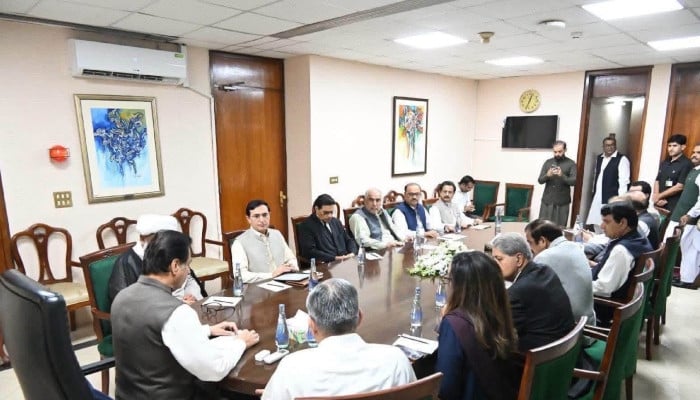
Political tensions in Pakistan have reached a critical juncture as representatives of the federal government and the Pakistan Tehreek-e-Insaf (PTI) sat down for their second round of formal negotiations. The primary stumbling block in the ongoing dialogue remains the opposition party's unyielding stance regarding its scheduled October 4 protest march toward Islamabad. Government representatives, led by senior cabinet ministers, are urging the opposition to reconsider the timing and route of the demonstration, citing severe security concerns and the potential for widespread civil unrest in the federal capital. Conversely, PTI leadership insists that exercising the constitutional right to peaceful assembly is non-negotiable, demanding immediate concessions regarding political prisoners and the broader electoral landscape.
The deadlock has paralyzed routine administrative functions in key urban centers, prompting heavy deployment of law enforcement personnel across Islamabad and Rawalpindi. Authorities have implemented strict containment measures, including the positioning of shipping containers at key entry points and intersections, effectively preempting potential clashes. Intelligence reports indicate that both sides are facing internal pressures; hardline factions within the ruling coalition oppose any substantial compromise, while PTI grassroots supporters view the October 4 deadline as a decisive test of political momentum.
Commercial & Economic Implications
For Pakistan's fragile economic recovery, the protracted political standoff carries severe commercial ramifications. The uncertainty surrounding the Islamabad march has already triggered jitters across major wholesale and retail markets, particularly in Punjab and Sindh. Wholesale distributors report a noticeable slowdown in inter-city freight movement as transporters hesitate to dispatch goods along major national arteries, fearing sudden road closures and container blockades.
Retail trade associations note a sharp contraction in consumer spending in urban markets as households prioritize essential goods over discretionary purchases. Furthermore, the persistent political volatility exerts upward pressure on retail prices and inflation expectations. Supply chain bottlenecks, caused by preemptive security roadblocks, threaten to inflate logistical costs, which will likely be passed down to end-consumers. Financial markets have also registered cautious sentiment, with the Pakistan Stock Exchange experiencing intermittent volatility as foreign and domestic investors weigh the risks of prolonged civil disruption against the backdrop of an ongoing International Monetary Fund stabilization program.
Related Intelligence: Spanish Housing Crisis Sparks Nationwide Protests and Economic Anxiety
Stakeholder Perspectives & Market Reactions
Business councils, chambers of commerce, and industrial bodies have issued urgent appeals to both political actors, demanding restraint and compromise. In joint statements, representatives from the Federation of Pakistan Chambers of Commerce and Industry (FPCCI) emphasized that recurring political deadlocks inflict irreparable damage on export targets and investor confidence. Industrialists in Faisalabad and Lahore warned that factory shutdowns resulting from transport strikes or security lockdowns could derail manufacturing output.
Legal experts remain divided on the constitutional boundaries of the proposed protest. While defense counsels for PTI argue that peaceful assembly is a fundamental right guaranteed under Article 16 of the Constitution of Pakistan, government legal advisors maintain that the state holds the prerogative to regulate public gatherings to preserve public order and economic stability. Public sentiment, meanwhile, reflects profound fatigue, with ordinary citizens caught between political posturing and mounting inflationary pressures.
Forward Outlook & Key Watchpoints
As the October 4 deadline approaches, all eyes remain fixed on the negotiating table and the security apparatus in Islamabad. The immediate trajectory of the nation's political and economic stability hinges on whether a last-minute compromise can be forged to de-escalate tensions. Key indicators to monitor include the final outcome of the current dialogue sessions, potential modifications to PTI's march itinerary, and the government's enforcement of emergency powers or traffic diversions. Failure to reach a consensus could precipitate a confrontational showdown in the capital, with far-reaching consequences for Pakistan's domestic stability and international economic standing.
Join Our Official WhatsApp Channel
Receive live commodity alerts, policy changes, and commercial intelligence directly on WhatsApp.