
Global Sports Capital Under Scrutiny as Premier League Asset Valuations Shift
Manchester United operational underperformance challenges cross-border commercial valuations and sports investment models, testing the financial resilience of elite football assets within global media and hospitality markets.
Geopolitical & Core Developments
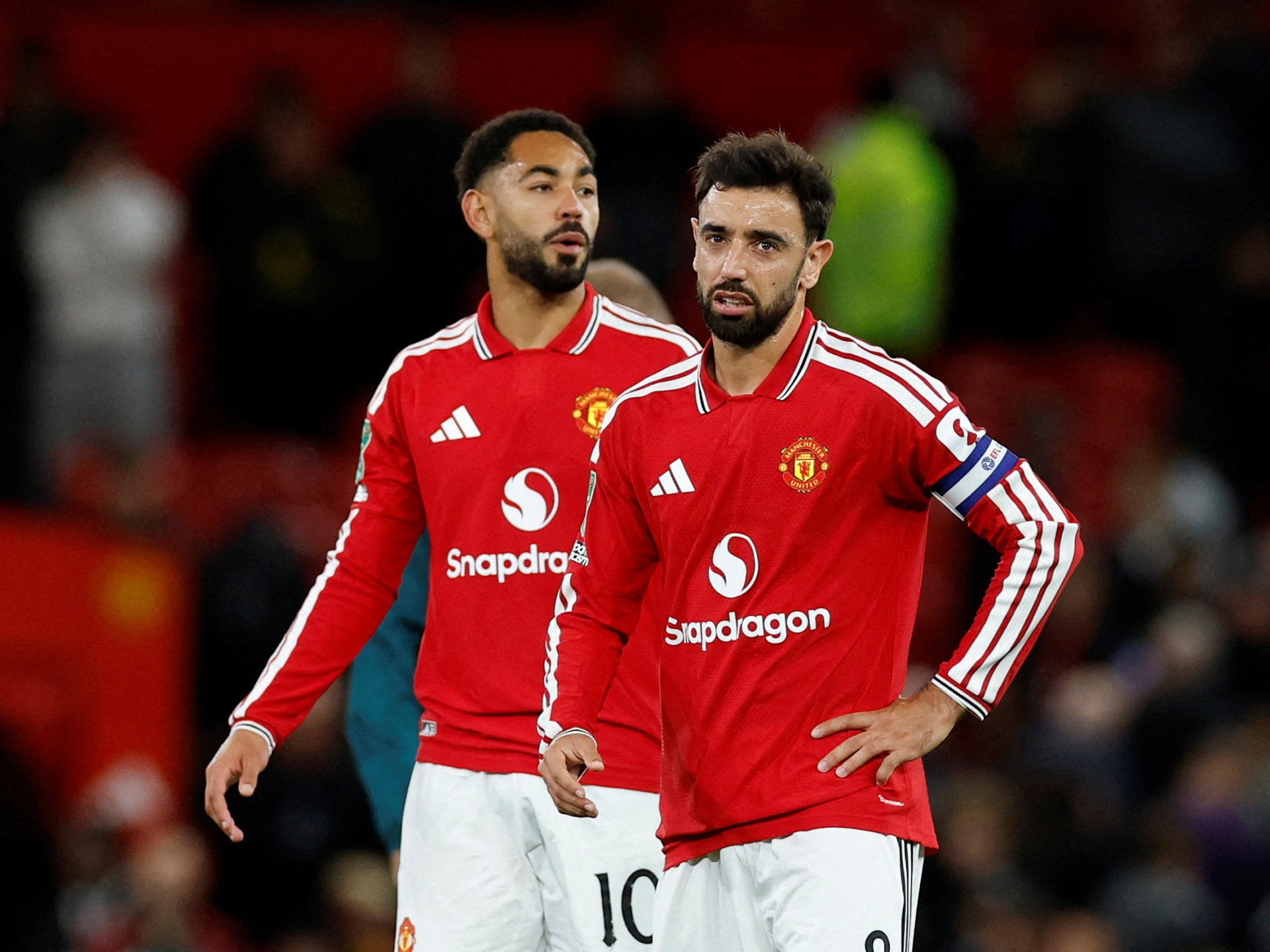
The commercial nexus of international football has increasingly evolved into an arena of cross-border financial governance, soft-power diplomacy, and high-stakes corporate management. The impending Premier League clash between Fulham and Manchester United serves as an acute operational case study for global institutional investors monitoring premium sports assets. Manchester United, an entity capitalized on the New York Stock Exchange and structurally influenced by transatlantic institutional funds alongside British industrial conglomerate INEOS, faces intense organizational scrutiny following a sluggish start to the competitive calendar. The club's reliance on interim and under-fire managerial structures, reflected in heightened pressure on team leadership including Michael Carrick, highlights the structural friction between long-term institutional asset strategy and immediate competitive delivery.
Elite Western football franchises no longer operate merely as localized sporting institutions; they function as transnational media conglomerates. In recent years, ownership patterns across the English Premier League have mirrored broader shifts in international finance, drawing significant direct investment from United States private equity funds, sovereign wealth conduits in the Middle East, and multinational petrochemical entities. When a tier-one asset demonstrates protracted operational underperformance, the operational stability, brand equity, and commercial governance of these globally syndicated organizations face direct stress, influencing stakeholder confidence and executive decision-making across international capital markets.
Global Trade & Economic Ripples
The macro-level implications of European sports asset valuations extend deeply into international media rights syndication, cross-border advertising, and global hospitality supply chains. Premier League broadcasting contracts, valued in the billions of dollars across North American, Asia-Pacific, and European markets, represent a critical export for the United Kingdom service and creative economies. Operational crises at flagship franchises like Manchester United generate measurable downstream effects on linear and streaming subscription trends, transnational merchandising supply networks, and sports betting liquidity.
Furthermore, corporate sponsorships bridging consumer goods, international airline carriers, and global financial institutions are calibrated against continuous brand prestige and high-profile European tournament access. Persistent underperformance jeopardizes subsequent qualification for lucrative UEFA competitions, curtailing anticipated foreign exchange revenue inflows, dampening corporate hospitality expenditure in major metropolitan hubs, and pressuring seasonal retail supply chains spanning manufacturing centers in Southeast Asia. This volatility underscores the vulnerability of consumer-facing sports syndicates to operational shocks.
Related Intelligence: Kohat Police Lines Breach Exposes Supply Chain and Security Vulnerabilities
International Reactions & Diplomatic Stances
Financial market analysts and sports governance bodies have monitored the shifting economics of legacy football institutions with growing analytical rigor. Ratings agencies and market commentators in London and New York have increasingly treated sporting underperformance as an enterprise governance risk, emphasizing that brand depreciation directly influences debt servicing capabilities and stock valuation volatility.
Meanwhile, international athletic governing bodies and domestic regulatory authorities continue to negotiate tighter regulatory frameworks, notably around multi-club ownership models and foreign direct investment oversight. Sovereign wealth advisory groups in the Gulf region and American private equity consortiums maintain a close watch on legacy club valuations, recognizing that operational turbulence often catalyzes equity restructuring, minority stake divestitures, or activist shareholder intervention. Corporate sponsors have similarly adopted risk-mitigated contractual clauses tying future disbursement tranches to performance benchmarks, reflecting an institutional shift toward stringent risk governance.
Strategic Outlook & Future Scenarios
Moving forward, the operational trajectory of globally capitalized athletic institutions will increasingly depend on rigorous structural alignment between sporting operations and commercial enterprise frameworks. The upcoming fixture against Fulham represents more than an isolated domestic contest; it serves as a litmus test for managerial stability and operational viability under rigorous institutional scrutiny.
Should institutional underperformance persist, expectations will heighten regarding executive restructuring, strategic operational pivots, and accelerated balance-sheet reappraisals by primary equity holders. Over the medium term, legacy franchises will confront an intensifying competitive environment driven by state-backed sovereign entities and disciplined multi-club networks. The broader market trajectory indicates that brand heritage alone will no longer insulate premier sports enterprises from corporate devaluation in an increasingly fragmented, capital-intensive global entertainment marketplace.
Join Our Official WhatsApp Channel
Receive live commodity alerts, policy changes, and commercial intelligence directly on WhatsApp.