
French Civil Unrest Escalates Political Fragmentation and European Economic Uncertainty
Violent nationwide unrest across France exposes deepening political divisions, clouding economic forecasts and amplifying domestic instability ahead of pivotal upcoming elections.
Geopolitical & Core Developments
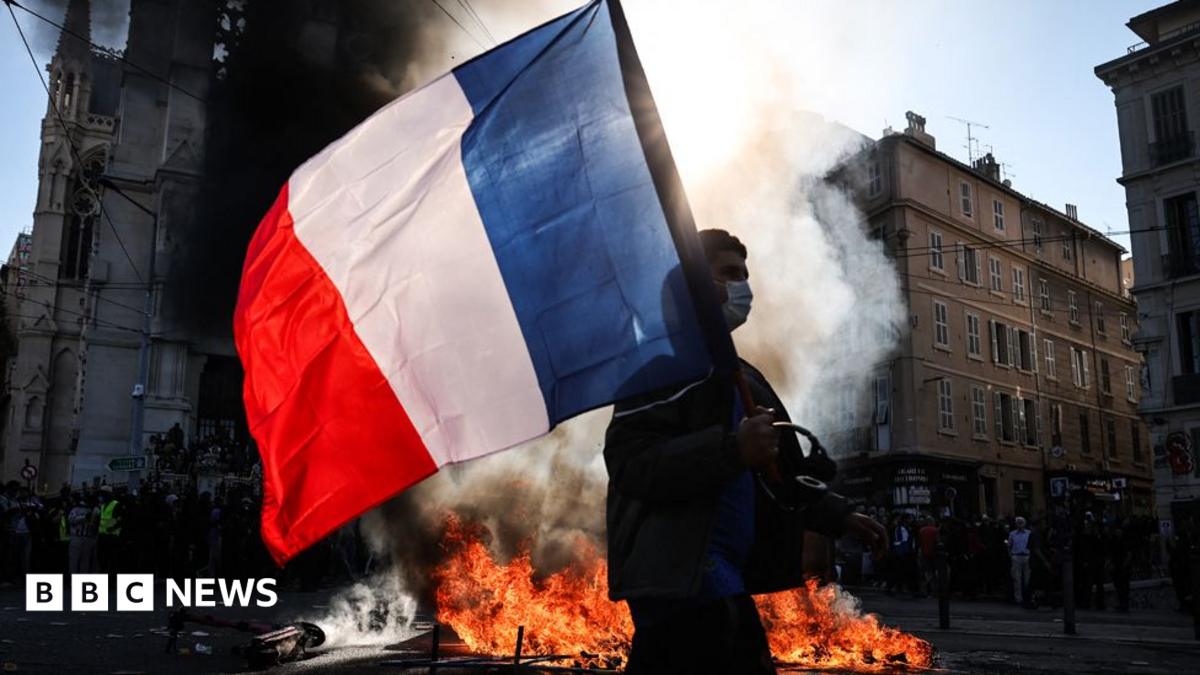
France has entered another cycle of profound civil unrest as violent demonstrations, looting, and targeted vandalism swept urban centers over the weekend. What originated as localized protests swiftly metastasized into coordinated nationwide confrontations between youth cohorts and federal security services. Major metropolitan areas including Paris, Marseille, Lyon, and Toulouse experienced widespread damage to public infrastructure, commercial storefronts, and municipal transport networks. Over forty-five thousand police personnel and tactical units were deployed to re-establish public order, resulting in thousands of detentions and substantial injuries across both sides.
The strategic stakes extend far beyond immediate policing failures. The rapid descent into chaos highlights severe institutional alienation and socio-economic fractures within the French Republic. Observers assess that the recurring turbulence severely erodes the governing administration's executive authority, directly playing into the hands of both far-right and hard-left political factions. With critical electoral cycles looming, the crisis is functioning as a critical referendum on state legitimacy, public safety, and institutional governance across one of Europe's founding democratic powers.
Global Trade & Economic Ripples
The immediate economic toll of the unrest is directly impacting European commercial stability. France's retail, hospitality, and public transit sectors have suffered damages estimated in the hundreds of millions of euros, with domestic supply chains experiencing abrupt disruptions due to curfews, logistical rerouting, and warehouse security concerns. Small- and medium-sized enterprises (SMEs) concentrated in urban cores have incurred the heaviest direct losses through inventory destruction and forced commercial closures during peak summer trading windows.
Beyond domestic logistics, the instability introduces broader friction into European cross-border freight and consumer confidence. The travel and tourism sector, which forms a pillar of France's trade surplus, faces sudden cancellations and advisory downgrades from international markets. On sovereign bond desks, the spread between French OATs (Obligations assimilables du Trésor) and German Bunds has widened marginally, reflecting investors' wariness regarding sovereign reform capacity, long-term fiscal discipline, and budgetary consolidation within the Eurozone's second-largest economy.
Related Intelligence: Severe Unrest Across France Threatens European Economic Stability and Heritage
International Reactions & Diplomatic Stances
International responses have focused on civil stability and the safety of foreign nationals. Several sovereign partners, including the United Kingdom, the United States, and multiple European Union neighbors, updated their official travel advisories, urging citizens to avoid affected urban quarters and exercise heightened vigilance. Multilateral organizations, including the United Nations Human Rights Office, issued statements urging French authorities to address underlying systemic inequities while maintaining proportionate police conduct during civil crowd management.
Diplomatically, the domestic volatility complicates France's foreign policy posture. European leaders have privately voiced concerns that domestic paralysis diminishes Paris's ability to drive decisive European Union initiatives regarding strategic autonomy, industrial decarbonization subsidies, and unified defense procurement. Institutional market analysts at major investment banks note that continuous urban unrest risks solidifying sovereign risk premiums if structural governance deficits persist.
Strategic Outlook & Future Scenarios
The trajectory of the current crisis hinges on the state's capacity to restore sustained public order without further inflaming marginalized urban populations. A failure to de-escalate tensions could trigger secondary labor strikes and student mobilizations, compounding existing pressures on public sector infrastructure. Under such conditions, political opposition parties will likely escalate legislative challenges, potentially prompting parliamentary no-confidence motions or cabinet reshuffles.
Over the medium term, the persistent atmosphere of instability creates a volatile backdrop for forthcoming municipal and European electoral milestones. Mainstream centrist parties face growing voter attrition toward hardline law-and-order platforms, a shift that could reshape France's legislative balance and future foreign policy orientations. Unless structural dialogue succeeds in bridging socio-economic disparities, France faces recurring episodes of volatility that will inevitably weigh on investor confidence and European institutional cohesion.
Join Our Official WhatsApp Channel
Receive live commodity alerts, policy changes, and commercial intelligence directly on WhatsApp.