
Severe Unrest Across France Threatens European Economic Stability and Heritage
Escalating civil violence across major French metropolitan hubs has resulted in catastrophic structural damage to national landmarks and commercial centers, triggering broader economic concerns for Western Europe.
Geopolitical & Core Developments
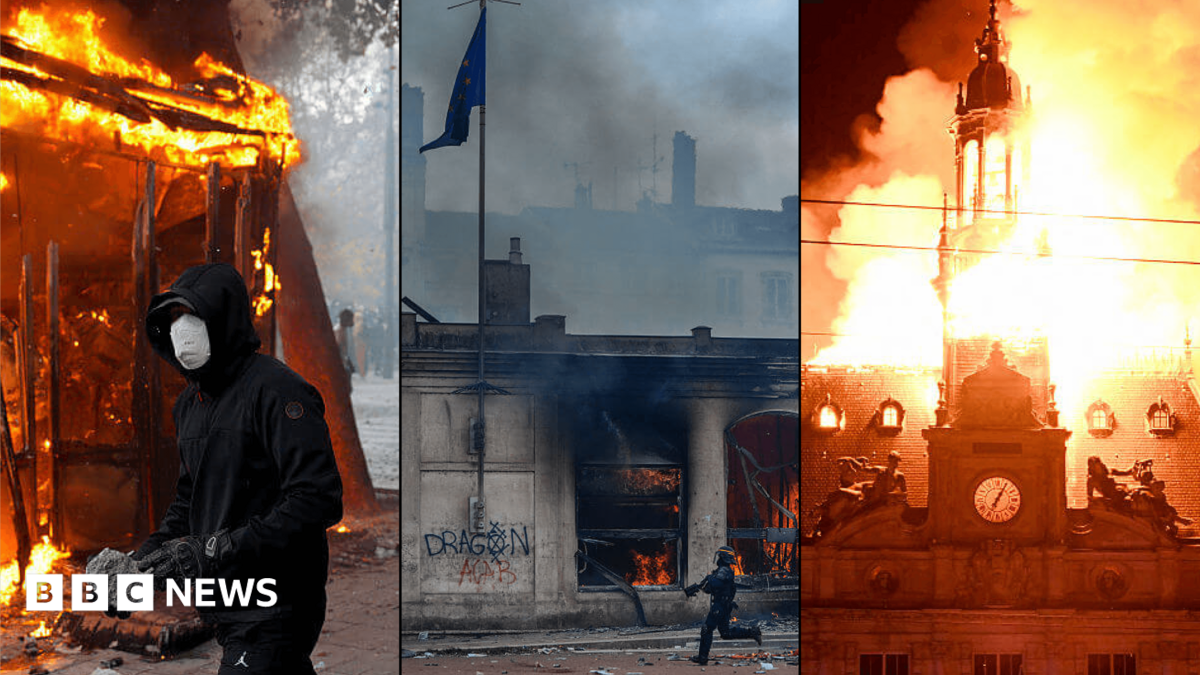
France has entered a volatile phase of sustained domestic upheaval, characterized by coordinated rioting, widespread vandalism, and severe infrastructure destruction across Paris, Marseille, Lyon, and regional capitals. While street mobilization remains a historical staple of French public expression, the acute destruction directed at national landmarks, administrative seats, and high-density commercial strips marks an unprecedented escalation. Over recent days, historic architectural façades have been defaced, municipal town halls set ablaze, and public transport fleets rendered inoperable.
The crisis places intense pressure on President Emmanuel Macron's administration, eroding the executive branch's domestic political capital and constraining its broader geopolitical posture within the European Union. Security forces have mobilized tens of thousands of gendarmes and police units, yet operational control over volatile suburbs and city centers remains tenuous during overnight curfews. The systemic degradation of state assets underscores deep socio-economic fissures, leaving the central government vulnerable to legislative gridlock and emboldening both populist and far-right opposition factions ahead of key European parliamentary deliberations.
Global Trade & Economic Ripples
Beyond property destruction, the commercial fallout from nationwide disruptions is rippling across European markets. France, the European Union's second-largest economy, serves as a vital arterial link for cross-border transit, logistics, and maritime trade. Blockades along key transport arteries and targeted strikes at logistics hubs have interrupted trans-European freight schedules, compounding supply chain friction for automotive, consumer goods, and industrial manufacturing sectors across the continent.
Retail and tourism sectors—indispensable pillars of the French gross domestic product—are bearing the immediate brunt. Central commercial districts in Paris and Lyon report significant losses due to pervasive closures, canceled reservations, and physical inventory loss. Financial analysts project that prolonged instability could shave measurable fractions off France's quarterly output. Furthermore, institutional investors are reassessing French sovereign risk premiums, reflecting concerns over debt consolidation targets and administrative capacity to execute structural economic reforms.
Related Intelligence: French Unrest Triggers Supply Chain Jitters Amid European Economic Disruption
International Reactions & Diplomatic Stances
Multilateral bodies and sovereign governments have issued cautious assessments, balancing diplomatic protocol with concern over citizen safety. The United Nations human rights apparatus has called for balanced security deployments and de-escalation, urging state authorities to address core socioeconomic grievances while respecting fundamental rights. Concurrently, diplomatic missions across Europe, North America, and East Asia have upgraded travel advisories for France, advising foreign nationals to avoid urban protest zones and anticipate transit halts.
European partners, particularly Germany, observe the instability with growing apprehension. A compromised French executive limits Berlin-Paris bilateral coordination, which remains essential for advancing joint initiatives on EU industrial policy, energy security frameworks, and geopolitical alignment against external threats. Global rating agencies have emphasized that persistent domestic conflict could weaken investor confidence, complicating France's sovereign borrowing conditions in an era of tightened monetary policy.
Strategic Outlook & Future Scenarios
The trajectory of the unrest depends heavily on the French government's ability to restore public order without triggering further escalatory cycles. Strategic scenarios point toward elevated emergency policing powers, including the potential deployment of specialized domestic counter-insurgency apparatuses if local governance continues to falter. In the absence of a comprehensive national dialogue addressing economic marginalization and administrative reform, recurring flare-ups remain highly probable.
In the medium term, the visible degradation of Paris's urban infrastructure raises operational questions ahead of high-profile international sporting and diplomatic summits. Prolonged unrest threatens to diminish foreign direct investment into Western Europe, dampen international consumer confidence, and divert capital toward more stable regional markets. Macron's administration faces a narrowing window to establish civic peace before structural economic degradation becomes entrenched across vital domestic sectors.
Join Our Official WhatsApp Channel
Receive live commodity alerts, policy changes, and commercial intelligence directly on WhatsApp.