
Federal-Opposition Talks Collapse as KP Chief Minister Blamed for Sabotage
Interior Minister Mohsin Naqvi announced the collapse of negotiations between the federal government and the opposition, accusing the Khyber Pakhtunkhwa chief minister of derailing a prospective counterterrorism agreement.
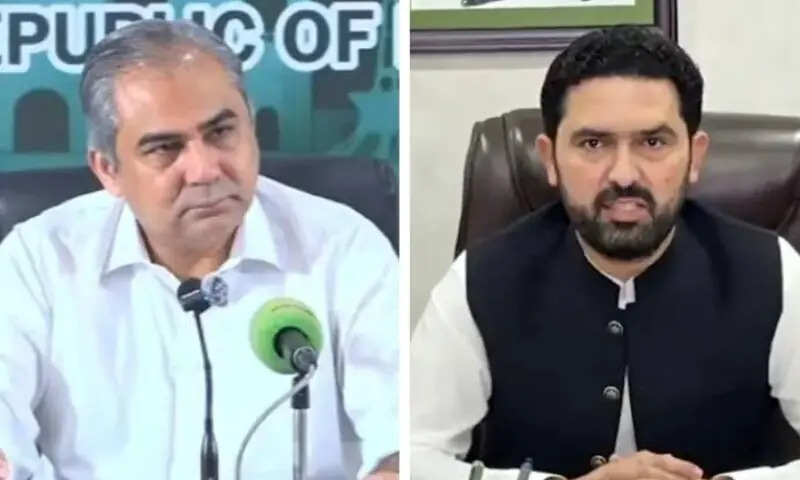
The Core Development
Negotiations between the federal government and the opposition have officially collapsed following the launch of a high-stakes long march by the Pakistan Tehreek-e-Insaf (PTI). Addressing an emergency press conference in Islamabad on Sunday, Interior Minister Mohsin Naqvi announced that all diplomatic avenues had broken down after an intensive second round of weekend talks concluded without any tangible results. The breakdown occurred despite initial optimism that both sides were inching toward a consensus on critical national security and administrative protocols.
According to federal authorities, the discussions had initially progressed toward a breakthrough. Mr Naqvi revealed that the Khyber Pakhtunkhwa government had previously agreed to sign a formal written accord and submit a comprehensive implementation framework within a 72-hour window. This framework was primarily designed to institutionalize joint counterterrorism initiatives across provincial boundaries. However, in an abrupt reversal, the PTI leadership backtracked on the commitments, opting instead to advance with their scheduled protest demonstrations.
Mr Naqvi directed sharp criticism toward Khyber Pakhtunkhwa Chief Minister Sohail Afridi, accusing him of acting in bad faith and deliberately sabotaging the negotiation process from within. Following the collapse, the federal administration reiterated its commitment to upholding public order, issuing strict warnings that any attempts to violate Islamabad High Court directives regarding the protests will be met with immediate and uncompromising legal repercussions.
Commercial & Economic Implications
Political instability and protracted street agitation continue to exert a heavy toll on Pakistan's fragile economic recovery, directly threatening commercial activities across major urban centers. Periodic transport disruptions, containerized road closures, and heightened security lockdowns severely paralyze wholesale distribution networks and retail trade corridors, particularly in the twin cities of Islamabad and Rawalpindi.
Supply chain bottlenecks resulting from sudden political unrest trigger immediate upward pressure on perishable food prices and essential commodities due to delayed freight movement. Wholesale markets face inventory stagnation, while consumer confidence dips sharply amid fears of prolonged civil disruption. For an economy striving to stabilize inflation and restore investor confidence under stringent macroeconomic stabilization programs, recurring political volatility acts as a major deterrent to foreign direct investment and domestic commercial expansion.
Related Intelligence: Spanish Housing Crisis Sparks National Unrest and Political Instability
Stakeholder Perspectives & Market Reactions
Business councils, industrial associations, and trade bodies have expressed deep dismay over the collapse of political dialogue, warning that renewed confrontation will derail nascent economic stabilization efforts. Chambers of commerce across Punjab and Khyber Pakhtunkhwa have repeatedly emphasized that continuous political polarization directly harms manufacturing output and daily wage earners.
Legal experts have noted that the failure to reach a constitutional consensus raises questions about the enforcement of judicial orders concerning public assembly and freedom of movement. Meanwhile, public response remains polarized, with citizens expressing fatigue over the endless cycle of political brinkmanship and its immediate economic fallout.
Forward Outlook & Key Watchpoints
As the political confrontation enters a more volatile phase, market analysts and policy observers are closely monitoring several critical indicators over the coming days. Key watchpoints include the enforcement of Islamabad High Court orders, the government's operational response to the ongoing long march, and the potential for back-channel communications to resume.
Unless political stakeholders establish a sustainable framework for dispute resolution, recurring disruptions will continue to test the resilience of Pakistan's commercial markets and administrative machinery. Strict policy enforcement and maintaining logistical continuity remain paramount for mitigating economic damage in the near term.
Join Our Official WhatsApp Channel
Receive live commodity alerts, policy changes, and commercial intelligence directly on WhatsApp.