
Federal Government Imposes Emergency in Khyber Pakhtunkhwa Citing Security Failures
Federal authorities imposed emergency rule in Khyber Pakhtunkhwa, citing governance failures and alleging a nexus between the provincial administration and terrorist groups, escalating political and economic tensions.
The Core Development
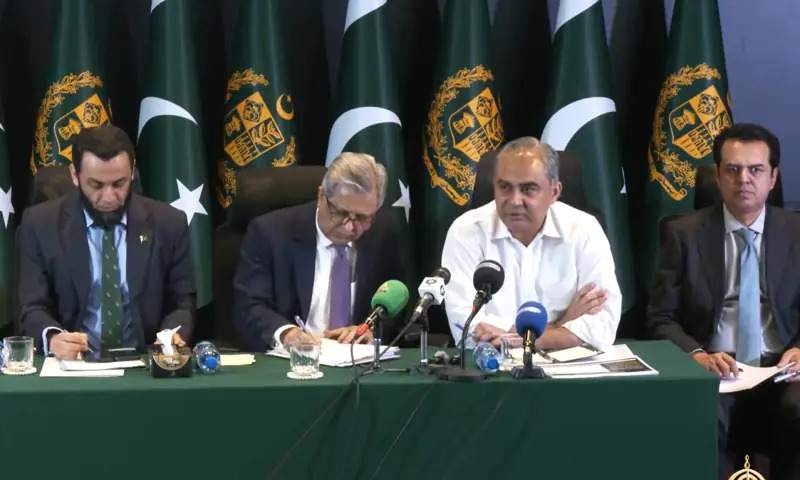
In a high-stakes political and constitutional escalation, the federal government officially imposed an emergency and governor's rule in Khyber Pakhtunkhwa (KP). The decision, swiftly approved by the President of Pakistan following a formal federal cabinet recommendation, was announced during an emergency joint press conference led by Information Minister Attaullah Tarar, Interior Minister Mohsin Naqvi, Law Minister Azam Nazeer Tarar, and Minister of State for Interior Tallal Chaudhry.
Federal ministers laid bare a series of grave allegations, claiming that the Pakistan Tehreek-e-Insaf (PTI) led provincial administration maintained an unacceptable nexus with terrorist networks operating within the region. According to federal officials, the provincial government systematically failed to deploy adequate counterterrorism resources, neglecting internal security and compromising the writ of the state. This move follows months of escalating friction between Islamabad and Peshawar over security paradigms, intelligence sharing, and broader political deadlocks, including access to jailed former prime minister Imran Khan.
Commercial & Economic Implications
For Kalyar Traders and the wider business community across Pakistan, the imposition of emergency rule in a vital border province carries profound commercial and economic ramifications. Khyber Pakhtunkhwa serves as a critical trade artery, particularly for bilateral commerce with Central Asia via the Torkham border crossing. Prolonged political instability, heightened security lockdowns, and administrative uncertainty directly threaten wholesale distribution networks, retail trade, and regional supply chains.
Market analysts warn that persistent administrative paralysis in KP could trigger localized inflationary spikes. Disruptions in transportation routes and freight movement inevitably inflate logistics costs, which are ultimately passed down to consumers already grappling with high utility tariffs and inflationary pressures. Furthermore, foreign and domestic investor confidence remains fragile; political volatility of this magnitude deters capital deployment in industrial zones across Peshawar, Hattar, and Gadoon, undermining broader national economic recovery targets.
Related Intelligence: Poland Investigates Alleged Assassination Plot Targeting Prime Minister Tusk
Stakeholder Perspectives & Market Reactions
Reaction from political stakeholders, trade bodies, and legal experts has been sharply polarized. Representatives from the PTI have vehemently condemned the emergency declaration, labeling it an unconstitutional usurpation of provincial autonomy and a desperate attempt to suppress political opposition. Party leadership maintains that federal interference will only worsen the security crisis by alienating local populations and deepening political polarization.
Conversely, federal representatives and allied political factions defend the measure as an unavoidable constitutional intervention necessitated by an extraordinary security emergency. Major trade associations and chambers of commerce in Peshawar and Islamabad have expressed cautious concern, urging both federal and provincial stakeholders to prioritize economic continuity and ensure that commercial transit corridors remain unhindered amidst the political turmoil. Legal minds remain divided on the constitutional longevity of the governor's rule, anticipating intense litigation in superior courts.
Forward Outlook & Key Watchpoints
As the situation unfolds, key market players and economic observers must monitor several critical indicators over the coming weeks. The immediate priority is the maintenance of law and order and the uninterrupted flow of commercial traffic along major trade routes. Any escalation in civil unrest or militant retaliation could prompt broader curfews, severely impacting retail activity and wholesale markets.
Additionally, the legal battles in the Supreme Court and Peshawar High Court regarding the constitutionality of the emergency will dictate the political trajectory of the province. For businesses operating in Pakistan, navigating this period requires agile risk management, diversified supply chain planning, and close monitoring of regulatory directives issued by the newly empowered provincial administration under governor's rule.
Join Our Official WhatsApp Channel
Receive live commodity alerts, policy changes, and commercial intelligence directly on WhatsApp.