
Federal Constitutional Court Ruling Sparks Workplace Harassment Legal Debate
Legal experts express alarm after the Federal Constitutional Court sets aside an Islamabad High Court workplace harassment judgment involving a National Bank of Pakistan employee.
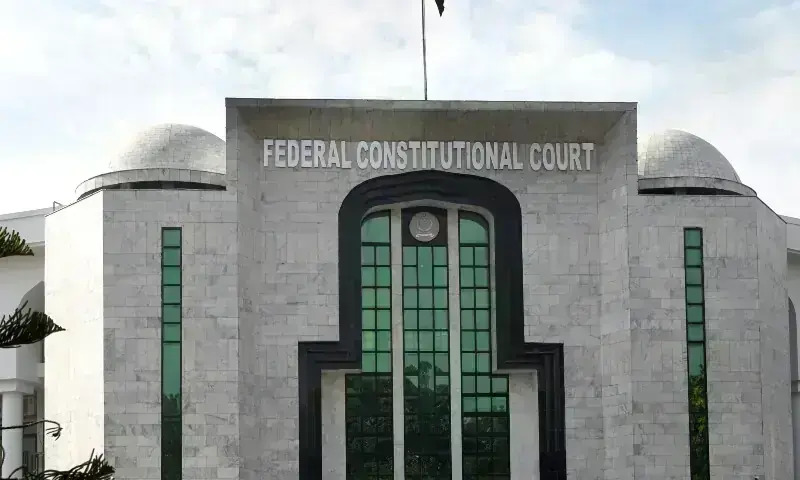
The Core Development
The legal and journalistic landscapes of Pakistan have been stirred following a high-profile ruling by the Federal Constitutional Court (FCC), which formally set aside a previous Islamabad High Court (IHC) judgment in a landmark workplace harassment case. The legal battle originates from a complaint filed in 2012 by Nadia Sarwar, an employee of the state-owned National Bank of Pakistan (NBP) who had been serving the institution since 2008.
According to case details, Sarwar accused two colleagues, Aqeel Abbas and Usman Shahid, of systemic workplace harassment through the alleged misuse of their administrative authority. The original grievances detailed coercive practices, including forcing the complainant to remain in the office well beyond official working hours and compelling her to disclose personal information when applying for medical and administrative leave. While lower forums and the Islamabad High Court had previously examined the procedural and substantive merits of the allegations, the recent FCC intervention has upended the trajectory of institutional accountability and judicial precedent concerning workplace protection standards.
Commercial & Economic Implications
While ostensibly a matter of jurisprudence and labor law, the ruling carries profound implications for the broader commercial and financial sectors in Pakistan. State-owned enterprises and large commercial banks rely heavily on stringent corporate governance, transparent human resource policies, and robust internal compliance frameworks to maintain operational integrity and investor confidence.
When high-profile disputes involving state financial institutions face protracted judicial uncertainty or reversals at apex judicial tiers, it introduces systemic risk regarding corporate culture and regulatory enforcement. For the retail and wholesale banking sectors, maintaining an equitable, secure, and legally protected working environment is vital for retaining skilled human capital, particularly female professionals. Any perception of weakening legal protections against administrative overreach or harassment can adversely impact workforce participation rates, institutional productivity, and compliance with international environmental, social, and governance (ESG) benchmarks increasingly scrutinized by foreign investors and multilateral financial institutions.
Related Intelligence: Ethiopian Conflict Escalation Threatens Horn of Africa Stability and Trade
Stakeholder Perspectives & Market Reactions
The judgment has drawn sharp criticism from prominent legal circles, human rights advocates, and trade unions across Pakistan. Legal experts argue that overturning established high court verdicts in harassment matters could create a chilling effect, discouraging victims from coming forward and utilizing statutory protection mechanisms established under national labor and gender equality legislation.
Conversely, defense representatives and institutional observers emphasize the necessity of strict adherence to due process, evidentiary standards, and the protection of accused parties from potential administrative or personal vendettas within corporate hierarchies. Industry bodies monitoring labor standards note that the lack of clear, predictable judicial outcomes in such cases complicates corporate compliance strategies, leaving human resource departments vulnerable to conflicting legal interpretations between high courts and constitutional benches.
Forward Outlook & Key Watchpoints
As the fallout from the FCC decision reverberates through legal and financial corridors, several key watchpoints will determine the long-term trajectory of workplace jurisprudence in Pakistan. Analysts will closely monitor how lower courts and high courts interpret the binding nature of the FCC judgment in ongoing and future employment litigation.
Furthermore, institutional stakeholders are urging regulatory bodies, including the State Bank of Pakistan and the Ministry of Finance, to reinforce internal audit mechanisms and clarify compliance guidelines for state-owned financial institutions. The ultimate test will lie in whether legislative and judicial bodies can balance rigorous due process with robust safeguards for vulnerable employees, ensuring that corporate environments remain conducive to fair labor practices and sustained economic productivity.
Join Our Official WhatsApp Channel
Receive live commodity alerts, policy changes, and commercial intelligence directly on WhatsApp.