
Federal Constitutional Court Ruling Sparks Workplace Harassment Debate
Legal experts and civil society leaders have criticized a recent Federal Constitutional Court ruling that overturned a landmark Islamabad High Court judgment in a prolonged workplace harassment case involving a National Bank of Pakistan employee.
The Core Development
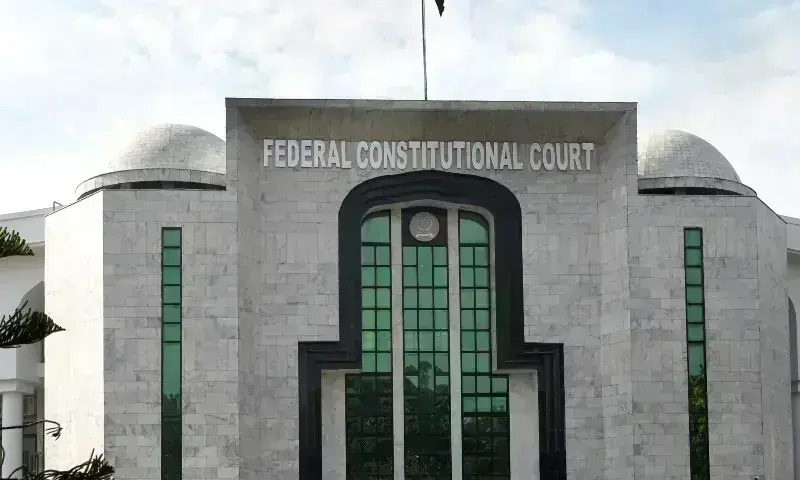
In a landmark legal development that has reverberated across Pakistan's judicial and corporate landscape, the Federal Constitutional Court (FCC) has issued a controversial judgment setting aside an earlier Islamabad High Court (IHC) ruling in a high-profile workplace harassment case. The legal battle originates from a complaint filed in 2012 by Nadia Sarwar, an employee of the National Bank of Pakistan (NBP) who had been with the institution since 2008.
According to case details, Sarwar alleged that two senior colleagues, Aqeel Abbas and Usman Shahid, subjected her to sustained professional harassment by systematically misusing their executive authority. The grievance detailed coercive practices, including compelling the employee to remain in the office well beyond official working hours without operational justification and demanding intrusive personal disclosures regarding applications for medical and casual leave.
The case wound its way through various administrative tribunals and high court benches over more than a decade, culminating in an IHC decision that recognized the systemic power imbalances inherent in the allegations. However, the recent FCC intervention has dismantled the high court's findings, triggering a profound debate regarding the interpretation of protection laws for women in the Pakistani workforce.
Commercial & Economic Implications
While ostensibly a legal dispute, the ramifications of this judicial reversal extend deeply into Pakistan's commercial, financial, and corporate sectors. A stable, transparent, and equitable labor environment is a prerequisite for sustainable economic growth, foreign investment, and corporate governance compliance. Financial institutions, particularly state-backed entities like the National Bank of Pakistan, employ tens of thousands of professionals nationwide and serve as bellwethers for national employment standards.
Market analysts and institutional investors increasingly incorporate Environmental, Social, and Governance (ESG) metrics into their evaluations of Pakistani enterprises. Weakened judicial protections against workplace harassment risk damaging institutional credibility, lowering employee morale, and reducing productivity across the banking and financial services sector. Furthermore, persistent legal uncertainty regarding labor rights can deter female labor force participation—a critical component for boosting Pakistan's gross domestic product and fostering inclusive economic development.
Related Intelligence: Tennessee Courts Grant Stay of Execution for Christa Pike
Stakeholder Perspectives & Market Reactions
The FCC judgment has drawn sharp criticism from prominent legal practitioners, human rights advocates, and trade union representatives. Senior legal minds argue that the apex court's interpretation restricts the broad protective scope intended by the Protection against Harassment of Women at the Workplace Act of 2010. Critics contend that demanding excessively stringent evidentiary burdens in institutional harassment cases effectively shields perpetrators who leverage managerial hierarchies to intimidate subordinates.
Conversely, defense representatives maintain that judicial scrutiny must rigorously protect due process rights for all parties involved in administrative disputes, guarding against potential misuse of workplace regulations. Nonetheless, public response from civil society organizations and journalist bodies remains overwhelmingly skeptical, with many calling for legislative clarification to reinforce statutory safeguards for vulnerable employees across corporate Pakistan.
Forward Outlook & Key Watchpoints
As the legal community digests the full text of the FCC judgment, attention turns to potential review petitions and subsequent judicial filings. Legal strategists are closely monitoring whether the complainant will pursue extraordinary remedies or if the ruling will prompt parliamentary intervention to amend existing labor statutes.
Key watchpoints for corporate observers include how federal and provincial ombudsperson offices will interpret this precedent in pending harassment adjudication, whether commercial banks will proactively revise internal compliance protocols, and if labor unions will successfully lobby for stronger statutory protections. The trajectory of this case will undoubtedly serve as a critical benchmark for institutional accountability and gender equity within Pakistan's formal economy for years to come.
Join Our Official WhatsApp Channel
Receive live commodity alerts, policy changes, and commercial intelligence directly on WhatsApp.