
Delhi De-Notifies Historic Jantar Mantar Protest Site After Three Decades
Authorities in New Delhi have officially de-notified the iconic Jantar Mantar protest site, curbing public demonstrations in the capital commercial heart after more than three decades.
The Core Development
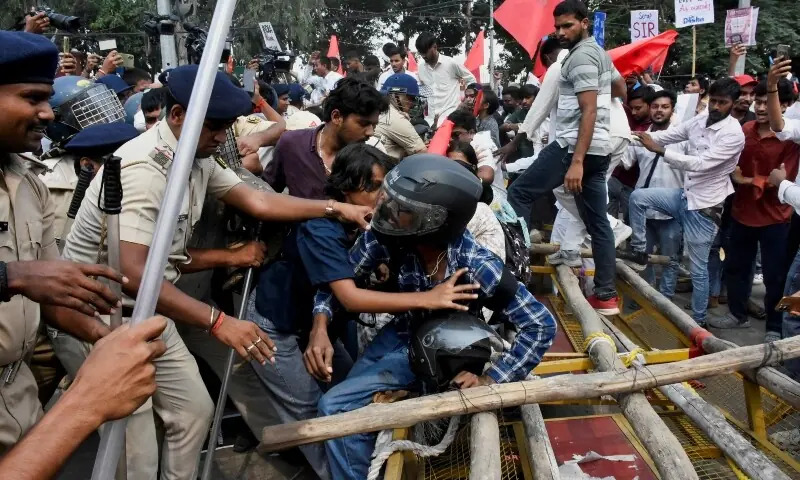
In a landmark administrative shift, the Delhi Police have officially stripped Jantar Mantar of its designation as a sanctioned protest site, ending more than three decades of public demonstrations along the historic stretch of road in central New Delhi. The order, formally issued on Monday, confirms that the site adjacent to the 18th-century observatory will no longer host rallies, indefinite sit-ins, or civil society assemblies. For over thirty years, the thoroughfare served as India's premier theater of public dissent, positioned strategically between the federal seat of political power at Raisina Hill and the bustling commercial hub of Connaught Place. Over the decades, diverse groups ranging from national trade unions and defense veterans to anti-corruption crusaders and student movements utilized the venue to capture the attention of federal lawmakers. Municipal authorities cited persistent logistical congestion, sound pollution, and security concerns associated with high-profile diplomatic and administrative corridors as primary drivers behind the decision to de-notify the venue.
Commercial & Economic Implications
From an urban economics and trade infrastructure perspective, the de-notification carries tangible consequences for local businesses, commercial transit, and regional market stability. Jantar Mantar's proximity to Connaught Place—one of South Asia's most expensive office and retail markets—meant that recurring mass mobilizations routinely led to police barricades, traffic diversions, and abrupt closures of central transit nodes. Wholesale distributors, retail outlets, and logistics operators frequently endured delivery delays and depressed footfall during multi-day demonstrations. For regional trade observers, including supply chain analysts in Pakistan tracking South Asian municipal governance, the move highlights how high-density metropolitan hubs manage the friction between civic rights and trade continuity. The systematic removal of recurrent protest activity unblocks vital logistical arteries, stabilizes local commercial property predictability, and minimizes retail business interruptions. Conversely, pushing demonstrations to peri-urban peripheries alters transit economics, shifting security and operational costs toward alternative civic corridors.
Related Intelligence: Southeast Asian Haze Reignites Regional Friction and Agricultural Supply Chain Risks
Stakeholder Perspectives & Market Reactions
Market associations, civil liberty groups, and retail consortiums have responded to the de-notification with contrasting viewpoints. Local merchant unions and retail federations in central Delhi welcomed the move, noting that decades of road closures had depressed discretionary spending, compromised retail access, and created recurring security overheads for businesses operating along Parliament Street. In contrast, labor federations, independent rights advocates, and trade union leaders condemned the decision as a decisive blow to democratic participation and worker representation. Legal analysts noted that while municipal administrations possess broad powers to regulate public order under urban policing frameworks, completely removing central protest zones without providing equally accessible central alternatives challenges constitutional conventions surrounding the freedom of assembly.
Forward Outlook & Key Watchpoints
Moving forward, the primary focus shifts to enforcement mechanisms and the designation of secondary assembly hubs. Authorities are expected to redirect future public gatherings toward designated grounds on the outskirts of the capital, such as Ramlila Ground or Burari, which feature distinct logistical dynamics and significantly reduced political visibility. Legal challenges contesting the de-notification order are widely anticipated in the Delhi High Court and Supreme Court, where petitioners are expected to argue against the curtailment of public space. Investors, corporate risk officers, and logistics networks will closely monitor how future union and civic mobilizations adapt to the ban. The critical watchpoint will be whether civil movements comply with peripheral zoning or if spontaneous, decentralized protests emerge across alternative central transport hubs, potentially introducing new operational risks for urban distribution networks.
Join Our Official WhatsApp Channel
Receive live commodity alerts, policy changes, and commercial intelligence directly on WhatsApp.