
Federal Government Imposes Emergency in Khyber Pakhtunkhwa Citing National Security Threats
The federal government has imposed emergency rule in Khyber Pakhtunkhwa citing critical threats to national security, prompting deep parliamentary debate and escalating concerns over regional commercial corridors.
The Core Development
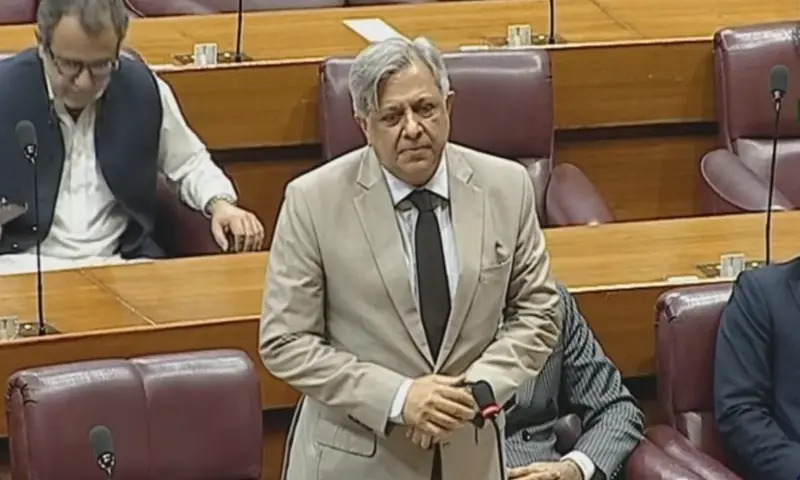
In a dramatic escalation of political and security measures, Federal Minister for Law and Justice Azam Nazeer Tarar announced before the National Assembly on Wednesday that the federal administration has enforced a state of emergency across Khyber Pakhtunkhwa (KP). The minister affirmed that internal operational stability in the province had deteriorated to a degree that directly jeopardized the territorial and institutional security of the federation.
The formal proclamation was introduced on the floor of the lower house by Federal Minister for Parliamentary Affairs Tariq Fazal Chaudhry, who tabled the motion under relevant constitutional mandates. In an unusual procedural departure, the standard Question Hour was suspended to allow lawmakers to debate the executive intervention. Observers inside the chamber noted an unexpected calm from opposition benches, with parliamentarians withholding conventional protest demonstrations as the government set forth its legal and operational arguments for assuming heightened administrative control over the province.
Government representatives maintained that the federal intervention was precipitated by recurring administrative friction, an uncontained resurgence of militant activity, and structural deficits in regional law enforcement. The enforcement of emergency powers grants the executive authority expanded legal oversight over provincial administrative machinery, law enforcement coordination, and strategic infrastructure.
Commercial & Economic Implications
The implementation of emergency protocols across Khyber Pakhtunkhwa carries acute ramifications for wholesale distribution networks, domestic retail flows, and regional transit corridors. Khyber Pakhtunkhwa serves as the primary transit artery connecting Pakistan's industrial heartlands in Punjab and maritime gateways in Karachi to Afghan transit trade and Central Asian trade routes.
Transport operators and freight forwarders have voiced concerns regarding the imminent expansion of security checkpoints, cargo inspections, and potential curfews in sensitive districts such as Peshawar, Bannu, and Dera Ismail Khan. Heightened transit friction typically translates into longer dwell times, escalated logistics premiums, and localized price spikes for fast-moving consumer goods and perishable commodities. Wholesale markets in Peshawar, which serve as regional consolidation points for grains, construction materials, and imported goods, face liquidity contractions as commercial lenders and traders reassess counterparty risk amid heightened political uncertainty.
Related Intelligence: Karachi Court Grants Cybercrime Agency Remand of Politician Iqrar ul Hassan
Stakeholder Perspectives & Market Reactions
Reactions across the political and commercial spectrum reflect guarded apprehension. Chambers of commerce throughout northern Pakistan emphasized the necessity of sustaining uninterrupted trade routes, particularly via the Torkham and Ghulam Khan border crossings. Business associations cautioned that while stability remains paramount for enterprise, protracted civil restrictions could damage industrial output in provincial economic zones, including the Hattar and Gadoon industrial estates.
Constitutional scholars and legal bodies are scrutinizing the parliamentary motion, questioning the constitutional threshold under which provincial autonomy was subordinated. While treasury benches defended the step as a constitutional necessity to prevent operational breakdown, civil society groups have warned that centralizing security apparatuses without provincial consensus risks alienating regional administrative institutions. Meanwhile, currency and equities markets reflected cautious sentiment, with institutional investors monitoring whether the administrative dispute triggers wider civil instability or impacts federal fiscal outlays.
Forward Outlook & Key Watchpoints
The immediate trajectory of the crisis hinges on the procedural ratification of the emergency declaration within both houses of Parliament. Under constitutional requirements, executive emergency proclamations require legislative sanction to sustain prolonged legal validity.
Key watchpoints in the coming days include whether provincial authorities challenge the proclamation before the Supreme Court of Pakistan, the potential imposition of targeted operational restrictions across key commercial corridors, and the responsiveness of federal law enforcement agencies in restoring civil stability. Market participants will closely monitor freight rates, inter-provincial border checkpoints, and commodity supply resilience as the federal government seeks to balance security imperatives against economic equilibrium.
Join Our Official WhatsApp Channel
Receive live commodity alerts, policy changes, and commercial intelligence directly on WhatsApp.