
Dar Lands Ahead of PM Shehbaz for Critical UNGA Diplomatic Push
Deputy Prime Minister Ishaq Dar has arrived in New York to initiate high-level consultations ahead of Prime Minister Shehbaz Sharif's address at the United Nations General Assembly, focusing on economic diplomacy and geopolitical headwinds.
The Core Development
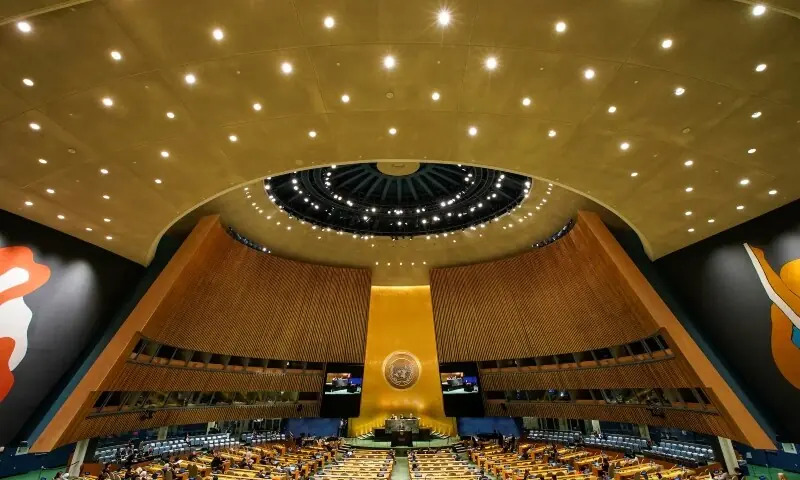
Deputy Prime Minister and Foreign Minister Ishaq Dar has arrived in New York to conduct preliminary diplomatic consultations ahead of Prime Minister Shehbaz Sharif’s participation in the United Nations General Assembly. The premier is scheduled to arrive on Monday to head the official Pakistani delegation, with his formal address to the General Assembly set for September 25.
Dar’s advance arrival establishes an operational runway for intensive multilateral and bilateral engagements. The high-level gathering comes at a turbulent juncture for international diplomacy, dominated by protracted conflict involving the United States, Israel, and Iran, escalating warfare in Yemen, and wider volatility across the Middle East. Accompanying the leadership is Special Assistant to the Prime Minister on Foreign Affairs Tariq Fatemi, alongside a strictly pared-down delegation.
In an explicit nod to prevailing domestic fiscal constraints, Islamabad has restricted the delegation size under broader government austerity measures. Rather than expansive institutional entourages typical of annual General Assembly sessions, the executive mandate emphasizes lean diplomatic missions geared toward targeted diplomatic interventions, bilateral economic outreach, and sovereign alignment amidst mounting global polarization.
Commercial & Economic Implications
For Pakistan's commercial ecosystem, wholesale distributors, and retail merchants, the diplomatic maneuvers at the United Nations hold direct relevance to sovereign liquidity and supply chain stability. Diplomatic activity in New York is intrinsically tied to Pakistan’s external balance of payments, sovereign credit health, and the continuation of multilateral program support.
Escalating hostilities in the Middle East present immediate risks to domestic import bills, specifically petroleum and refined fuel products. With crude benchmarks susceptible to maritime disruption in the Red Sea and Persian Gulf, Pakistan’s retail and wholesale transport costs face ongoing inflation. Prime Minister Sharif and Foreign Minister Dar's bilateral meetings on the sidelines with partner nations—most notably Gulf allies and international financial institution representatives—are designed to solidify external debt rollovers, bilateral investment frameworks, and emergency credit lines.
Stabilizing these macroeconomic indicators directly governs the landed costs of imported raw materials, finished consumer electronics, edible oils, and industrial components. Wholesale trade networks across Karachi, Lahore, and Faisalabad remain sensitive to foreign exchange volatility. A coherent diplomatic posture that avoids costly foreign-policy friction while assuring international lenders provides necessary currency stability, lowering the threat of sudden exchange-rate devaluations that compress consumer purchasing power.
Related Intelligence: Houthi Strike Near Riyadh Airport Escalates Gulf Regional Security Risks
Stakeholder Perspectives & Market Reactions
Pakistan’s commercial and industrial stakeholders have responded to the streamlined UNGA mission with measured pragmatic optimism. Leadership within the Federation of Pakistan Chambers of Commerce and Industry (FPCCI) and regional merchant associations has consistently urged the federal government to limit overseas state expenditure while maximizing economic diplomacy.
Financial analysts and institutional investors view the visit through the lens of external financing assurances. Capital markets closely observe whether sideline dialogues yield tangible commitments regarding Special Investment Facilitation Council (SIFC) initiatives or support for climate-resilience funding. Legal and fiscal commentators have noted that limiting the delegation size is an indispensable political signal, validating austerity promises made to international lenders and domestic taxpayers alike, who are bearing heightened electricity tariffs and substantial direct tax burdens.
However, domestic merchant federations note that symbolic austerity must be paired with commercial dividends, specifically market access agreements and energy security partnerships that shelter the domestic retail sector from external shocks.
Forward Outlook & Key Watchpoints
Over the coming week, observers will monitor the precise scheduling and outcomes of Prime Minister Sharif's bilateral engagements prior to his September 25 address. Key analytical focus rests on scheduled dialogues with leadership from donor countries, multilateral development banks, and traditional sovereign partners.
Critical watchpoints include any substantive discussions concerning the activation of bilateral currency swap arrangements, progress on energy corridor agreements, and statements regarding regional security balances. Crucially, the Prime Minister's address will need to balance humanitarian and normative positions on ongoing regional conflicts with the pragmatic economic necessity of maintaining working relationships across major global power blocs. The outcomes achieved in New York will directly shape the trajectory of Pakistan’s foreign exchange reserves and domestic market predictability heading into the final quarter of the fiscal year.
Join Our Official WhatsApp Channel
Receive live commodity alerts, policy changes, and commercial intelligence directly on WhatsApp.