
Dar Hails Whole of Government Approach for Fuel Subsidy Scheme
Deputy Prime Minister Ishaq Dar commended the inter-ministerial coordination behind the nationwide fuel subsidy rollout, designed to shield low-capacity vehicle owners from escalating global energy costs.
The Core Development
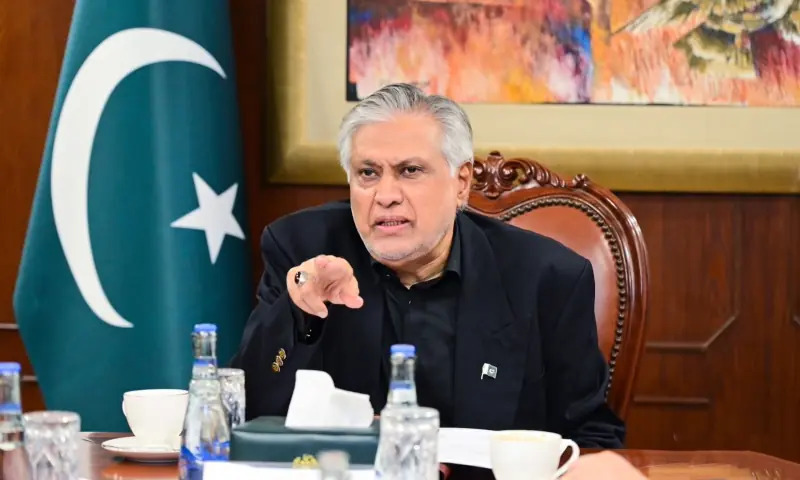
Deputy Prime Minister and Foreign Minister Ishaq Dar convened a high-level meeting of the National Steering Committee on Fuel Subsidy on Tuesday to evaluate the ongoing implementation of the Prime Minister's Fuel Relief Scheme. During the session, the deputy premier lauded the seamless execution of the policy, describing it as a benchmark demonstration of a comprehensive 'whole of government' administrative framework.
The relief initiative, officially rolled out nationwide on September 17, was originally conceptualized by Prime Minister Shehbaz Sharif to mitigate the severe inflationary pressures borne by vulnerable commuters. The program specifically targets owners of motorcycles, auto-rickshaws, and compact motor vehicles with engine capacities of up to 800cc, a demographic that forms the backbone of daily urban and rural mobility in Pakistan.
Tuesday's review meeting brought together leadership from key state apparatuses, including the Ministry of Information and Broadcasting, the Ministry of Information Technology and Telecommunication, the Petroleum Division, and the Oil and Gas Regulatory Authority (Ogra). Officials examined real-time data feeds, digital registration metrics, and distribution bottlenecks to ensure that fiscal leakages are minimized and targeted subsidies reach legitimate beneficiaries without administrative friction.
Commercial & Economic Implications
The targeted fuel relief intervention arrives at a critical juncture for Pakistan's domestic economy, where cascading energy shocks resulting from geopolitical instability in the Middle East have driven up retail petroleum prices. For the retail trade, wholesale distribution networks, and daily wage earners, transportation costs constitute a major overhead. By cushioning the blow for high-frequency transport operators such as rickshaw drivers and motorcycle commuters, the subsidy aims to suppress secondary inflationary spirals across food supply chains and public transport fares.
Economists note that while broad-based energy subsidies historically strain national fiscal deficits, this targeted approach protects macroeconomic stability under International Monetary Fund guidelines by restricting relief to low-income transport segments. Stable transportation costs directly support small-scale retail trade, ensuring that urban supply chains remain fluid and consumer price inflation for essential goods is kept in check. Furthermore, the reliance on digital registration and verification platforms reduces administrative overhead and prevents systemic subsidy diversion.
Related Intelligence: Philippine Transport Strikes Erupt Amid Middle East Fuel Shock
Stakeholder Perspectives & Market Reactions
Representative bodies of transport workers, auto-rickshaw associations, and commuter welfare groups have expressed cautious optimism regarding the operational rollout of the scheme. Industry associations noted that while fuel price volatility continues to test profit margins for commercial drivers, the direct relief mechanism provides immediate breathing room against mounting daily operational costs.
Official statements from participating regulatory bodies and ministries underscore a commitment to transparency and inter-departmental synergy. Ogra and the Petroleum Division have established dedicated monitoring cells to oversee retail pump compliance and verify that subsidized allocations are distributed transparently. Legal and financial analysts have praised the collaborative institutional design, emphasizing that multi-agency coordination is vital for executing targeted welfare programs in developing economic landscapes.
Forward Outlook & Key Watchpoints
As the National Steering Committee continues its oversight, key operational watchpoints will include the expansion of digital verification nodes and the continuous audit of disbursement channels. Policymakers must ensure that distribution mechanisms scale effectively as more vehicle owners register for the relief initiative.
In the coming weeks, the government's primary focus will remain on monitoring global crude oil price trajectories and assessing the fiscal impact of the subsidy program on the national exchequer. The success of this model will likely dictate the structuring of future targeted welfare interventions as Pakistan navigates ongoing fiscal consolidation and external economic headwinds.
Join Our Official WhatsApp Channel
Receive live commodity alerts, policy changes, and commercial intelligence directly on WhatsApp.